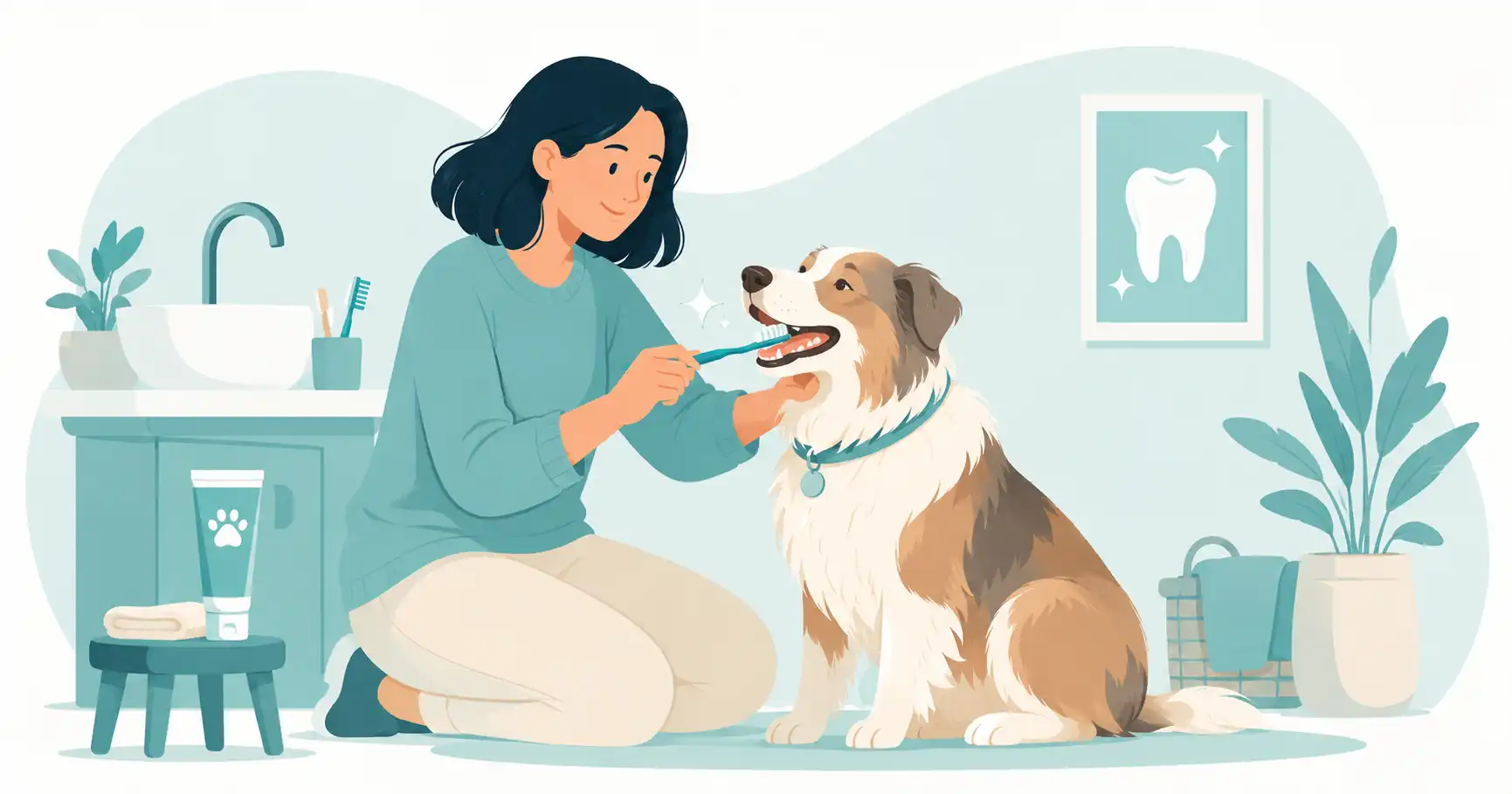
Daily tooth brushing is the single most effective thing you can do at home to protect your dog’s dental health between professional cleanings. It removes the soft bacterial plaque that accumulates on tooth surfaces before it has the chance to mineralise into hard tartar — the calculus that requires professional instruments and anaesthesia to remove.
Most owners assume their dog will never tolerate having their teeth brushed. In our experience at Walker Lake Veterinary Centre, most dogs can be successfully introduced to tooth brushing with patience, the right approach, and — most importantly — starting slowly. If you would like guidance on your dog’s dental health or a demonstration of brushing technique, call us at (587) 786-6771.
Daily brushing is the goal — but even brushing three to four times per week produces meaningful benefit compared to no brushing at all. Do not let the pursuit of perfection prevent you from starting. Some brushing is always better than none.
What You Need Before You Start
Dog-Specific Toothpaste
Never use human toothpaste on a dog. Human toothpaste contains fluoride and often xylitol — both toxic to dogs. It also foams, which dogs find unpleasant, and is not designed to be swallowed.
Veterinary toothpastes are specifically formulated for dogs — they are enzymatic, designed to be swallowed safely, and come in flavours dogs find appealing such as poultry, beef, peanut butter, and vanilla. The enzymatic action continues working after brushing, providing additional benefit beyond the mechanical plaque removal.
The Right Brush
Several options are available:
- Finger brush — a silicone brush that fits over the index finger. Excellent for introducing brushing because it gives you better tactile feedback and feels less threatening to a dog new to the process
- Angled dog toothbrush — a longer-handled brush with a head angled to reach the back teeth more easily. The most effective tool once the dog is comfortable
- Double-headed toothbrush — brushes the inner and outer tooth surfaces simultaneously
- Small child’s toothbrush — can be used as a gentler alternative to a full dog toothbrush for very small breeds
Ask our team at Walker Lake Veterinary Centre which option they recommend for your dog’s size, breed, and temperament.
The Introduction Process — Take Your Time
The most common reason tooth brushing fails is rushing the introduction. A dog that has a toothbrush pushed into their mouth before they are comfortable will resist — and that resistance becomes harder to overcome with each subsequent attempt.
The correct approach is a gradual, positive introduction over one to two weeks. Every step should end with the dog feeling positive about the interaction.
Step 1 — Introduce the Toothpaste
Begin with no brush at all. Put a small amount of toothpaste on your finger and let your dog lick it off. The goal is simply for your dog to enjoy the taste and associate the toothpaste with something pleasant.
Do this for two to three days before moving on. If your dog is hesitant, try a different flavour — what one dog loves, another may dislike.
Step 2 — Touch the Teeth and Gums With Your Finger
With toothpaste on your finger, gently lift your dog’s lip and rub the paste along the outer surfaces of the front teeth and gums. Keep it brief — just a few seconds — and reward with praise.
Do not try to access the back of the mouth or the inner tooth surfaces at this stage. The outer surfaces of the upper teeth are the most important area to brush and the easiest to access — this is where tartar accumulates most heavily.
Repeat this step for two to three days until your dog is comfortable with your finger in their mouth.
Step 3 — Introduce the Brush
Let your dog investigate the toothbrush first — sniff it, lick the toothpaste from it. Then, with toothpaste applied, gently brush just the outer surfaces of the front teeth using small circular motions. Keep the session very short — ten to fifteen seconds — and end on a positive note.
Step 4 — Gradually Extend to the Back Teeth
Over the following days, gradually work toward the back teeth — the premolars and molars. These are the teeth that accumulate the most tartar and the ones where periodontal disease tends to be most significant.
Lift the lip with your non-dominant hand and angle the brush at approximately 45 degrees to the gumline — this directs the bristles slightly below the gum margin where plaque accumulates.
Step 5 — Establish a Routine
Once your dog tolerates a full brushing session comfortably, aim for daily brushing at a consistent time. Attaching it to an existing routine — after the morning walk, before bed — helps establish it as a normal and expected part of the day rather than an occasional stressful event.
Keep brushing sessions short and positive — one to two minutes is sufficient for a thorough clean. A dog that tolerates a brief daily session is more valuable than one that endures an occasional lengthy session reluctantly.
Brushing Technique
Which Surfaces to Focus On
The outer surfaces of the teeth — the cheek-facing sides — are the most important to brush. This is where the salivary ducts deposit minerals that contribute to tartar formation, and where the heaviest deposits accumulate.
The inner surfaces — the tongue-facing sides — accumulate less tartar because the tongue constantly moves across them. While brushing the inner surfaces is beneficial if your dog tolerates it, prioritise the outer surfaces.
The chewing surfaces of the back teeth benefit from brushing where accessible but are partly self-cleaning through the mechanical action of chewing.
Angle and Motion
Hold the brush at approximately 45 degrees to the tooth surface so the bristles reach slightly below the gumline. Use small, gentle circular motions rather than aggressive scrubbing. Apply light pressure — you are removing soft plaque, not scrubbing off tartar. Hard scrubbing damages the gum tissue rather than helping it.
Time Required
A thorough brushing of all accessible surfaces takes approximately one to two minutes in most dogs. Splitting this into a focus on one side of the mouth per session can make it more manageable for both you and your dog initially.
What If My Dog Will Not Tolerate Brushing?
Some dogs — particularly those introduced to brushing as adults, those with painful dental disease, or those with certain temperaments — do not tolerate tooth brushing despite a patient introduction process.
This is not a failure — it is a reality for some dogs. If your dog will not accept brushing, there are alternatives that provide meaningful dental benefit:
VOHC-Approved Dental Chews
The Veterinary Oral Health Council (VOHC) awards its seal to products with clinical evidence of reducing plaque or tartar in dogs. VOHC-approved dental chews mechanically reduce plaque through the chewing action — they must be chewed rather than swallowed whole to be effective. Ask our team at Walker Lake Veterinary Centre which chews they recommend for your dog’s size.
Dental Diets
Prescription and over-the-counter dental diets use a specific kibble texture and size that mechanically disrupts plaque as the dog chews. Some diets also incorporate chemical plaque inhibitors. VOHC-approved dental diets have clinical evidence of efficacy.
Water Additives
Veterinary-recommended water additives contain antimicrobial agents that reduce bacterial load in the mouth throughout the day. They require no active participation from the dog beyond drinking normally. They are less effective than brushing but more effective than no intervention.
Dental Gels and Wipes
Enzymatic gels applied to the gum tissue and dental wipes that clean tooth surfaces without a brush can be useful for dogs that tolerate finger contact but not a brush.
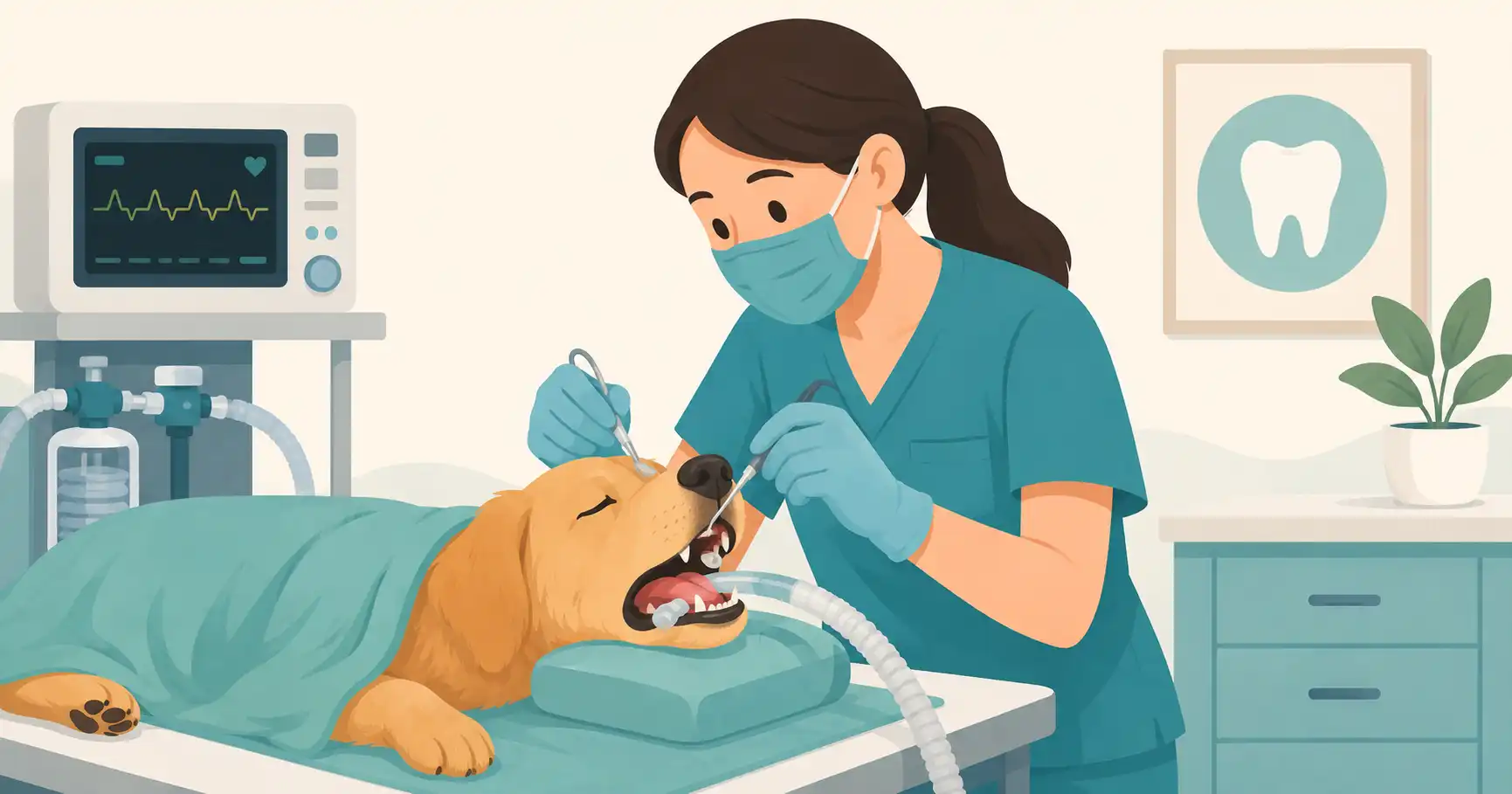
No home care product — regardless of how well used — replaces professional dental cleaning. Home care slows the progression of disease and extends the interval between professional cleanings. It does not eliminate the need for periodic professional cleaning under anaesthesia.
When Is It Too Late to Start Brushing?
It is never too late to start — but it is important to have your dog’s teeth assessed before beginning if they have not had a recent dental examination.
A dog with existing significant dental disease — established tartar, painful teeth, periodontal pockets — needs a professional cleaning before home brushing can be effective. Brushing a dog with a painful mouth is distressing for the dog and will undermine any attempt to establish a positive brushing routine. It also does not address the calculus that has already formed — brushing only affects soft plaque.
Our recommendation at Walker Lake Veterinary Centre is to start with a dental assessment. If a professional cleaning is needed, we perform that first to establish a clean baseline — and then home care begins on a healthy mouth where it can actually make a difference.
Starting Puppies Early — The Ideal Approach
The easiest time to introduce tooth brushing is during puppyhood — before the permanent teeth have fully erupted and before any negative associations with mouth handling have developed.
Puppies that are handled regularly around the face and mouth — including brief positive interactions with their teeth and gums — grow into adult dogs that tolerate dental care far more readily.
If you have a new puppy, we encourage you to start mouth handling early and introduce the taste of toothpaste before the permanent teeth come in. Building this foundation at 8 to 12 weeks of age pays dividends for the dog’s entire life.
Signs That Your Dog Needs a Professional Dental Check
Home brushing is maintenance — not treatment. Even well-brushed teeth develop some tartar over time, and no amount of home care prevents periodontal disease entirely. Watch for signs that a professional assessment is needed:
- Visible yellow, brown, or grey deposits on the teeth — tartar that brushing cannot remove
- Red or swollen gum tissue along the gumline
- Bad breath that is more significant than normal
- Bleeding when the gums are touched
- The dog resisting brushing in a specific area — possible pain at that site
- Changes in eating behaviour — dropping food, chewing on one side, reduced appetite
If you would like a dental assessment for your dog or guidance on starting a home brushing routine, book an appointment at Walker Lake Veterinary Centre. Call (587) 786-6771 or book online. Located at 5109 22 Avenue SW, Southwest Edmonton.
Book an Appointment at Walker Lake Veterinary Centre
Walker Lake Veterinary Centre provides dental assessments, professional cleanings, and personalised home care guidance for dogs and cats across Walker Lake, Summerside, Ellerslie, Heritage Valley, and Southwest Edmonton.
Call us at (587) 786-6771 or book online. We are located at 5109 22 Avenue SW, Edmonton.
Clinic hours:
- Monday, Tuesday & Thursday: 9:00 AM – 7:00 PM
- Wednesday & Friday: 9:00 AM – 6:00 PM
- Saturday: 9:00 AM – 3:00 PM
- Sunday: Closed
Frequently Asked Questions
How old should my dog be before I start brushing their teeth?
You can begin introducing positive mouth handling and the taste of toothpaste from 8 weeks of age. Actual brushing of the puppy teeth is less important than building comfort with the process — the adult teeth are what matter most. Most dogs have their full set of permanent teeth by 6 to 7 months, and regular brushing should be established by this point if possible.
My dog hates having their mouth touched — where do I start?
Start well before the mouth. Begin by rewarding your dog simply for allowing you to touch their face — cheeks, muzzle, chin. Gradually work toward lifting the lip briefly before rewarding. Only when your dog is completely comfortable with face and muzzle handling should you progress to touching the teeth. This desensitisation process may take several weeks for a dog with strong resistance to face handling.
Can I use coconut oil instead of dog toothpaste?
Coconut oil does not have the same antimicrobial and enzymatic properties as veterinary toothpaste and is not a clinically equivalent substitute. While some owners use it and it is not toxic to dogs, it does not provide the same benefit. We recommend using a veterinary toothpaste with the VOHC seal for maximum benefit.
My dog swallows the toothpaste — is that safe?
Yes — veterinary toothpaste is specifically formulated to be safe if swallowed by dogs. This is one of the reasons human toothpaste must never be used — it is not designed to be swallowed and contains ingredients toxic to dogs. Let your dog lick and swallow the veterinary toothpaste without concern.
How do I know if I am brushing correctly?
The key indicators of effective brushing are gum tissue that remains a healthy pale pink rather than red and inflamed, minimal tartar accumulation between professional cleanings, and fresh breath. If you are unsure whether your technique is effective, ask our team at Walker Lake Veterinary Centre for a demonstration at your next appointment — we are happy to show you.