The idea of placing a dog or cat under anesthesia can make any pet owner nervous. This concern is especially common when the pet is older, has an existing health condition or has never undergone anesthesia before.
No medical procedure is completely without risk. However, modern veterinary anesthesia is generally well tolerated when the patient is properly assessed, the anesthetic plan is tailored to their health and trained veterinary staff monitor them throughout the procedure.
Anesthesia is also necessary for a complete professional dental cleaning. It allows the veterinary team to examine the entire mouth, clean below the gumline, take dental X-rays when needed and treat painful teeth without causing stress or discomfort.
If you are concerned about anesthesia for your pet’s dental cleaning, contact Walker Lake Veterinary Centre at (587) 786-6771. Our team can examine your pet, discuss their individual risk factors and explain the safety measures used during the procedure.
The decision to use anesthesia is based on the balance between risk and benefit. Untreated dental disease can cause chronic pain, infection and tooth loss, so postponing necessary dental care also carries risks.
Why Is Anesthesia Needed for Pet Dental Cleaning?
A professional veterinary dental cleaning involves much more than removing visible tartar from the front of the teeth.
Significant dental disease often develops below the gumline, where it cannot be seen during a normal examination. Cleaning and examining these areas requires precise instruments, dental probing and, in some cases, dental X-rays.
Anesthesia allows the veterinary team to:
- Examine every tooth and all areas of the mouth
- Clean plaque and tartar above and below the gumline
- Keep the patient still while dental instruments are used
- Protect the airway from water, bacteria and dental debris
- Take dental X-rays when required
- Probe around the teeth for periodontal pockets
- Treat or extract painful and damaged teeth
- Reduce fear, stress and discomfort during the procedure
An awake dog or cat cannot safely remain completely still while sharp dental instruments are used around the teeth and gums. Even a calm pet may move suddenly if an uncomfortable area is touched.
Is Pet Dental Anesthesia Completely Risk-Free?
No form of anesthesia is completely risk-free. Reactions and complications are possible with any anaesthetic procedure.
The level of risk, however, is not the same for every patient. A healthy young dog may have a different risk profile from a senior cat with kidney disease or a dog with a heart condition.
Veterinarians reduce risk by assessing each pet individually and adjusting the medications, monitoring and support provided during the procedure.
Factors that may influence anaesthetic risk include:
- Age
- Breed and airway anatomy
- Body weight and physical condition
- Heart or respiratory disease
- Kidney or liver disease
- Diabetes or other hormonal conditions
- Current medications
- Previous reactions to anesthesia
- The anticipated length and complexity of the procedure
Having one of these risk factors does not automatically mean your pet cannot undergo dental treatment. It means the veterinary team may recommend additional testing or modify the anesthetic plan.
How We Reduce Anesthesia Risks
At Walker Lake Veterinary Centre, dental patients are assessed individually before anesthesia. The precautions recommended will depend on your pet’s age, health history and examination findings.
1. Pre-Anesthetic Examination
Before the dental procedure, the veterinarian examines your pet and reviews their medical history.
This assessment may include:
- Listening to the heart and lungs
- Checking breathing and circulation
- Reviewing current medications
- Discussing previous anaesthetic experiences
- Evaluating hydration and body condition
- Looking for signs of infection or other illness
Tell the veterinary team about any coughing, vomiting, diarrhoea, reduced appetite, unusual tiredness or recent changes in your pet’s health before the procedure.
2. Pre-Anesthetic Bloodwork
Bloodwork helps identify health problems that may not be obvious during a physical examination.
Depending on your pet’s age and health, testing may assess:
- Red and white blood cell levels
- Platelet levels
- Kidney function
- Liver function
- Blood glucose
- Protein and electrolyte levels
If the results reveal a concern, the veterinarian may adjust the anesthetic protocol, recommend additional testing or postpone the procedure until the condition has been investigated.
3. Anesthetic Plan Tailored to Your Pet
There is no single anesthetic protocol that is suitable for every dog and cat.
The medications and doses are selected according to factors such as:
- Your pet’s age
- Weight
- Breed
- Temperament
- Medical history
- Bloodwork results
- Expected dental treatment
- Existing health conditions
This individualized approach helps the veterinary team use the medication combination most appropriate for the patient.
4. Intravenous Access and Support
An intravenous catheter may be placed before anesthesia. This provides direct access for medications and allows the team to respond quickly if additional support is required.
Intravenous fluids may also be used to support circulation and hydration during the procedure when appropriate for the patient.
5. Airway Protection
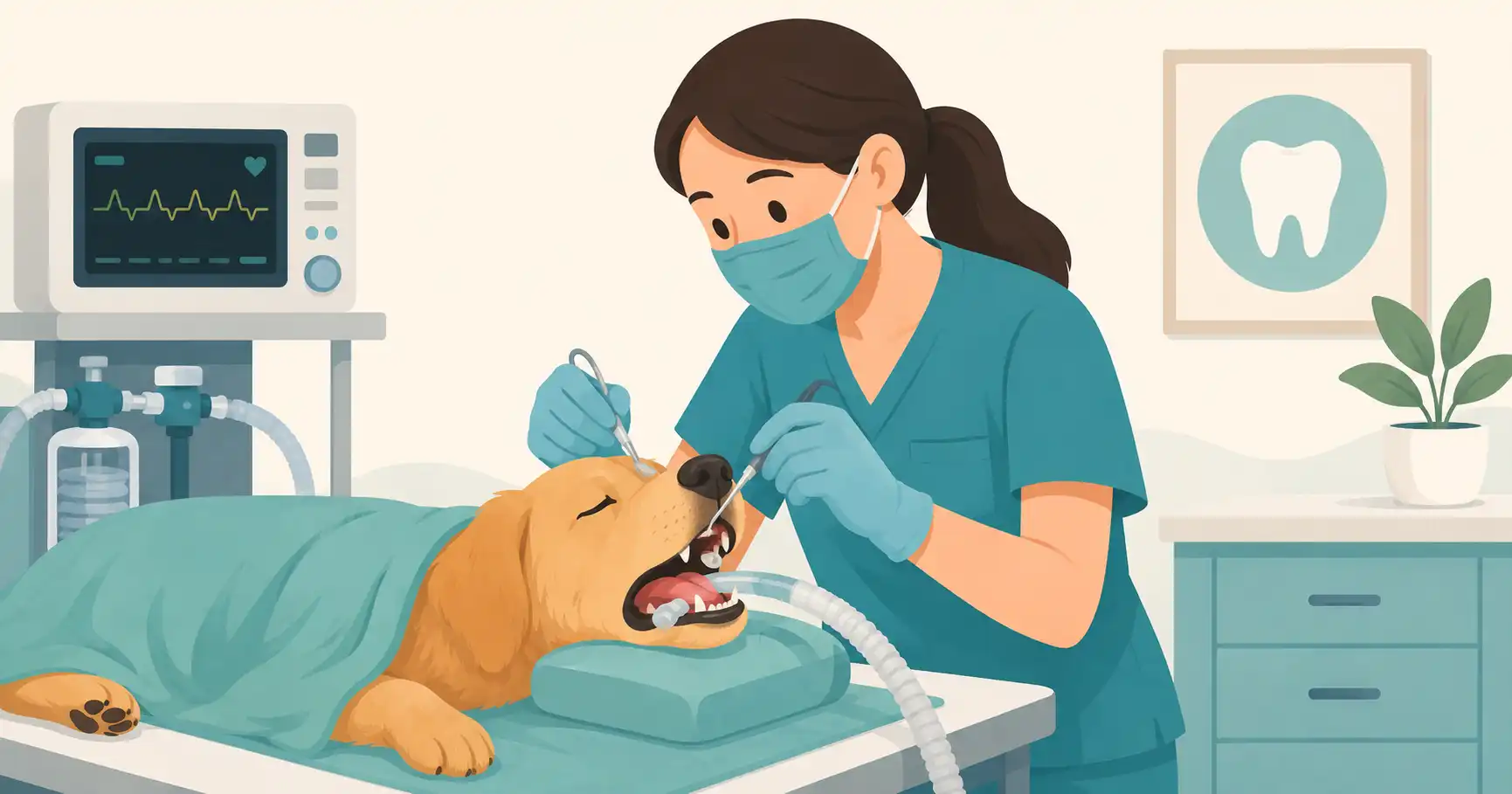
During a professional dental procedure, the pet is intubated with a breathing tube.
The tube helps:
- Deliver oxygen and anesthetic gas
- Maintain an open airway
- Support breathing when required
- Reduce the risk of water and dental debris entering the lungs
Airway protection is one of the important reasons a complete dental cleaning should be performed under general anesthesia.
6. Continuous Monitoring
At Walker Lake Veterinary Centre, dental patients receive continuous monitoring during anesthesia.
The team monitors important measurements including:
- Heart rate
- Blood oxygen level
- Blood pressure
- Body temperature
- Breathing and anaesthetic depth
Monitoring allows the veterinary team to identify changes promptly and adjust anesthesia, oxygen, fluids or temperature support when necessary.
What Happens on the Day of the Dental Procedure?
Although the exact process may vary according to your pet’s needs, a dental appointment generally follows these stages:
1. Admission and Health Review
The veterinary team confirms fasting instructions, medications, recent health changes and the planned procedure.
2. Pre-Anesthetic Preparation
Your pet receives a physical assessment, and any recommended bloodwork is reviewed before anesthesia begins.
3. Anesthesia and Monitoring
Anesthetic medications are administered, a breathing tube is placed and monitoring begins.
4. Dental Examination and Cleaning
The teeth and gums are examined thoroughly. Plaque and tartar are removed from above and below the gumline, and the teeth are polished.
Dental X-rays may be taken to assess the tooth roots and supporting bone.
5. Additional Treatment
If damaged or infected teeth are identified, the veterinarian may recommend extraction or other treatment. Any treatment outside the agreed plan should be discussed according to the consent arrangements made before the procedure.
6. Recovery
Once the procedure is complete, the anesthetic gas is discontinued and your pet is monitored closely while waking up.
Temperature support and pain medication are provided when needed.
Is Anesthesia Safe for Senior Pets?
Older age alone does not automatically make anesthesia unsafe.
A healthy senior pet may tolerate anesthesia better than a younger animal with an uncontrolled medical condition. The important consideration is the pet’s overall health rather than age alone.
Senior pets may benefit from:
- More comprehensive pre-anesthetic bloodwork
- Urine testing
- Chest imaging
- Heart testing when indicated
- Adjusted medication doses
- Additional monitoring and recovery support
Dental treatment can be especially valuable for senior pets because painful periodontal disease, loose teeth and tooth-root infections become more common with age.
Do not assume that your senior pet is too old for dental care. Arrange an assessment so the veterinarian can evaluate the individual risks and benefits based on your pet’s current health.
What If My Pet Has Heart, Kidney or Liver Disease?
Pets with existing medical conditions may still be able to undergo dental treatment safely, but additional planning may be required.
The veterinarian may recommend:
- Additional blood or urine tests
- Heart assessment
- Diagnostic imaging
- Changes to medications before the procedure
- A modified anesthetic protocol
- Shorter or staged dental procedures
- Additional monitoring during recovery
In some cases, anesthesia may be postponed until a medical condition is better controlled. In others, treating the dental infection may be important because chronic pain and inflammation can place additional stress on an already unwell pet.
The decision should be based on your pet’s individual condition rather than a general rule.
Is Anesthesia-Free Dental Cleaning Safer?
Anesthesia-free dental cleaning may sound safer because the pet is not placed under general anesthesia. However, it does not provide the same examination or treatment as a professional veterinary dental procedure.
During an anesthesia-free cleaning, only visible tartar on accessible tooth surfaces can be scraped away.
It does not allow the veterinary team to:
- Clean thoroughly below the gumline
- Take diagnostic dental X-rays
- Examine every tooth safely
- Measure periodontal pockets accurately
- Treat painful or infected teeth
- Protect the airway from dental debris
- Keep the pet free from stress and discomfort
Removing visible tartar may make the teeth appear cleaner while disease remains untreated beneath the gums.
Anesthesia-free dental scaling is not an equivalent alternative to a professional veterinary dental cleaning. It may improve the appearance of the visible teeth without diagnosing or treating the source of periodontal disease.
What Should I Expect After Dental Anesthesia?
Many pets are sleepy or quieter than usual for several hours after returning home. Mild unsteadiness or reduced appetite may also occur as the medications wear off.
Follow the discharge instructions provided by the veterinary team. These may include:
- Offering a small meal when advised
- Providing access to fresh water
- Keeping your pet warm and quiet
- Limiting strenuous activity
- Giving pain medication exactly as prescribed
- Feeding softened food after extractions
- Preventing chewing on hard toys
- Monitoring extraction sites when instructed
Contact the clinic if your pet experiences persistent vomiting, difficulty breathing, extreme weakness, uncontrolled bleeding, severe pain or does not recover as expected.
Questions to Ask Before Your Pet’s Dental Cleaning
It is reasonable to ask questions before consenting to anesthesia.
Useful questions include:
- What pre-anesthetic testing do you recommend?
- How will my pet be monitored?
- Will a breathing tube be used?
- Will dental X-rays be taken?
- How will pain be managed?
- What happens if extractions are needed?
- When should my pet stop eating before the procedure?
- Which regular medications should be given?
- What should I expect during recovery?
Your veterinary team should explain the procedure clearly and give you an opportunity to discuss concerns before the appointment.
Balancing Anesthesia Risk Against Dental Disease
It is natural to focus on the risks of anesthesia because the procedure happens on a specific day. The risks of untreated dental disease are often less visible because they develop gradually.
Delaying necessary treatment may allow:
- Gum inflammation to progress
- Supporting bone to deteriorate
- Teeth to become loose
- Tooth-root infections to develop
- Oral pain to continue
- More teeth to require extraction later
- The eventual procedure to become longer and more complex
The goal is not to claim that anesthesia has no risk. It is to assess the patient carefully, reduce avoidable risks and determine whether the benefits of treating dental disease outweigh the remaining risk.
If your pet needs a dental cleaning and you are concerned about anesthesia, book an assessment at Walker Lake Veterinary Centre. We will review your pet’s health, explain the recommended testing and discuss the anesthetic safety plan with you. Call (587) 786-6771 or book online.
Book a Dental Assessment at Walker Lake Veterinary Centre
Walker Lake Veterinary Centre provides dental examinations, professional dental cleanings, dental X-rays and treatment for dogs and cats across Walker Lake, Summerside, Ellerslie, Heritage Valley, Rutherford and surrounding Southwest Edmonton communities.
Our dental patients receive a pre-anesthetic health assessment, age-appropriate bloodwork and continuous monitoring during anesthesia.
Call us at (587) 786-6771 or book an appointment online. We are located at 5109 22 Avenue SW, Edmonton.
Frequently Asked Questions
Can a pet die under anesthesia during a dental cleaning?
Serious anaesthetic complications are possible but uncommon when patients are appropriately assessed and monitored. The individual risk depends on the pet’s health, age, medical conditions and the procedure being performed.
Is anesthesia safe for an old dog or cat?
Many senior pets undergo dental procedures successfully. Age alone does not determine safety. The veterinarian will evaluate the pet’s general health and may recommend additional testing or modifications to the anesthetic plan.
Does my pet need bloodwork before dental anesthesia?
Bloodwork is commonly recommended because it can identify conditions that may influence anesthesia. The appropriate tests depend on your pet’s age, medical history and examination findings.
Why can’t my pet be sedated instead?
Sedation alone does not provide the immobility, airway protection and level of control required for a complete veterinary dental cleaning. General anesthesia with a protected airway is required for thorough dental examination and treatment.
How long will my pet be under anesthesia?
The duration depends on the amount of tartar, the dental X-ray findings and whether extractions or additional treatment are needed. A straightforward cleaning is usually shorter than a procedure involving several damaged teeth.
Will my pet feel pain during the procedure?
Anesthesia prevents conscious awareness during the dental procedure. Pain medication and local dental blocks may also be used when extractions or other painful treatments are required.
How long does recovery take?
Many pets are alert enough to return home later the same day, although they may remain sleepy for several hours. Recovery varies according to the patient, medications used and complexity of the dental treatment.
What happens if the bloodwork is abnormal?
The veterinarian will evaluate the abnormal result and decide whether to adjust the anesthetic plan, perform additional testing, treat the underlying condition or postpone the dental procedure.