Dental disease is one of the most common health problems affecting dogs and cats. It often begins with plaque accumulating along the gumline and gradually progresses to hardened tartar, inflamed gums, infection and damage to the tissues supporting the teeth.
Unfortunately, pets are very good at hiding oral discomfort. A dog may continue eating despite a painful tooth, while a cat may simply become quieter or begin chewing differently. Dental disease can therefore become advanced before owners realise there is a problem.
If your pet has persistent bad breath, visible tartar, red gums or changes in eating behaviour, contact Walker Lake Veterinary Centre at (587) 786-6771 for a dental assessment.
A pet that continues eating can still have significant dental pain. Dogs and cats often adjust the way they chew instead of refusing food completely, so subtle changes should not be ignored.
Why Professional Dental Care Matters
Plaque is a soft bacterial film that continually forms on the teeth. If it is not removed through regular brushing and appropriate home dental care, it can harden into tartar.
Tartar creates a rough surface where more bacteria can accumulate. Over time, this causes inflammation of the gums, known as gingivitis. If the disease progresses below the gumline, it can damage the tissues and bone that hold the teeth in place.
A professional dental cleaning removes plaque and tartar from above and below the gumline. It also allows the veterinary team to examine each tooth and identify problems that may not be visible during a normal examination.
Common Signs Your Pet May Need a Dental Cleaning
Persistent Bad Breath
Bad breath is one of the earliest and most common signs of dental disease.
Although a pet’s breath may have a natural odour, it should not smell strongly rotten, sour or unusually unpleasant. Persistent bad breath often means bacteria are accumulating around the teeth and gums.
The smell may also be associated with an infected tooth, oral wound or another medical condition. If your pet’s breath has become noticeably worse, a veterinary examination is recommended.
Visible Yellow or Brown Tartar
Tartar usually appears as a yellow, brown or grey deposit on the teeth. It is often most noticeable along the gumline and on the outer surfaces of the back teeth.
Once plaque has hardened into tartar, brushing will not remove it. Professional dental instruments are required to clean the teeth safely and thoroughly.
Even a small amount of visible tartar may indicate that additional buildup is present below the gumline.
Red, Swollen or Bleeding Gums
Healthy gums should generally appear firm and pink, although some pets naturally have darker pigmentation.
Redness along the gumline is often an early sign of gingivitis. As inflammation progresses, the gums may become swollen, painful or begin to bleed.
- Redness where the gums meet the teeth
- Swollen or puffy gum tissue
- Bleeding when the mouth is touched
- Blood on toys or food bowls
- Gums pulling away from the teeth
- Discharge around a tooth
Early gingivitis may improve after professional cleaning and consistent home care. Once the tissues and bone supporting the teeth are damaged, however, the condition becomes more difficult to manage.
Changes in Eating Behaviour
Dental pain does not always cause a pet to stop eating completely. More often, owners notice small changes in how the pet approaches food.
- Chewing on only one side of the mouth
- Dropping food while eating
- Taking longer to finish meals
- Swallowing dry food without chewing
- Preferring wet or softened food
- Walking away from the food bowl
- Reduced interest in hard treats
- Crying or flinching while chewing
Cats with painful teeth may appear hungry and approach the bowl but suddenly pull away after trying to eat. Dogs may continue eating but begin avoiding hard food, bones or chew toys.
Drooling More Than Usual
An increase in drooling may indicate oral pain, inflammation or difficulty swallowing.
The saliva may appear thick, stringy, blood-stained or have an unpleasant smell. Some pets drool mainly from one side of the mouth when a painful tooth or gum problem is present.
Cats do not normally drool heavily, so persistent drooling in a cat should be assessed promptly.
Pawing at the Mouth or Rubbing the Face
A pet experiencing oral discomfort may repeatedly paw at the mouth, rub the face against furniture or lick the lips.
These behaviours may be caused by:
- A painful or fractured tooth
- Advanced gum disease
- An object trapped between the teeth
- An oral ulcer
- A tooth-root infection
- Swelling or abnormal tissue in the mouth
Do not force your pet’s mouth open if they appear painful or frightened. Arrange a veterinary assessment, particularly if the behaviour begins suddenly.
Loose, Broken or Discoloured Teeth
Adult dogs and cats should not normally have loose teeth. A loose tooth may indicate advanced periodontal disease, trauma or damage to the supporting bone.
Broken teeth also require veterinary attention, even when the pet does not appear uncomfortable. A fracture can expose the sensitive tissue inside the tooth and allow bacteria to reach the root.
A tooth that turns grey, brown, pink or black may have suffered internal damage and should also be examined.
Do not attempt to pull a loose tooth or scrape tartar from your pet’s teeth at home. This can cause pain, bleeding, damage to the gums and incomplete removal of the affected tooth.
Facial Swelling
Swelling on the face, jaw or below an eye can be a sign of a tooth-root infection.
The roots of some upper teeth are located close to the tissues beneath the eye. When one of these teeth becomes infected, a lump or swelling may appear on the face.
Other signs may include pain when the face is touched, reduced appetite, lethargy or discharge from the swollen area.
Facial swelling requires prompt veterinary attention. Antibiotics may temporarily reduce the infection, but the damaged tooth may still require treatment or extraction.
Changes in Behaviour
Dental discomfort may appear as a general change in behaviour rather than an obvious mouth problem.
Your pet may:
- Become quieter or less playful
- Avoid having the head or face touched
- Become irritable when handled
- Stop carrying or chewing toys
- Sleep more than usual
- Hide more frequently
- Show reduced interest in grooming
- Withdraw from family interaction
These changes are sometimes mistaken for normal ageing. However, an older pet becoming quieter or less interested in food may be experiencing treatable dental pain.
Signs of Dental Disease in Cats
Cats are particularly skilled at hiding oral pain. Many continue eating even when they have severe dental disease.
Signs to watch for include:
- Dropping food from the mouth
- Chewing on one side
- Swallowing dry food whole
- Preferring wet food
- Drooling
- Bad breath
- Reduced grooming
- A greasy or unkempt coat
- Hiding more often
- Weight loss
- Irritability when the head is touched
Cats may also develop tooth resorption, a painful condition in which the tooth structure begins to break down. These lesions can be difficult to identify without a detailed dental examination and dental X-rays.
A cat that appears hungry but repeatedly walks away from food should be examined.
Signs of Dental Disease in Dogs
Dogs often develop visible tartar on the upper back teeth, but dental disease may also be present below the gumline.
Common signs include:
- Strong bad breath
- Yellow or brown tartar
- Red or bleeding gums
- Chewing on one side
- Dropping food or toys
- Avoiding hard treats
- Pawing at the mouth
- Loose or fractured teeth
- Facial swelling
- Reduced interest in chewing
Small dogs are particularly prone to dental disease because their teeth are often crowded into a smaller jaw. However, dogs of every breed and size require regular dental examinations.
What Happens During a Dental Assessment?
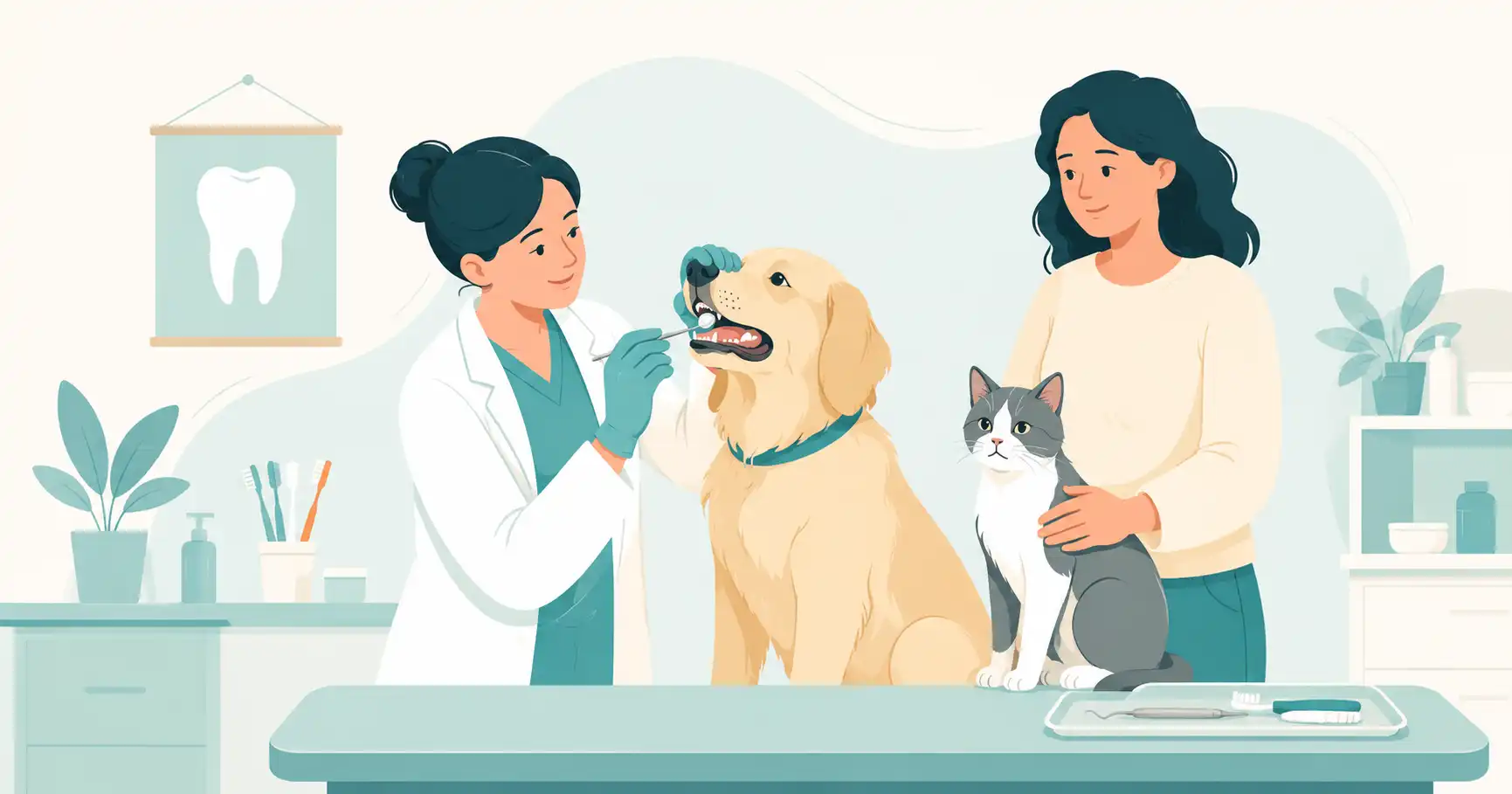
A dental assessment begins with a physical examination and an examination of the mouth, provided your pet allows this safely.
Our veterinary team will look for:
- Plaque and tartar buildup
- Red or inflamed gums
- Loose or damaged teeth
- Facial swelling
- Pain when the mouth is examined
- Abnormal oral tissue
- Changes in eating or chewing
- Signs of infection
A conscious examination provides useful information, but it cannot show the full extent of disease below the gumline.
If a professional dental cleaning is recommended, we will explain the procedure, pre-anaesthetic bloodwork, monitoring and the possibility that damaged teeth may require extraction.
Why Dental Cleaning Requires Anaesthesia
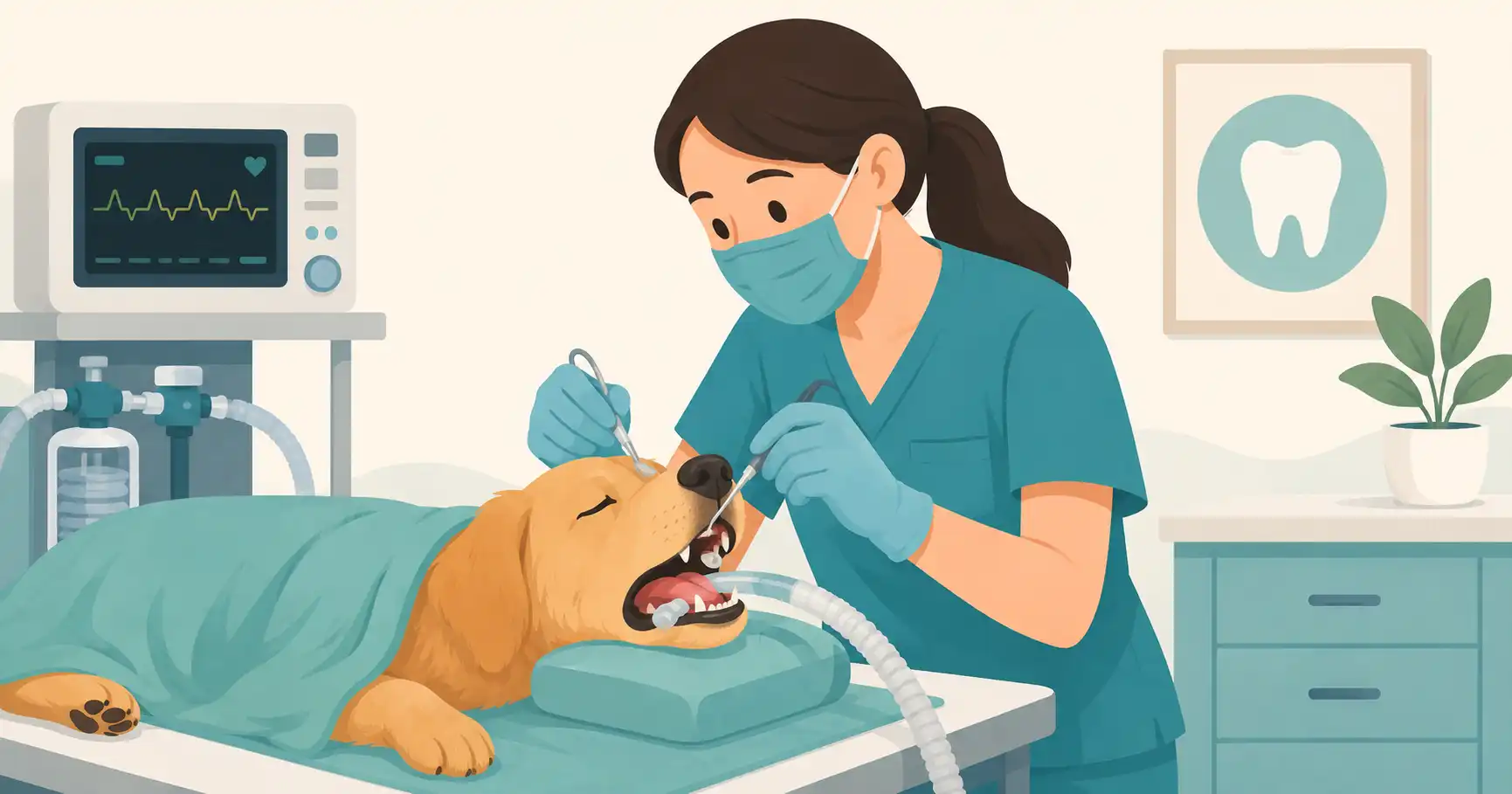
A complete veterinary dental cleaning cannot be performed safely or thoroughly while a pet is awake.
General anaesthesia allows our veterinary team to:
- Examine every tooth
- Clean above and below the gumline
- Take dental X-rays when required
- Check for periodontal pockets
- Protect the airway from water and debris
- Treat or extract painful teeth
- Keep the patient still and comfortable
- Monitor vital signs throughout the procedure
Removing only the visible tartar from an awake pet does not treat disease below the gumline. The teeth may appear cleaner while the underlying infection continues to progress.
Professional dental cleaning is a medical procedure, not simply a cosmetic treatment. Its purpose is to identify and treat dental disease throughout the mouth, including areas that cannot be seen while your pet is awake.
Can Brushing Replace a Professional Cleaning?
Regular brushing is the most effective form of home dental care, but it cannot remove hardened tartar or repair existing periodontal damage.
Brushing works best when it begins before significant dental disease develops or after a professional cleaning has established a clean, healthy starting point.
If your pet already has heavy tartar, painful gums, loose teeth or difficulty eating, arrange a dental assessment before beginning a new brushing routine.
Brushing a painful mouth can cause discomfort and make your pet more resistant to future home care.
When Dental Problems Need Prompt Attention
Contact a veterinarian promptly if your pet has:
- Facial or jaw swelling
- Active bleeding from the mouth
- A visibly fractured tooth
- A loose adult tooth
- An inability or refusal to eat
- Severe drooling
- Crying while chewing
- Pus or discharge around a tooth
- Sudden facial pain
- Difficulty opening the mouth
Difficulty breathing, uncontrolled oral bleeding, major facial trauma or swelling affecting breathing or swallowing is an emergency. Seek immediate veterinary care.
How to Reduce Your Pet’s Risk of Dental Disease
Regular home care and veterinary monitoring can slow plaque accumulation and help identify dental disease earlier.
- Brush your pet’s teeth with veterinary toothpaste
- Check the teeth and gums regularly
- Attend routine wellness examinations
- Use veterinary-recommended dental chews or diets
- Avoid extremely hard objects that may fracture teeth
- Monitor changes in breath, eating and chewing
- Have broken or discoloured teeth examined
- Follow your veterinarian’s recommended cleaning schedule
No dental chew, food, powder or water additive completely replaces brushing and professional dental care.
If your dog or cat has bad breath, visible tartar, inflamed gums or changes in eating behaviour, book a dental assessment at Walker Lake Veterinary Centre. Call (587) 786-6771 or book online. We are located at 5109 22 Avenue SW in Southwest Edmonton.
Book a Dental Assessment at Walker Lake Veterinary Centre
Walker Lake Veterinary Centre provides dental examinations, professional dental cleanings and home-care guidance for dogs and cats across Walker Lake, Summerside, Ellerslie, Heritage Valley and surrounding Southwest Edmonton communities.
Our veterinary team can assess your pet’s teeth and gums, explain whether a professional cleaning is recommended and discuss the next steps based on your pet’s age, health and individual dental needs.
Call us at (587) 786-6771 or book an appointment online. We are located at 5109 22 Avenue SW, Edmonton.
Clinic hours:
Monday, Tuesday and Thursday: 9:00 AM – 7:00 PM
Wednesday and Friday: 9:00 AM – 6:00 PM
Saturday: 9:00 AM – 3:00 PM
Sunday: Closed
Frequently Asked Questions
How often should my pet have a dental cleaning?
There is no single schedule for every pet. The recommended frequency depends on your pet’s breed, age, dental health, previous dental disease and home-care routine. Your veterinarian will recommend an appropriate schedule after examining your pet.
Does bad breath always mean my pet needs a cleaning?
Persistent bad breath commonly accompanies dental disease, but it can also occur with oral infections or other health problems. A veterinary examination is needed to identify the cause.
My pet is still eating. Can the teeth still be painful?
Yes. Dogs and cats often continue eating despite dental pain. They may chew on one side, swallow food without chewing or begin preferring softer food.
Can brushing remove tartar?
No. Brushing removes soft plaque but cannot remove hardened tartar. Once tartar has formed, professional dental instruments are required.
Can I scrape tartar from my pet’s teeth at home?
No. Home scraping can damage the enamel and gums and does not clean below the gumline, where significant dental disease develops.
Why does my pet need anaesthesia for a dental cleaning?
Anaesthesia allows the veterinary team to clean below the gumline, examine every tooth, protect the airway, take dental X-rays and treat painful disease safely.
Are small dogs more likely to need dental cleanings?
Small dogs often develop dental disease earlier because their teeth are crowded into a smaller mouth. However, pets of all breeds and sizes require routine dental examinations.
Should senior pets have dental cleanings?
Age alone does not automatically make a pet unsuitable for anaesthesia. The veterinarian considers the pet’s overall health, physical examination, bloodwork and individual risk factors before recommending a procedure.