Socializing your puppy helps them become comfortable with people, animals, sounds, environments and everyday experiences. Good early socialization can help reduce fear and make it easier for your puppy to adapt confidently to life as an adult dog.
The first few months of a puppy’s life are especially important for behavioural development. Veterinary behaviour guidance recommends introducing puppies to a wide range of positive experiences early rather than waiting until they are older.
The goal is not to expose your puppy to everything at once. Socialization should be gradual, controlled and positive.
If you have recently brought home a puppy in Edmonton, Walker Lake Veterinary Centre can help you balance safe socialization with vaccinations and preventive care. Call us at (587) 786-6771.
Socialization is more than meeting other dogs. Your puppy should gradually become comfortable with different people, surfaces, sounds, handling, vehicles, environments and everyday situations.
When Should You Start Socializing a Puppy?
Socialization should begin as early as possible during puppyhood.
The American Veterinary Society of Animal Behavior considers the first three months of life especially important for social development. Appropriate puppy classes may begin as early as 7–8 weeks when suitable vaccination and health precautions are followed.
However, your puppy may not yet have completed their vaccination series.
This means you need to balance socialization with disease prevention.
Until your veterinarian confirms that your puppy has adequate protection, avoid:
- Busy dog parks
- Areas heavily used by unknown dogs
- Contact with sick or unvaccinated dogs
- Shared outdoor water bowls
- Areas with known parvovirus contamination
You can still provide many safe socialization experiences while vaccinations are being completed.
How to Socialize Your Puppy Step by Step
1. Start With Your Home
Your puppy’s first socialization experiences can happen inside the home.
Introduce them gradually to normal household activities such as:
- Vacuum cleaners
- Doorbells
- Television
- Washing machines
- Kitchen sounds
- People entering and leaving
- Different rooms
- Stairs where appropriate
Allow your puppy to investigate at their own pace.
Reward calm behaviour with treats, praise or play.
2. Introduce Different People
Your puppy should learn that people can look, sound and move differently.
When possible, provide positive introductions to:
- Men and women
- Children under careful supervision
- Older adults
- People wearing hats
- People wearing glasses
- People carrying umbrellas
- People using walking aids
- People with different voices and appearances
Do not force your puppy to interact.
Allow them to approach voluntarily and reward calm curiosity.
3. Introduce Healthy, Vaccinated Dogs
Meeting appropriate dogs teaches puppies important social skills.
Choose calm, healthy dogs that are known to be properly vaccinated.
Good early interactions should be:
- Supervised
- Short
- Calm
- Appropriate for your puppy’s size and confidence
Avoid overwhelming your puppy with several unfamiliar dogs at once.
A negative encounter during early development can have a lasting effect, so quality is more important than quantity.
Should Puppies Attend Socialization Classes?
A well-managed puppy class can provide controlled exposure to other puppies, people and new situations.
Veterinary behaviour guidance supports appropriately managed puppy classes before the full vaccination series is complete when health precautions are followed.
Before enrolling, ask:
- What vaccination requirements are in place?
- How are puppies supervised?
- Are positive-reinforcement methods used?
- How are fearful puppies handled?
- Are class sizes controlled?
- Is the environment cleaned appropriately?
Avoid training methods based on fear, physical punishment or intimidation. Positive reinforcement is preferred for teaching puppies new behaviours.
4. Explore Different Environments
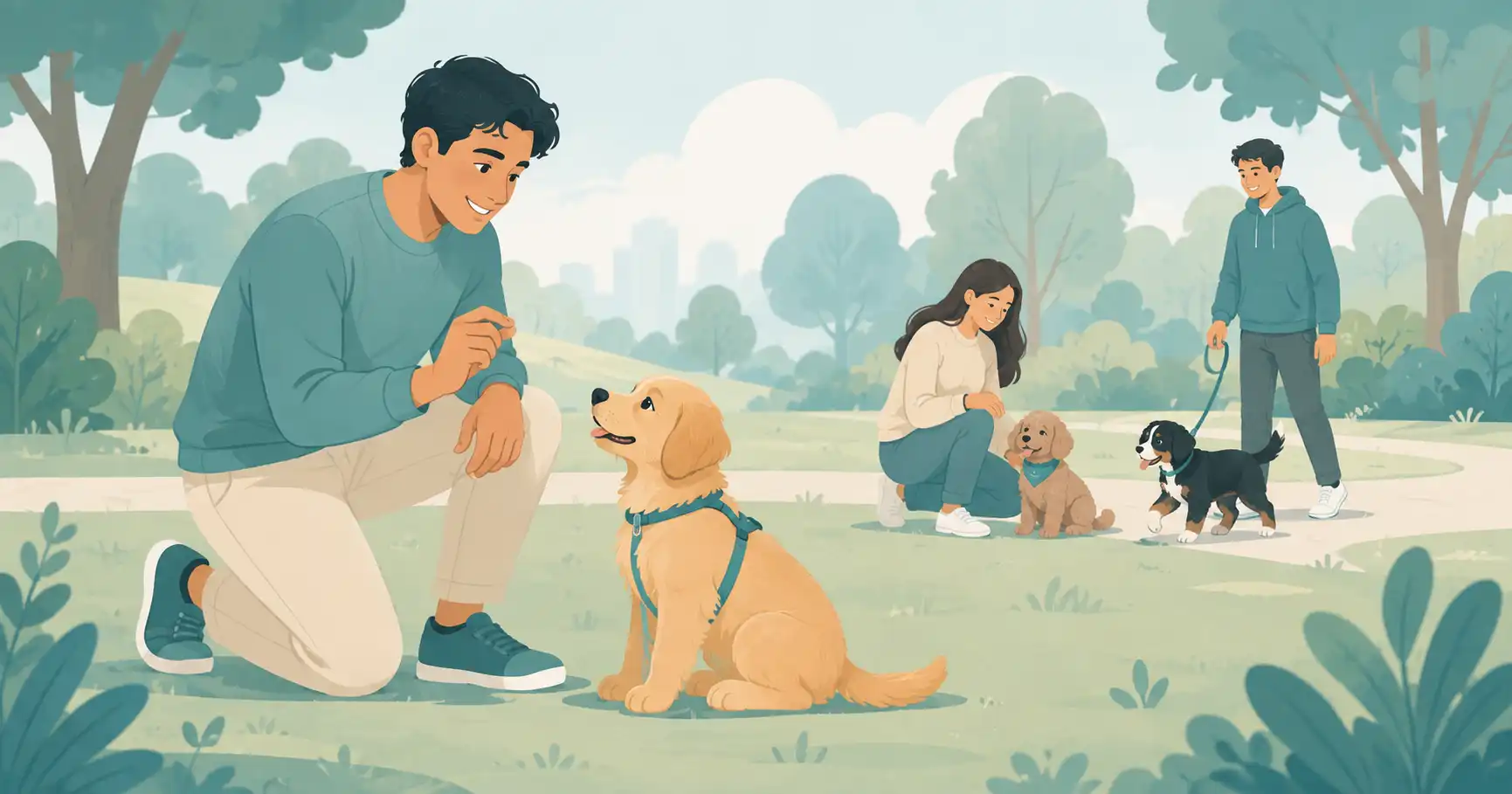
Once your veterinarian advises that outdoor exposure is appropriate, gradually introduce your puppy to different surroundings.
Examples include:
- Quiet neighbourhood streets
- Parking areas
- Pet-friendly businesses
- Parks
- Veterinary clinics
- Friends’ homes
- Car rides
- Outdoor patios where dogs are permitted
Start in quieter locations before progressing to busy environments.
A puppy that is comfortable walking around Walker Lake may still find heavy traffic, crowds or a busy shopping area overwhelming.
5. Introduce Different Surfaces
Dogs encounter many different surfaces throughout life.
Allow your puppy to safely explore:
- Grass
- Carpet
- Tile
- Concrete
- Gravel
- Wooden floors
- Wet surfaces
- Snow
Edmonton puppies should also gradually become familiar with winter conditions.
Never force a frightened puppy across a surface. Encourage them gently and reward progress.
6. Introduce Everyday Sounds
Unexpected noises can frighten dogs that have never encountered them before.
Gradually introduce sounds such as:
- Traffic
- Doorbells
- Vacuum cleaners
- Construction noises
- Thunder recordings
- Household appliances
- Children playing
- Car doors
- Grooming tools
Begin at a low intensity.
If your puppy appears frightened, increase the distance or reduce the sound rather than forcing them to remain near it.
7. Practice Gentle Handling
Your puppy will need to tolerate handling throughout their life for grooming and veterinary care.
Practice gently touching:
- Ears
- Paws
- Toes
- Mouth
- Teeth
- Tail
- Legs
- Abdomen
Keep sessions short and reward calm behaviour.
You can also introduce a toothbrush, nail clippers and grooming brush without immediately using them.
Pair handling with something your puppy enjoys. A small treat after touching a paw, checking an ear or lifting the lip helps create a positive association with future veterinary and grooming care.
8. Introduce Car Travel
Car rides are another useful socialization experience.
Start with short trips rather than making your puppy’s first long journey a stressful one.
A simple progression is:
- Allow your puppy to sit safely in the parked vehicle.
- Start the engine without driving.
- Take a short drive around the neighbourhood.
- Gradually increase the journey length.
Use an appropriate carrier or restraint system while travelling.
Watch Your Puppy’s Body Language
Successful socialization does not mean forcing your puppy to tolerate something frightening.
Watch for signs of stress such as:
- Tail tucked underneath the body
- Trying to hide or escape
- Trembling
- Repeated yawning
- Excessive lip licking
- Refusing treats
- Barking or growling
- Freezing in place
If these occur, give your puppy more distance from whatever is worrying them.
Never punish your puppy for showing fear or growling. These behaviours communicate discomfort. Increase the distance, reduce the intensity of the situation and allow your puppy to regain confidence.
Common Puppy Socialization Mistakes
Doing Too Much Too Quickly
Taking a new puppy directly into a crowded environment can overwhelm them.
Introduce new experiences gradually.
Forcing Interactions
Do not hold your puppy while strangers repeatedly touch them or force them toward something they fear.
Give your puppy a choice whenever possible.
Thinking Socialization Means Only Meeting Dogs
Meeting other dogs is only one part of socialization.
Your puppy also needs experience with people, sounds, handling, environments and everyday objects.
Waiting Until All Vaccinations Are Finished
Avoiding every new experience for months can mean missing an important period of behavioural development.
Instead, speak with your veterinarian about safe ways to socialize while completing the vaccination series. AAHA guidance similarly emphasizes early behavioural development and appropriate social exposure.
A Simple Puppy Socialization Checklist
During puppyhood, gradually introduce your puppy to:
- Different people
- Healthy vaccinated dogs
- Household noises
- Traffic sounds
- Car rides
- Different walking surfaces
- Gentle handling
- Grooming equipment
- Veterinary visits
- New buildings
- Weather conditions
- Short periods away from you
Each experience should be positive rather than simply completed.
Have a new puppy? Walker Lake Veterinary Centre can help you develop a vaccination, preventive-care and socialization plan appropriate for your puppy’s age and lifestyle. Call (587) 786-6771 or book an appointment online.
Puppy Care at Walker Lake Veterinary Centre
Walker Lake Veterinary Centre provides puppy examinations, vaccinations, parasite prevention, microchipping and preventive care for families across Walker Lake, Summerside, Ellerslie, Heritage Valley and Southwest Edmonton.
During your puppy’s visits, our team can also help you determine which social activities are appropriate while their vaccination series is being completed.
Call us at (587) 786-6771 or book an appointment online.
Frequently Asked Questions
What age should puppy socialization begin?
Socialization should begin early in puppyhood. The first few months are particularly important for helping puppies develop positive associations with people, animals and new experiences.
Can I socialize my puppy before all vaccinations are complete?
Yes, but exposure should be controlled. Avoid high-risk areas and unknown dogs while using safer opportunities such as meeting healthy vaccinated dogs and attending appropriately managed puppy classes.
What if my puppy is scared of something new?
Increase the distance and allow your puppy to observe without being forced closer. Reward calm behaviour and try again gradually.
How long should socialization sessions last?
Short, positive sessions are usually better than long or overwhelming experiences. End while your puppy is still comfortable.
Is it too late to socialize an older puppy?
No. Dogs can continue learning throughout life, although early puppyhood is especially important. Older fearful puppies may require slower introductions and professional behavioural guidance.