Obesity is the most common preventable health condition in dogs — and one of the most underrecognised. Studies consistently show that over 50% of dogs in Canada are overweight or obese, yet the majority of owners of overweight dogs describe their pet as a normal weight. The gradual nature of weight gain makes it difficult to notice until the excess is significant.
The consequences of obesity in dogs are serious, wide-ranging, and shorten life expectancy. The good news is that weight loss in dogs is achievable with the right approach — and even modest reductions in body weight produce meaningful improvements in health and quality of life.
If you are unsure whether your dog is a healthy weight, contact Walker Lake Veterinary Centre at (587) 786-6771 for a body condition assessment.
A dog that looks normal to its owner is often overweight. Our perception of what constitutes a healthy dog weight has shifted over decades of living with overweight pets — we have normalised excess weight. The best guide to your dog’s weight is body condition scoring, not appearance alone.
How to Assess Your Dog’s Weight
Body Condition Scoring
Body condition scoring (BCS) is the standard clinical tool for assessing a dog’s weight relative to their ideal. It uses a 9-point scale — 1 being emaciated, 5 being ideal, and 9 being severely obese. The assessment is based on what you can see and feel, not the number on the scale, making it applicable across all breeds and sizes.
The Ideal Body Condition
At a body condition score of 4 to 5 out of 9 — the ideal range — a dog should have:
- Ribs that are easily felt with light finger pressure but not visibly prominent
- A visible waist when viewed from above — the body narrows between the ribcage and hips
- An abdominal tuck when viewed from the side — the belly line rises toward the hindquarters
- No excess fat deposits over the spine, base of tail, or limbs
Signs of Overweight or Obesity
- Ribs that are difficult to feel through a layer of fat — require firm pressure to locate
- No visible waist from above — the body appears cylindrical or barrel-shaped
- No abdominal tuck — the belly hangs level or sags downward
- Visible fat deposits over the spine, at the base of the tail, or on the chest
- The dog appears rounded overall
Weighing Your Dog
Regular weight checks at the veterinary clinic provide objective data to track progress over time. For dogs that are too large to weigh at home, most veterinary clinics allow walk-in weight checks between appointments.
Health Risks of Obesity in Dogs
Obesity is not simply a cosmetic concern — it is a medical condition with serious consequences across multiple body systems.
Musculoskeletal Disease
Excess body weight dramatically increases the mechanical load on joints. In dogs with existing conditions — hip dysplasia, elbow dysplasia, cruciate ligament disease — obesity accelerates cartilage breakdown and worsens pain. In dogs without pre-existing joint disease, obesity significantly increases the risk of developing osteoarthritis.
Studies have shown that overweight dogs develop osteoarthritis at a significantly earlier age than dogs maintained at an ideal weight, and that weight loss in arthritic dogs reduces pain scores comparably to prescription pain medication.
Respiratory Disease
Excess fat deposits around the chest and abdomen reduce lung volume and make breathing more effortful. Obese dogs tire more quickly, overheat more readily, and are at significantly higher risk of respiratory complications under anaesthesia. In brachycephalic breeds already predisposed to breathing difficulties, obesity compounds an already serious problem.
Diabetes Mellitus
Obesity is a significant risk factor for the development of diabetes mellitus in dogs. Excess adipose tissue produces hormones that reduce insulin sensitivity — the same mechanism that drives type 2 diabetes in obese humans. Obese dogs that develop diabetes require lifelong insulin injections and careful dietary management.
Heart and Circulatory Disease
The heart of an obese dog must work harder to circulate blood through a larger body mass and through fatty tissue that has a poorer blood supply than lean tissue. Over time, this increased cardiac workload contributes to heart disease and hypertension.
Liver Disease
Hepatic lipidosis — fat accumulation in the liver — is common in obese dogs and impairs liver function. The liver plays a central role in metabolism, detoxification, and immune function — compromised liver function has widespread consequences for overall health.
Increased Anaesthetic Risk
Obese dogs are significantly higher anaesthetic risks. Fat-soluble anaesthetic drugs distribute into fatty tissue unpredictably, making dosing more challenging. Reduced respiratory reserve and increased cardiac workload further complicate anaesthetic management. Weight loss before elective surgical procedures significantly improves safety.
Cancer
Several studies have identified obesity as a risk factor for certain cancers in dogs. The mechanisms are complex and involve the inflammatory and hormonal effects of excess adipose tissue. Maintaining a lean body weight throughout life is associated with a reduced cancer risk.
Reduced Life Expectancy
A landmark long-term study — the Purina Life Span Study — demonstrated that Labrador Retrievers maintained at a lean body condition lived a median of 1.8 years longer than their littermates fed to a slightly heavier body condition. The lean dogs also developed chronic diseases — including osteoarthritis — significantly later in life.
The single most impactful thing you can do for your dog’s long-term health and longevity is maintain them at a lean body weight throughout their life. This has a greater measurable impact on lifespan than any supplement, medication, or intervention currently available in veterinary medicine.
What Causes Obesity in Dogs?
Overfeeding
The most common cause. Dogs require a specific caloric intake based on their size, age, activity level, and reproductive status — and most owners significantly overestimate their dog’s caloric needs while underestimating what they are feeding.
Contributing factors include:
- Overgenerous portion sizes
- Excessive treats — even small treats add up significantly across a day
- Table scraps and human food
- Multiple family members feeding the dog without coordination
- Highly palatable, calorie-dense commercial foods
Insufficient Exercise
Physical activity burns calories and maintains muscle mass. Dogs that are insufficiently exercised — whether due to owner lifestyle, environmental constraints, or mobility issues — accumulate weight more readily.
Neutering
Neutering reduces metabolic rate by approximately 20 to 30% and reduces the hormonal drive to be active and roam. This is a normal consequence of the procedure — not a reason to avoid neutering — but it means that neutered dogs require meaningfully fewer calories than intact dogs of the same size and age. Caloric intake should be adjusted downward after neutering.
Age
Metabolic rate decreases with age. Senior dogs require fewer calories than young adults to maintain the same body weight. Without dietary adjustment as a dog ages, gradual weight gain is almost inevitable.
Breed Predisposition
Certain breeds have a strong genetic predisposition to obesity:
- Labrador Retrievers — particularly prone due to a genetic mutation (POMC gene) that impairs the satiety signal, meaning they genuinely feel hungrier than other breeds
- Golden Retrievers
- Cocker Spaniels
- Beagles
- Dachshunds
- Pugs and Bulldogs
- Rottweilers
- Basset Hounds
Medical Conditions
A small proportion of canine obesity is caused by underlying medical conditions rather than caloric excess:
- Hypothyroidism — reduced thyroid hormone production slows metabolism and causes weight gain alongside lethargy, coat changes, and cold intolerance
- Hyperadrenocorticism (Cushing’s disease) — excess cortisol production promotes fat deposition, particularly around the abdomen
- Insulinoma — a rare pancreatic tumour causing excess insulin production and weight gain
Any dog that gains weight despite appropriate caloric intake should be assessed for these conditions.
How to Help Your Dog Lose Weight
Start With a Veterinary Assessment
Before starting a weight loss programme, a veterinary assessment establishes:
- The dog’s current body weight and body condition score
- The ideal target weight
- Whether any underlying medical condition is contributing
- Any orthopaedic or other health issues that affect appropriate exercise recommendations
- A safe, realistic caloric target for weight loss
Calculate Caloric Needs
Weight loss in dogs requires creating a modest caloric deficit — typically feeding 60 to 80% of the calories required to maintain the ideal body weight. This calculation is based on the dog’s target weight, not their current weight.
Your veterinarian can calculate an appropriate daily caloric target and recommend an appropriate food. Generic feeding guides on food packaging are often too generous and are a common cause of ongoing weight gain.
Choose the Right Food
For significant weight loss, a veterinary prescription weight management diet is often the most effective choice. These diets are:
- Calorie-controlled with precisely known energy content
- Higher in protein to preserve muscle mass during weight loss
- Higher in fibre to promote satiety — the dog feels full on fewer calories
- Nutritionally complete so no additional supplementation is needed
Measure Food Accurately
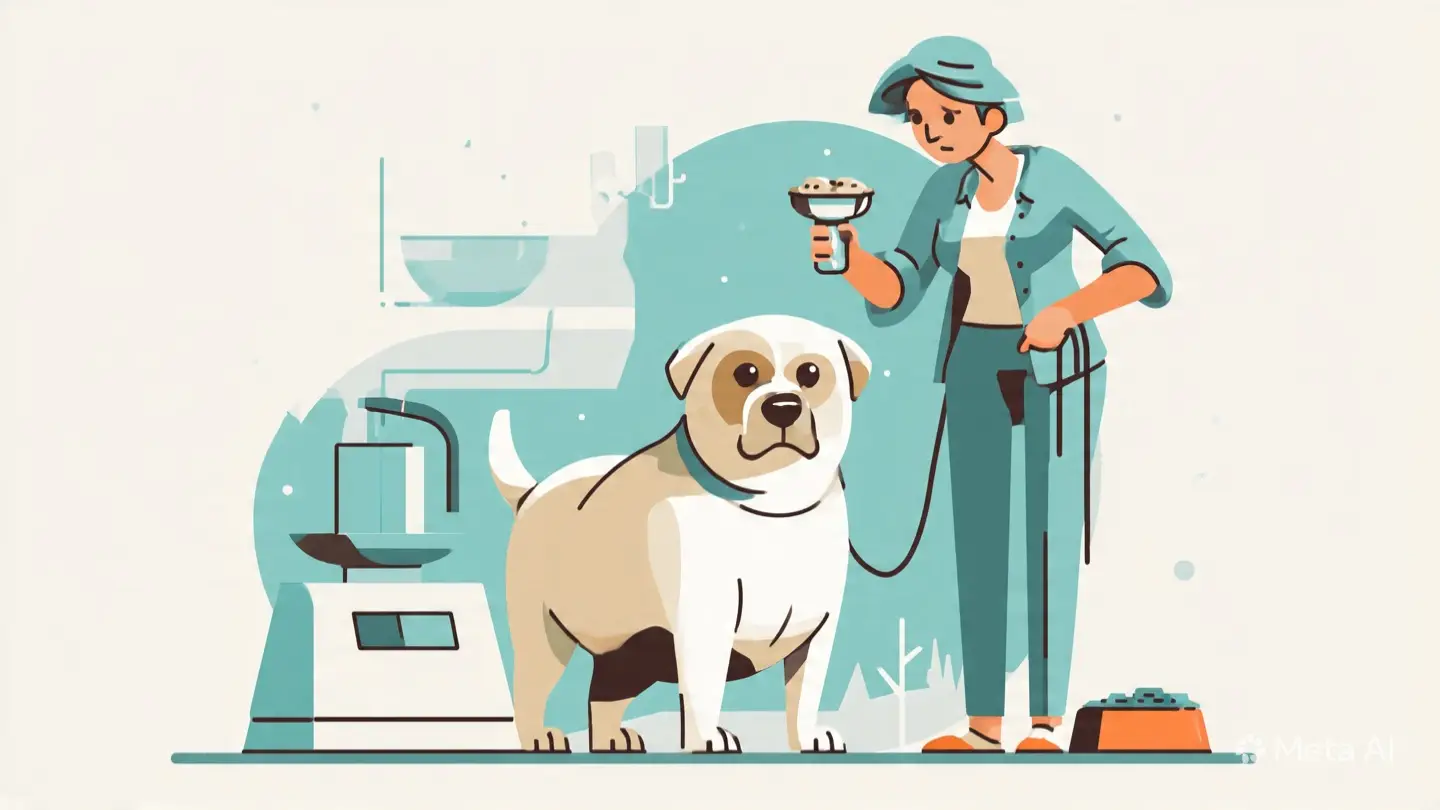
Estimating food portions by eye is unreliable — even experienced owners consistently overestimate. Use a digital kitchen scale to weigh food portions accurately. The difference between an estimated cup and a weighed cup can be 20 to 40% more calories than intended.
Manage Treats
Treats are often the hidden source of significant excess calories. Options for managing treat calories include:
- Using a portion of the daily food allowance as treats rather than giving extras
- Switching to low-calorie treats — raw carrot, cucumber, and plain air-popped popcorn are low-calorie options most dogs enjoy
- Counting every treat as part of the daily caloric allowance
- Eliminating table scraps entirely — human food is calorie-dense and nutritionally imbalanced for dogs
Increase Exercise Gradually
Exercise supports weight loss by burning additional calories and maintaining muscle mass during caloric restriction. However, exercise alone without dietary change is rarely sufficient for significant weight loss in dogs.
For overweight dogs with joint pain or limited mobility, low-impact exercise is important:
- Short, frequent leash walks rather than occasional long walks
- Hydrotherapy or swimming — excellent calorie-burning exercise without joint impact
- Gentle play sessions
- Gradual increases in duration and intensity as fitness improves and weight comes down
Monitor Progress
Weight loss should be monitored regularly — ideally monthly weigh-ins at the veterinary clinic. Target weight loss of 1 to 2% of body weight per week — faster weight loss risks muscle loss and nutritional deficiency.
Adjust the feeding plan based on progress. If weight loss is not occurring after 4 weeks of consistent adherence to the plan, the caloric target needs to be recalculated.
If your dog needs a weight assessment or a personalised weight loss plan, book an appointment at Walker Lake Veterinary Centre. Call (587) 786-6771 or book online. Located at 5109 22 Avenue SW, Southwest Edmonton.
Book an Appointment at Walker Lake Veterinary Centre
Walker Lake Veterinary Centre provides body condition assessment, weight management planning, nutritional counselling, and monitoring for dogs across Walker Lake, Summerside, Ellerslie, Heritage Valley, and Southwest Edmonton.
Call us at (587) 786-6771 or book online. We are located at 5109 22 Avenue SW, Edmonton.
Clinic hours:
- Monday, Tuesday & Thursday: 9:00 AM – 7:00 PM
- Wednesday & Friday: 9:00 AM – 6:00 PM
- Saturday: 9:00 AM – 3:00 PM
- Sunday: Closed
Frequently Asked Questions
How do I know if my dog is overweight?
The most reliable way is body condition scoring — feeling for the ribs, looking for a waist from above, and checking for an abdominal tuck from the side. If you cannot easily feel your dog’s ribs without pressing firmly, if their waist is not visible from above, or if their belly does not tuck upward toward the hindquarters, they are likely overweight. A veterinary body condition assessment provides an objective score and target weight.
How long does it take for a dog to lose weight?
At a safe rate of 1 to 2% of body weight per week, a dog that needs to lose 10% of their body weight will take approximately 5 to 10 weeks. Significant obesity — a dog that is 30 to 40% above ideal weight — may take 6 to 12 months of consistent dietary management to reach a healthy weight. Patience and consistency are essential — sustainable weight loss takes time.
My dog seems hungry all the time on a reduced diet — is this normal?
Yes, particularly in the early weeks of a weight loss programme and in breeds with a genetic predisposition to hunger such as Labrador Retrievers. Switching to a higher-fibre weight management diet helps — fibre increases satiety without adding significant calories. Feeding smaller, more frequent meals rather than one large meal also helps manage hunger.
Can I give my dog vegetables as treats during weight loss?
Yes. Many vegetables are very low in calories and are enjoyed by most dogs. Safe low-calorie options include raw carrot, cucumber, celery, green beans, and broccoli florets. Avoid onions, garlic, grapes, raisins, and avocado — all toxic to dogs. Always introduce new foods gradually and in small amounts.
Is it safe for an arthritic dog to exercise for weight loss?
Yes — with appropriate modifications. Low-impact exercise is essential for arthritic dogs and should form part of their management plan. Short, frequent leash walks on even surfaces, swimming, and hydrotherapy are ideal. Avoid high-impact activities — running, jumping, rough play — that stress painful joints. Your veterinarian can advise on an appropriate exercise programme based on your dog’s individual joint health.