Dental disease is the single most common health condition diagnosed in cats — yet it remains one of the least addressed by owners. Studies consistently show that over 70% of cats over the age of three have some degree of periodontal disease, and the majority show no obvious signs until the disease is significantly advanced. Cats are experts at hiding oral pain, continuing to eat despite significant dental discomfort because the survival instinct to eat overrides the pain signal.
The consequences of untreated dental disease extend far beyond the mouth. Bacteria from infected gum tissue enter the bloodstream and can damage the kidneys, liver, and heart over time. Addressing your cat’s dental health is not merely cosmetic — it is an essential part of protecting their long-term systemic health.
If you have noticed changes in your cat’s eating behaviour, bad breath, or any signs of oral discomfort, contact Walker Lake Veterinary Centre at (587) 786-6771 for a dental assessment.
Most cats with significant dental disease continue to eat — this does not mean they are not in pain. The absence of obvious food refusal is not a reliable indicator of dental health in cats. Only a veterinary oral examination can accurately assess the degree of dental disease present.
Understanding the Feline Mouth
Adult cats have 30 permanent teeth — 12 incisors, 4 canines, 10 premolars, and 4 molars. The teeth are designed for catching prey, tearing meat, and shearing food into swallowable pieces rather than grinding — which is why cats do not chew the way dogs or humans do.
The periodontium — the supporting structures of the teeth — includes the gingiva (gum tissue), periodontal ligament, cementum, and alveolar bone. Periodontal disease affects these supporting structures rather than the tooth surface itself, and is the most common dental condition in cats.
Types of Dental Disease in Cats
Periodontal Disease
The most common dental condition in cats — affecting the gum tissue, periodontal ligament, and alveolar bone. It develops in stages:
Gingivitis — Stage 1
Inflammation of the gingiva caused by bacterial plaque accumulation at the gumline. The gums appear red and swollen. At this stage, the disease is fully reversible with professional cleaning and appropriate home care. No permanent damage has occurred.
Early Periodontitis — Stage 2
Plaque mineralises to form tartar (calculus) and bacteria begin penetrating below the gumline. The periodontal ligament and supporting bone begin to be affected. The gums may bleed when touched. Some permanent damage has occurred but the process is not yet advanced.
Moderate Periodontitis — Stage 3
Significant attachment loss — the gum tissue and bone have receded away from the tooth root. Pockets form between the gum and tooth where bacteria accumulate and cause ongoing destruction. Pain is significant at this stage.
Advanced Periodontitis — Stage 4
Severe destruction of supporting structures — more than 50% of the attachment around the tooth is lost. Teeth become loose, roots may be exposed, and tooth loss is likely. Bacteria have unrestricted access to the bloodstream through the inflamed, compromised gum tissue.
Tooth Resorption — TR
One of the most common and most painful dental conditions in cats — and one that has no equivalent in human dentistry. Tooth resorption involves the progressive destruction of tooth structure — starting at the root surface and progressing toward the crown — by specialised cells called odontoclasts.
The exact cause of tooth resorption is not fully understood. It affects one or more teeth — most commonly the premolars — and is identified in approximately 30 to 60% of cats presented for dental assessment.
Affected teeth are extremely painful. The pulp of the tooth is exposed as resorption progresses, and the nerve endings within are directly stimulated. Cats rarely vocalise their pain — the classic sign is a jaw chattering or facial tremor when the affected tooth is touched, which is observed during examination.
There is no treatment for tooth resorption other than extraction of the affected tooth or teeth. Extraction reliably resolves the pain.
Stomatitis — Feline Chronic Gingivostomatitis
A severe, painful inflammatory condition affecting the gum tissue and extending to the oral mucosa further back in the mouth — the caudal oral mucosa. Stomatitis is believed to involve an abnormal immune response to oral bacteria or to viral infection (particularly feline calicivirus).
Affected cats have severely inflamed, ulcerated, bleeding oral tissue that extends beyond the gums to the cheeks and the back of the throat. The pain is often so severe that cats stop eating entirely, drool, paw at their mouth, and lose significant weight.
Stomatitis is one of the most challenging feline dental conditions to manage. Full mouth extraction — removing all teeth — is the most effective treatment, producing complete or significant improvement in approximately 60 to 80% of cats. The rationale is that removing all tooth surfaces eliminates the bacterial plaque that drives the immune response.
Fractured Teeth
Cats fracture teeth through trauma — falls, accidents, chewing hard objects — or through tooth resorption that weakens the tooth structure. Fractured teeth exposing the pulp are extremely painful and provide a direct route for bacteria to enter the tooth and surrounding bone.
Fractured teeth require extraction or, in some cases, root canal therapy performed by a veterinary dental specialist.
Oral Tumours
Oral tumours are unfortunately common in cats. Squamous cell carcinoma — the most common feline oral tumour — is locally aggressive, spreads to surrounding bone, and carries a poor prognosis. Fibrosarcoma, lymphoma, and other tumour types also occur. Any oral mass, unusual swelling, asymmetry of the face or jaw, or tooth looseness in an older cat should be assessed promptly.
Signs of Dental Disease in Cats
Subtle Early Signs
- Bad breath — the most commonly noticed sign. A normal cat’s breath has a mild odour. Significant halitosis indicates bacterial accumulation and periodontal disease
- Slightly reduced food intake — the cat may eat more slowly or show less enthusiasm for food
- Preference for soft food over hard kibble
- Occasional pawing at the mouth
- Mild facial asymmetry — swelling around one side of the face
More Obvious Signs
- Dropping food from the mouth while eating — indicates pain when chewing
- Chewing only on one side of the mouth
- Reluctance to eat hard food or treats they previously enjoyed
- Visible tartar — yellow, brown, or grey mineral deposits on the tooth surfaces
- Red, swollen, or bleeding gums
- Drooling — particularly if the saliva appears blood-tinged
- Pawing at the face or mouth repeatedly
- Changes in grooming — cats with oral pain may stop grooming their face
- Weight loss — from chronic reduced food intake due to pain
Signs Specific to Severe Disease
- Complete food refusal — too painful to eat at all
- Significant drooling with blood-tinged saliva
- Facial swelling — may indicate tooth root abscess
- Open-mouthed pain response when yawning or being examined
- Jaw chattering or tremor when a specific tooth is touched — classic for tooth resorption
- Loose or missing teeth
⚠️ A cat that stops eating due to oral pain is at risk of hepatic lipidosis within 48 hours. If your cat has visible signs of oral disease and has not eaten, seek veterinary assessment the same day.
How Dental Disease Affects Overall Health
The link between oral health and systemic health in cats is well established.
Kidney Disease
Bacteria from periodontal disease enter the bloodstream through inflamed gum tissue. The kidneys — as blood filtration organs — are exposed to high concentrations of these bacteria. Chronic bacteraemia from dental disease is a recognised contributor to CKD progression in cats.
Heart Disease
Endocarditis — infection of the heart valves — is a recognised complication of severe periodontal disease in both cats and dogs. While less commonly discussed than in human medicine, the potential cardiac consequences of untreated dental disease are real.
Liver Disease
The liver filters bacteria from the portal circulation. Chronic exposure to oral bacteria from periodontal disease contributes to hepatic inflammation in some cats.
Immune System Burden
Chronic infection and inflammation place a continuous burden on the immune system — resources directed at managing chronic oral infection are not available for other immune functions.
Diagnosing Dental Disease
Conscious Oral Examination
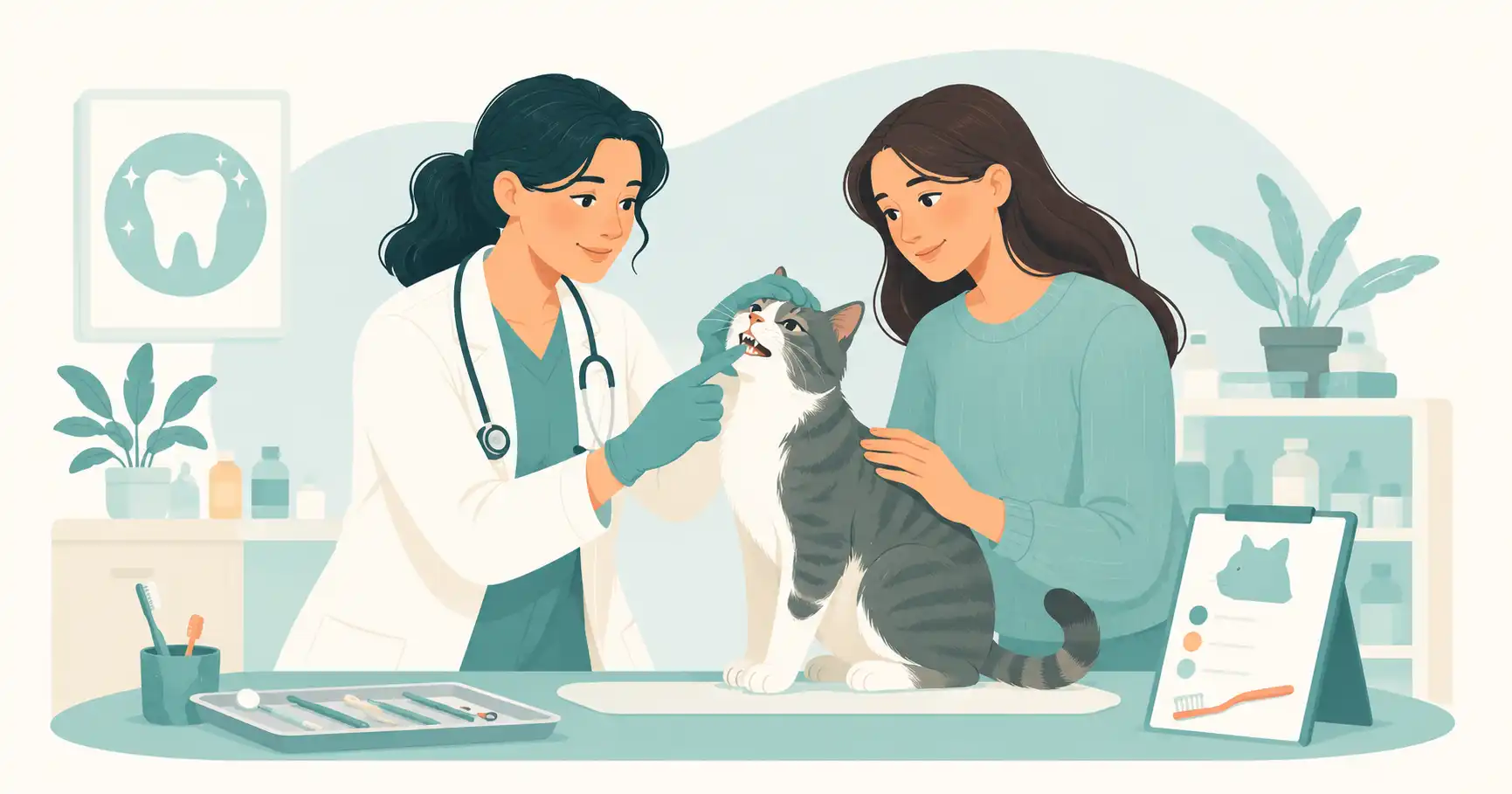
A brief visual inspection of the mouth is possible in most cooperative cats without sedation. This allows assessment of obvious tartar accumulation, gum inflammation, visible tooth fractures or resorption lesions, and any oral masses. However, a conscious examination is incomplete — it cannot assess below the gumline, inside the mouth toward the caudal oral mucosa, or the inner surfaces of the teeth.
Examination Under Anaesthesia
A complete oral health assessment requires general anaesthesia. Under anaesthesia, each tooth is individually examined — probing for pocket depth, assessing root exposure and attachment loss, checking for mobility, and examining all surfaces of every tooth. This is the only way to accurately characterise the degree of dental disease present and make appropriate treatment decisions.
Dental Radiography
Dental X-rays are essential for accurate dental assessment and are standard practice in professional veterinary dental care. Up to 60% of significant dental disease in cats occurs below the gumline and is invisible to visual examination alone.
Dental radiographs reveal:
- Tooth resorption — the degree of root destruction and the type of resorption
- Bone loss around affected teeth — quantifying periodontal disease severity
- Root fractures and root tip abnormalities
- Retained root tips from previously extracted teeth
- Periapical abscesses — infection at the root tip
- Unerupted teeth
Treatment
Professional Dental Cleaning — Scale and Polish
The foundation of dental treatment. Performed under general anaesthesia with full dental radiography. The procedure involves:
- Removal of all supragingival calculus — tartar above the gumline — using ultrasonic scalers and hand instruments
- Subgingival scaling — removal of calculus and plaque from below the gumline
- Root planing — smoothing the root surface to reduce bacterial adhesion
- Polishing — smoothing the tooth enamel to reduce future plaque accumulation
- Irrigation of periodontal pockets
- Full dental radiographic assessment
A professional clean does not simply remove visible tartar — it addresses the bacterial accumulation below the gumline where periodontal disease actually develops.
Extractions
Teeth that are non-salvageable — through advanced periodontal disease, tooth resorption, fracture, or severe mobility — are extracted. Feline dental extractions are technically demanding. The teeth have long, curved roots and the bone surrounding them is fragile. Appropriate surgical technique, including sectioning multi-rooted teeth and using dental radiographs to confirm complete root removal, is essential.
Well-performed extractions dramatically reduce oral pain. Many cats that have been struggling to eat for months — due to severe periodontal disease or tooth resorption — eat with noticeably greater enthusiasm within days of appropriate dental treatment.
Treatment of Stomatitis
Stomatitis management typically involves:
- Initial medical management — immunosuppressive medication, pain relief, anti-nausea medication — to stabilise the cat and improve nutritional intake
- Full mouth extraction — the most effective treatment. Removing all teeth eliminates the bacterial plaque surfaces that drive the abnormal immune response. The majority of cats improve significantly after full mouth extraction
- Long-term monitoring — some cats require ongoing medication even after full mouth extraction if the response is incomplete
Home Dental Care for Cats
Tooth Brushing
Daily tooth brushing is the gold standard for home dental care — the most effective method for removing plaque before it mineralises to tartar. Use a cat-specific toothbrush or a finger brush and veterinary toothpaste — never human toothpaste, which contains fluoride and xylitol that are toxic to cats.
Introducing tooth brushing requires patience. Begin by allowing the cat to lick toothpaste from your finger, then progress to touching the teeth with a finger, then the brush. Some cats accept brushing readily — particularly when started young — while others never fully tolerate it.
Dental Diets and Treats
Certain veterinary dental diets and treats carry the Veterinary Oral Health Council (VOHC) seal — awarded to products with clinical evidence of plaque and tartar reduction. These are a reasonable alternative or adjunct when tooth brushing is not achievable.
Dental diets work through a specific kibble texture that mechanically disrupts plaque as the cat chews — they must be chewed to be effective and are not beneficial for cats that swallow food whole.
Water Additives and Gels
Veterinary-recommended water additives contain antimicrobial agents that reduce bacterial load in the mouth. They are less effective than brushing but require no active participation from the cat beyond drinking normally.
Realistic Expectations
Home dental care slows the progression of dental disease — it cannot reverse established periodontal disease or replace professional dental cleaning. The most realistic approach is:
- Professional cleaning to establish a healthy baseline
- Home care — brushing where possible, dental diet or VOHC treats as alternatives
- Regular reassessment — typically every 6 to 12 months — to monitor plaque and tartar accumulation and repeat cleaning as needed
If your cat is overdue for a dental check, book an appointment at Walker Lake Veterinary Centre. Call (587) 786-6771 or book online. Located at 5109 22 Avenue SW, Southwest Edmonton.
Book an Appointment at Walker Lake Veterinary Centre
Walker Lake Veterinary Centre provides oral examination, professional dental cleaning under anaesthesia, dental radiography, extractions, and home care guidance for cats across Walker Lake, Summerside, Ellerslie, Heritage Valley, and Southwest Edmonton.
Call us at (587) 786-6771 or book online. We are located at 5109 22 Avenue SW, Edmonton.
Clinic hours:
- Monday, Tuesday & Thursday: 9:00 AM – 7:00 PM
- Wednesday & Friday: 9:00 AM – 6:00 PM
- Saturday: 9:00 AM – 3:00 PM
- Sunday: Closed
Frequently Asked Questions
How often does my cat need a professional dental cleaning?
Most cats benefit from a professional dental cleaning every 1 to 2 years. Cats prone to rapid tartar accumulation — particularly small breeds, cats with crowded teeth, and those with a history of dental disease — may need annual or more frequent cleaning. The interval is determined by monitoring at each wellness examination.
Is dental anaesthesia safe for older cats?
Yes, in the majority of cases. Pre-anaesthetic bloodwork assesses organ function and identifies conditions that affect anaesthetic risk. Modern anaesthetic protocols with appropriate monitoring are very safe for healthy older cats. The risk of untreated dental disease — systemic bacteraemia, chronic pain, weight loss — typically outweighs the anaesthetic risk in a well-assessed patient. Your veterinarian will discuss the risk-benefit balance for your individual cat.
My cat is eating fine — does it really need a dental check?
Yes. As discussed throughout this article, the majority of cats with significant dental disease continue to eat. Eating despite dental pain does not mean the pain is absent — it means the drive to eat overrides it. A dental examination is the only way to accurately assess oral health. Dental disease found and treated early is significantly less painful for the cat and less costly to treat than advanced disease.
What is tooth resorption and can it be prevented?
Tooth resorption is a progressive destruction of tooth structure by the cat’s own cells. Its cause is not fully understood and there is currently no known prevention. Regular dental examinations and radiographs allow early identification of affected teeth, and prompt extraction prevents ongoing pain from a tooth that will ultimately be lost regardless.
How will I know if my cat is in dental pain?
Most cats hide dental pain very effectively. Signs to watch for include reduced appetite, preference for soft food, slow eating, dropping food, pawing at the face, drooling, changes in grooming, bad breath, and facial swelling. However, many cats in significant dental pain show none of these signs. Annual oral examinations are the most reliable way to detect dental disease before pain becomes severe.