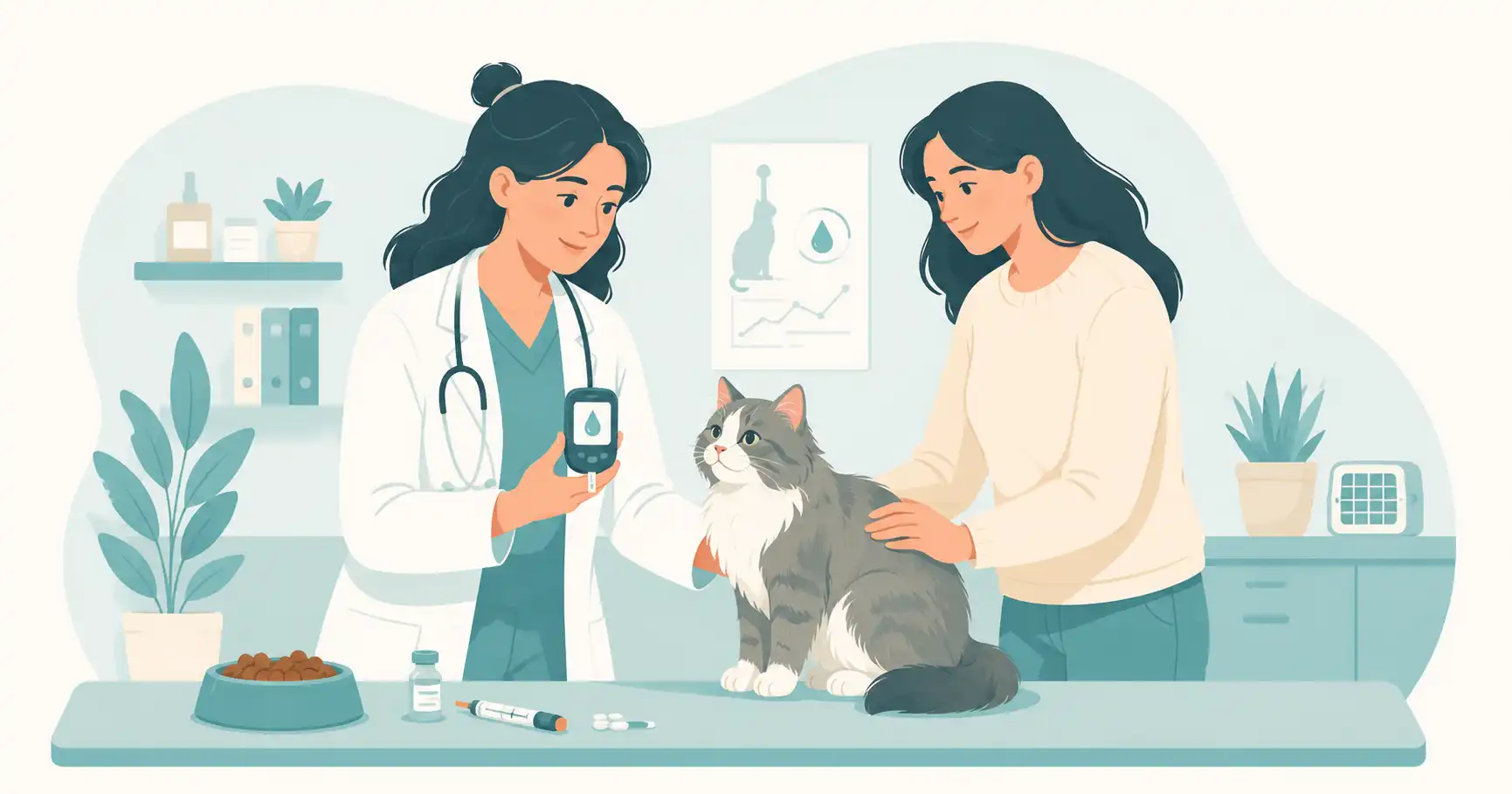
Diabetes mellitus is one of the most common endocrine disorders in cats — and its prevalence has increased significantly over recent decades, paralleling the rise in feline obesity. While a diabetes diagnosis can initially feel overwhelming, the condition is highly manageable. Many diabetic cats live comfortably for years with appropriate treatment, and a meaningful proportion achieve diabetic remission — their insulin requirement disappearing entirely with the right management.
Understanding diabetes, what treatment involves, and what to expect helps owners provide the consistent care that diabetic cats need. If your cat has been drinking excessively, urinating large volumes, losing weight despite eating well, or showing hind limb weakness, contact Walker Lake Veterinary Centre at (587) 786-6771 for an assessment.
Feline diabetes is not a death sentence — it is a manageable chronic condition. With appropriate treatment, most diabetic cats maintain good quality of life. Early diagnosis and aggressive initial management gives the best chance of achieving diabetic remission.
What Is Diabetes Mellitus in Cats?
Diabetes mellitus is a condition characterised by persistently elevated blood glucose — hyperglycaemia — caused by either insufficient insulin production, inadequate insulin response by body cells, or both.
Insulin is a hormone produced by the beta cells of the pancreas. Its primary function is to allow glucose to enter cells — without insulin, cells cannot access glucose for energy despite high circulating levels in the blood. The body responds by producing more glucose through gluconeogenesis and mobilising fat stores, causing weight loss and the characteristic signs of diabetes.
Types of Feline Diabetes
Type 1 Diabetes — Insulin Deficiency
True type 1 diabetes — where the immune system destroys insulin-producing beta cells — is relatively uncommon in cats. Complete destruction of beta cell function requires lifelong insulin therapy with no possibility of remission.
Type 2 Diabetes — Insulin Resistance
The most common form of diabetes in cats — closely resembling type 2 diabetes in humans. Beta cells initially function normally but body cells become resistant to insulin’s effects — requiring progressively more insulin to maintain normal blood glucose. Over time, the beta cells become exhausted from overproduction and function declines.
Crucially, type 2 diabetes in cats is often reversible — if insulin resistance is reduced and beta cell stress is relieved early enough, remaining beta cell function can recover. This is the basis of diabetic remission.
Secondary Diabetes
Diabetes caused by another condition that impairs insulin production or action:
- Hypersomatotropism (acromegaly) — a pituitary tumour producing excess growth hormone. One of the most common causes of difficult-to-control diabetes in cats — the excess growth hormone creates profound insulin resistance
- Hyperadrenocorticism (Cushing’s disease) — rare in cats but causes significant insulin resistance
- Pancreatitis — chronic pancreatic inflammation can destroy beta cells
- Long-term corticosteroid use — steroids cause insulin resistance
Risk Factors for Feline Diabetes
Obesity
The single most significant modifiable risk factor. Excess body fat produces adipokines — hormones that reduce insulin sensitivity. Obese cats are 4 times more likely to develop diabetes than lean cats. Weight loss significantly reduces insulin resistance and is a cornerstone of diabetes management and prevention.
Physical Inactivity
Muscle is a major site of glucose utilisation. Inactive cats — which describes most indoor domestic cats — have reduced muscle mass and reduced glucose disposal capacity, contributing to insulin resistance.
Sex and Neutering
Male cats are approximately twice as likely to develop diabetes as females. Neutered cats of both sexes are at higher risk than intact cats — neutering reduces metabolic rate and increases the risk of obesity.
Age
Risk increases substantially with age — most diabetic cats are middle-aged to older, between 8 and 13 years. The progressive decline in beta cell function with age combined with increasing insulin resistance makes older cats more vulnerable.
Diet
High-carbohydrate diets — typical of many commercial dry cat foods — produce repeated postprandial glucose spikes that chronically stimulate insulin production and contribute to beta cell exhaustion. Cats evolved as obligate carnivores with minimal dietary carbohydrate — their metabolism is poorly adapted to high carbohydrate loads.
Breed Predisposition
Burmese cats have a significantly higher prevalence of diabetes than other breeds — particularly in Australia and the United Kingdom. This breed predisposition suggests a genetic component to beta cell vulnerability. Other breeds do not show strong predisposition.
Signs and Symptoms of Feline Diabetes
The Classic Four Signs
The classic signs of diabetes — the four Ps — are a useful starting framework:
- Polydipsia — excessive thirst, drinking noticeably more water than normal
- Polyuria — excessive urination, producing large volumes of dilute urine
- Polyphagia — increased appetite, often dramatically increased
- Weight loss despite polyphagia — the cat eats more but loses weight because cells cannot utilise glucose
Additional Signs
- Poor, unkempt coat condition — from the metabolic effects of uncontrolled diabetes
- Lethargy and reduced activity — cells cannot access energy despite high blood glucose
- Vomiting — from gastrointestinal effects of hyperglycaemia
- Muscle wasting — catabolism of muscle protein as an alternative energy source
- Dehydration — despite increased drinking, glucose in the urine draws water out osmotically
Diabetic Neuropathy — Hind Limb Weakness
A distinctive and important sign of poorly controlled or longstanding diabetes in cats. The nerves supplying the hind limbs are damaged by chronic hyperglycaemia, causing progressive weakness and an abnormal gait.
The classic presentation is a plantigrade stance — the cat walks with the hocks touching the ground rather than walking on their toes normally. The hind limbs appear weak and the cat has difficulty jumping or climbing. Diabetic neuropathy is painful and significantly impacts quality of life.
With successful blood glucose control, diabetic neuropathy often improves or fully resolves over months — one of the most rewarding responses to successful diabetes management.
Diabetic Ketoacidosis — DKA
A serious complication of severe uncontrolled diabetes. When cells are unable to use glucose for energy, the body breaks down fat to produce ketones as an alternative fuel. Excessive ketone production causes the blood to become acidic — ketoacidosis.
DKA is a medical emergency. Signs include:
- Severe lethargy and weakness
- Complete anorexia
- Vomiting
- Dehydration
- A sweet or acetone-like odour to the breath
- Rapid, laboured breathing
- Collapse
⚠️ A diabetic cat showing severe lethargy, vomiting, and complete food refusal may be in diabetic ketoacidosis — a life-threatening emergency. Call (587) 786-6771 immediately and go directly to the clinic.
Diagnosing Feline Diabetes
Blood Glucose Measurement
A single elevated blood glucose reading is not sufficient to diagnose diabetes in cats. Cats are uniquely prone to stress hyperglycaemia — blood glucose can rise dramatically in response to the stress of a veterinary visit, producing values that mimic diabetes in a non-diabetic cat.
A single blood glucose measurement in a cat in the veterinary clinic must be interpreted with caution. Values above 20 mmol/L (360 mg/dL) are more likely to indicate true diabetes than stress hyperglycaemia, but even high values require additional confirmation.
Fructosamine
Fructosamine — glycated serum protein — reflects average blood glucose over the preceding 2 to 3 weeks and is not affected by acute stress. An elevated fructosamine in a cat with clinical signs confirms diabetes and distinguishes it from stress hyperglycaemia. Fructosamine is the most reliable single diagnostic test for confirming diabetes in cats.
Urine Glucose — Glucosuria
Glucose is not normally present in urine. When blood glucose exceeds the renal threshold — approximately 14 mmol/L in cats — glucose spills into the urine. Persistent glucosuria on urinalysis supports diabetes. However, acute stress can also cause transient glucosuria, so this finding alone is not diagnostic.
Urine Ketones
The presence of ketones in urine indicates fat breakdown and suggests either very poorly controlled diabetes or diabetic ketoacidosis. Urine ketone testing is an important part of monitoring at home once a cat is diagnosed.
Complete Assessment
Before initiating treatment, a complete baseline assessment establishes the severity of disease and identifies concurrent conditions that affect management:
- Complete blood count and biochemistry panel — liver and kidney function, electrolytes, signs of infection or inflammation
- Urinalysis and urine culture — UTIs are common in diabetic cats due to glucose-rich urine
- Fructosamine
- Blood pressure — hypertension is common
- Pancreatic lipase — to assess for concurrent pancreatitis
- IGF-1 measurement — to screen for acromegaly in difficult-to-control cases
Treating Feline Diabetes
Insulin Therapy
Insulin is the cornerstone of diabetes treatment in cats. Most diabetic cats require twice-daily insulin injections to maintain acceptable blood glucose control.
Types of Insulin Used in Cats
Glargine — Lantus
The most commonly recommended insulin for cats because of its long duration of action, smooth activity profile, and strong association with achieving diabetic remission. Glargine is a long-acting basal insulin administered twice daily in cats — typically at 12-hour intervals corresponding to meal times.
Protamine Zinc Insulin — PZI
Another long-acting insulin formulation used in cats. Sold as ProZinc, it is specifically licensed for use in cats in some countries and performs comparably to glargine.
Detemir — Levemir
An alternative long-acting insulin used in some diabetic cats that do not respond adequately to glargine. Typically used at lower doses than in dogs.
Starting Insulin
Initial insulin dosing is conservative — typically 0.25 to 0.5 units per kg twice daily for glargine. Underdosing is safer than overdosing — hypoglycaemia (low blood sugar) is the most immediately dangerous complication of insulin treatment.
Dose adjustments are made based on blood glucose monitoring — either through periodic clinical measurements or home monitoring.
Giving Insulin at Home
Most owners learn to administer insulin injections at home with appropriate training. The injection is given subcutaneously — into the loose skin over the scruff or flank — using a small insulin syringe with a fine needle. Most cats tolerate injections very well, particularly when they are given at the same time as an appetising meal.
Practical considerations:
- Store insulin correctly — refrigerated, not frozen, protected from light
- Use a new needle for each injection
- Give injections at consistent 12-hour intervals
- Always give insulin after the cat has eaten — never inject if the cat has not eaten
- Never double a missed dose — skip and resume the next scheduled injection
- Dispose of needles in an appropriate sharps container
Recognising Hypoglycaemia
Hypoglycaemia — low blood sugar from too much insulin — is the most immediately dangerous complication and every diabetic cat owner must be able to recognise it:
- Weakness, wobbling, or staggering
- Disorientation or confusion
- Seizures
- Collapse or loss of consciousness
- Unusual behaviour — hiding, vocalising, apparent distress
Emergency response to hypoglycaemia:
If your cat shows these signs and you can administer glucose — rub corn syrup or honey on the gums — do so immediately and then contact the veterinary clinic. Do not give insulin. If the cat is unconscious, do not put anything in the mouth — go directly to the clinic.
Dietary Management
High-Protein, Low-Carbohydrate Diet
Diet is as important as insulin in managing feline diabetes. A high-protein, low-carbohydrate diet — mimicking the natural carnivore diet cats evolved eating — reduces postprandial glucose spikes, reduces insulin requirements, and significantly improves the chance of achieving remission.
The target is a diet providing less than 10% of calories from carbohydrate — ideally less than 5%. Most wet cat foods meet this criterion. Most dry cat foods do not — they typically provide 30 to 50% of calories from carbohydrate and are inappropriate for diabetic cats.
Wet Food as the Primary Diet
Transitioning a diabetic cat to an exclusively wet food diet is strongly recommended. In addition to the carbohydrate reduction, the higher moisture content of wet food improves hydration and urinary health — particularly important in diabetic cats prone to UTIs.
Consistent Meal Timing
Insulin administration should coincide with meals — this matches the glucose absorption from food with the peak insulin activity. Feeding twice daily at 12-hour intervals coordinated with insulin injections is the standard approach.
Free-choice feeding — leaving food available at all times — makes glucose regulation significantly more difficult and is not recommended for diabetic cats.
Weight Management
Achieving and maintaining a healthy body weight is one of the most impactful interventions in feline diabetes management. Weight loss reduces insulin resistance, lowers insulin requirements, and significantly improves the probability of remission.
Weight loss must be gradual — rapid weight loss risks hepatic lipidosis. A target of 1 to 2% body weight per week is safe and sustainable.
Blood Glucose Monitoring
Regular blood glucose monitoring is essential for appropriate dose adjustment and early identification of hypoglycaemia or poor control.
In-Clinic Glucose Curves
Serial blood glucose measurements taken every 1 to 2 hours over 10 to 12 hours at the clinic provide a comprehensive picture of glucose excursion throughout the day. Stress hyperglycaemia in the clinic can distort results but glucose curves remain valuable for initial dose establishment and periodic assessment.
Home Glucose Monitoring
Home monitoring eliminates stress hyperglycaemia and provides more accurate results. Blood can be obtained from the ear flap — a small lancet applied to the margin of the ear produces a drop of blood measurable with a standard human glucometer. Many cat owners become proficient at home monitoring and provide more useful data than periodic clinic curves.
Continuous Glucose Monitoring
Continuous glucose monitoring devices — such as the FreeStyle Libre — can be applied to a shaved area of the cat’s skin to provide continuous blood glucose readings over 10 to 14 days without repeated blood sampling. These devices have transformed glucose monitoring in diabetic cats and are increasingly used in veterinary practice.
Diabetic Remission
One of the most remarkable aspects of feline diabetes — and one that distinguishes it from human type 2 diabetes — is the genuine possibility of remission. Remission occurs when the cat’s own insulin production recovers sufficiently to maintain normal blood glucose without exogenous insulin.
Who Achieves Remission?
Remission rates vary between studies but approximately 50 to 70% of diabetic cats achieve remission with optimal management — aggressive early insulin therapy with glargine combined with a strict low-carbohydrate diet and weight loss. The probability of remission is highest when:
- Treatment is initiated early — before beta cell exhaustion is complete
- Glargine or PZI insulin is used — their smooth action profile supports beta cell recovery
- A strict low-carbohydrate diet is fed
- Concurrent conditions — hypersomatotropism, pancreatitis — are identified and managed
- Body weight is reduced to lean condition
Signs of Remission
- The cat develops hypoglycaemic signs at the previously stable insulin dose
- Blood glucose measurements fall below the normal range
- The cat begins refusing food before insulin is due
- Water intake decreases significantly
When these signs appear, the insulin dose is reduced or suspended and blood glucose is monitored closely. If blood glucose remains normal without insulin — typically assessed over 2 to 4 weeks — the cat is in remission.
Monitoring After Remission
Cats in remission require ongoing monitoring — blood glucose or fructosamine every 3 to 6 months — as relapse can occur, particularly after stressful events, illness, or weight gain. Owners should be aware of the signs that insulin may be required again.
If your cat is showing signs of diabetes, book an assessment at Walker Lake Veterinary Centre. Call (587) 786-6771 or book online. Located at 5109 22 Avenue SW, Southwest Edmonton.
Book an Appointment at Walker Lake Veterinary Centre
Walker Lake Veterinary Centre provides diabetes diagnosis, insulin management, dietary guidance, glucose monitoring support, and long-term care for diabetic cats across Walker Lake, Summerside, Ellerslie, Heritage Valley, and Southwest Edmonton.
Call us at (587) 786-6771 or book online. We are located at 5109 22 Avenue SW, Edmonton.
Clinic hours:
- Monday, Tuesday & Thursday: 9:00 AM – 7:00 PM
- Wednesday & Friday: 9:00 AM – 6:00 PM
- Saturday: 9:00 AM – 3:00 PM
- Sunday: Closed
Frequently Asked Questions
How do I know if my cat is hypoglycaemic?
Signs of hypoglycaemia include sudden weakness or wobbling, disorientation, unusual behaviour, seizures, and collapse. If you observe these signs in your diabetic cat, rub a small amount of corn syrup or honey on the gums immediately and contact your veterinarian. Never give insulin to a cat showing hypoglycaemic signs. If unconscious, go directly to the clinic without attempting to give anything by mouth.
Can my cat’s diabetes be cured?
True cure is not achievable — the underlying predisposition to insulin resistance remains. However, diabetic remission — where the cat no longer requires insulin to maintain normal blood glucose — is achievable in 50 to 70% of cats with optimal management. Remission is most likely with early treatment, glargine insulin, strict low-carbohydrate diet, and weight loss. Cats in remission require ongoing monitoring and may relapse.
My cat won’t eat before an insulin injection — what should I do?
Never give insulin to a cat that has not eaten. A cat that refuses food before an insulin injection may be nauseous, unwell, or approaching hypoglycaemia. Withhold the insulin, offer a highly palatable food, and monitor the cat closely. If the cat is showing any signs of illness or hypoglycaemia, contact your veterinarian. Consistent food refusal before injections should be discussed at the next veterinary appointment.
How much does managing a diabetic cat cost?
The ongoing cost of feline diabetes management includes insulin, syringes or pen needles, glucose monitoring supplies, and regular veterinary monitoring appointments. The initial cost is higher due to diagnosis and establishing the management plan. Pet insurance that covers chronic conditions can significantly offset costs. Discuss the financial aspects of management with your veterinarian — there are options at different price points.
My diabetic cat seems to be getting worse despite insulin — why?
Several conditions can make diabetes difficult to control despite appropriate insulin therapy — most commonly hypersomatotropism (acromegaly), which causes profound insulin resistance. Other causes include concurrent infection, pancreatitis, dental disease, and inappropriate diet. A diabetic cat requiring progressively higher insulin doses without improvement in blood glucose control should be investigated for these underlying causes. IGF-1 testing for acromegaly is an important first step in cats with difficult-to-control diabetes.