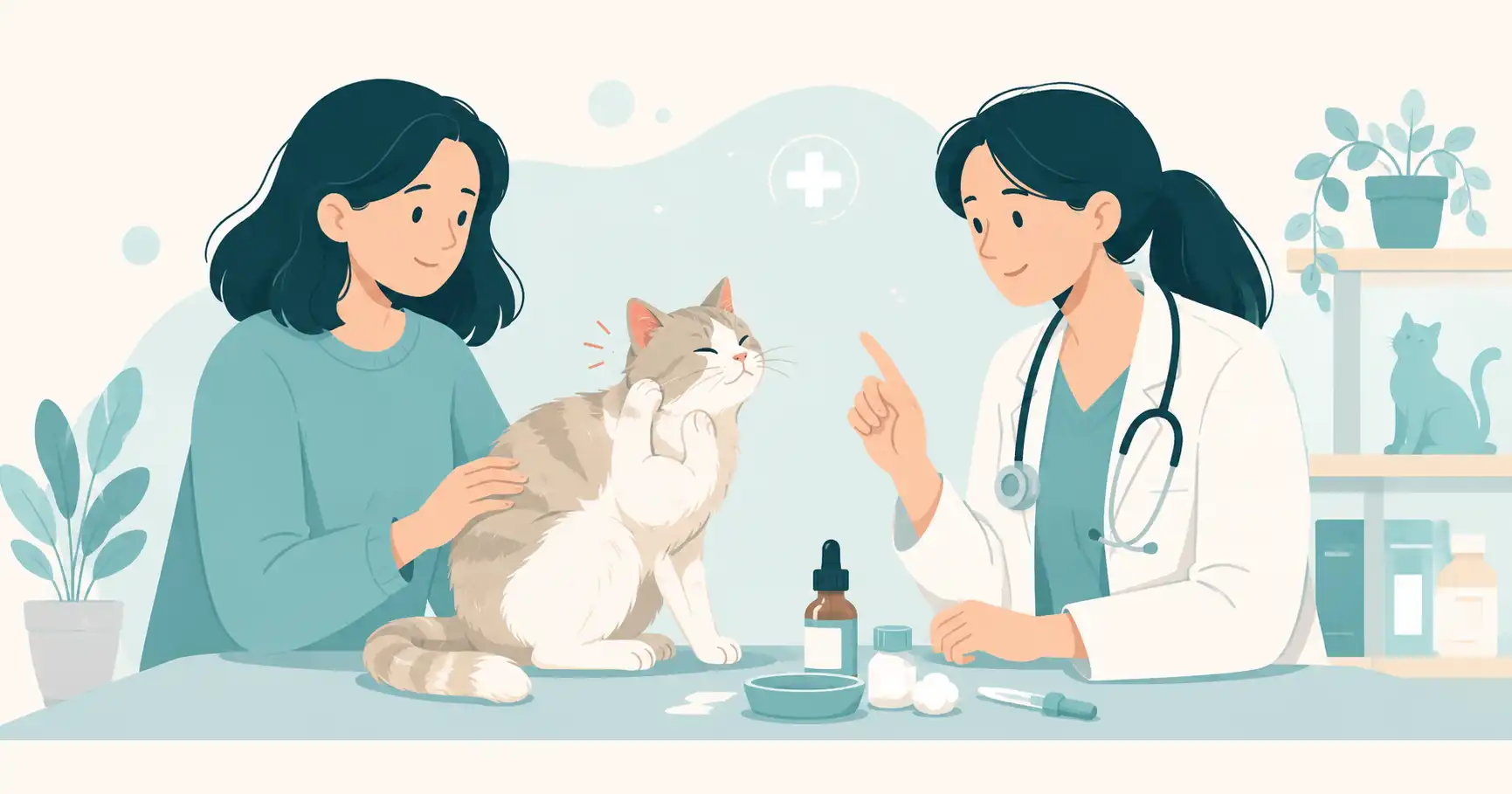
Allergies in cats are far more common than many owners realise — and far more varied in their presentation than the human experience of allergies might suggest. While a person with allergies typically sneezes and develops watery eyes, an allergic cat is most likely to scratch, over-groom, develop skin lesions, or have recurrent ear infections. The respiratory signs so characteristic of human allergies are less prominent in cats, making feline allergy a frequently missed or misidentified diagnosis.
If your cat has been scratching persistently, losing hair, developing skin lesions, or having recurrent ear or skin infections, contact Walker Lake Veterinary Centre at (587) 786-6771 for an assessment.
Allergies in cats are a lifelong condition — they are not cured, but they are highly manageable with accurate diagnosis and appropriate treatment. The most important step is identifying the specific type of allergy involved, as each type requires a different management approach.
How Allergies Develop in Cats
An allergy is an abnormal immune response to a substance that is otherwise harmless — called an allergen. In an allergic cat, the immune system incorrectly identifies a benign substance — a pollen particle, a protein in food, or a flea saliva protein — as a threat and mounts an inflammatory response against it.
This inflammatory response primarily manifests in the skin in cats — causing itching, hair loss, and skin damage — and sometimes in the respiratory tract and gastrointestinal system. The inflammation also disrupts the normal skin barrier, allowing bacteria and yeast to colonise the damaged skin surface and cause secondary infections that compound the original allergy signs.
Types of Cat Allergies
Flea Allergy Dermatitis — FAD
The most common allergy in cats. Flea allergy dermatitis is not an allergy to the flea itself but to specific proteins in flea saliva injected at the time of a bite. In a flea-allergic cat, a single flea bite triggers intense, prolonged itching — far beyond what non-allergic cats experience from the same bite.
The classic distribution of flea allergy dermatitis in cats is the lower back, base of the tail, inner thighs, and abdomen. The cat over-grooms these areas obsessively, producing hair loss, skin trauma, and secondary infection.
Importantly, fleas may not be visible on an allergic cat — the cat’s intensive grooming removes fleas before they can be found. The absence of visible fleas does not rule out flea allergy. Year-round flea prevention is the cornerstone of management.
Environmental Allergies — Atopic Dermatitis
Environmental allergies in cats — also called feline atopic syndrome — involve an immune reaction to inhaled or contact environmental allergens including:
- House dust mites — among the most common feline allergens, present year-round
- Pollens — tree, grass, and weed pollens cause seasonal exacerbations
- Mould spores
- Dander from other animals
- Certain fabrics, cleaning products, or materials the cat contacts
Environmental allergies typically develop between 6 months and 3 years of age. They are lifelong — signs may be seasonal in pollen-allergic cats or year-round in dust mite allergic cats.
Food Allergies
A true food allergy is an immune response to a specific protein in the diet. The most commonly implicated proteins in feline food allergies are:
- Beef
- Fish — despite being a popular cat food ingredient, fish is one of the most common feline food allergens
- Chicken
- Dairy
- Lamb
- Wheat
Food allergies in cats cause skin signs — itching, hair loss, miliary dermatitis — and sometimes gastrointestinal signs including vomiting and diarrhoea. Unlike environmental allergies, food allergy signs are not seasonal — they are consistent year-round.
A cat can develop a food allergy to a protein they have eaten safely for years. Allergies develop through repeated exposure — the immune system sensitises over time.
Fish-based cat foods are frequently marketed as hypoallergenic or natural options. In reality, fish is one of the most common cat food allergens. A cat with a suspected food allergy should avoid fish-based diets during the elimination diet trial.
Contact Allergies
Less common than other allergy types. Contact allergies develop when the skin reacts to direct physical contact with a specific substance — certain cleaning products, fabrics, rubber, plastic, or plant materials. Signs are localised to the areas of skin that contact the offending material — often the paws, chin, or belly.
How Cat Allergies Manifest
Unlike dogs — where itching of the paws, ears, and belly is the classic presentation — allergic cats show a distinctive set of reaction patterns that are somewhat unique to the species.
Miliary Dermatitis
One of the most characteristic presentations of allergy in cats. Small, crusted, millet seed-like papules develop across the skin — most commonly over the back, neck, and base of the tail. The cat may not appear to be scratching excessively — the lesions are found on examination by running fingers through the coat and feeling the small, rough crusts.
Miliary dermatitis is not a specific diagnosis — it is a reaction pattern that can be caused by flea allergy, food allergy, environmental allergy, or mites.
Symmetrical Alopecia — Over-Grooming
Allergic cats frequently over-groom as a response to itching — licking and barbering their coat obsessively until significant hair loss develops. The hair loss is typically bilaterally symmetrical — affecting the belly, inner thighs, flanks, and lower back in symmetrical patterns.
The hair is not actually falling out — it is being removed by the cat’s rough tongue. This can be confirmed by examining shed hairs under a microscope — broken hair shafts indicate barbering rather than true hair loss from the follicle.
Many owners do not observe the over-grooming — cats often groom at night or when alone. The first sign noticed is the symmetrical hair loss rather than the grooming behaviour itself.
Eosinophilic Granuloma Complex
A group of skin lesions unique to cats that can be caused by allergies — most commonly flea allergy and food allergy — and occasionally by other triggers.
Eosinophilic Plaque
Well-defined, raised, moist, intensely pruritic lesions — most commonly on the abdomen and inner thighs. The cat licks them obsessively. They are red, ulcerated, and clearly demarcated from surrounding skin.
Eosinophilic Granuloma
Linear, raised, yellowish lesions most commonly found on the caudal thighs — the classic “linear granuloma” or “racing stripe.” Less pruritic than plaques. Also occurs on the lips and in the oral cavity.
Indolent Ulcer — Rodent Ulcer
A well-defined, painless ulceration affecting the upper lip — typically at one or both sides of the midline. Despite the dramatic appearance, indolent ulcers are not painful. They are associated with allergy in many cases.
Head and Neck Pruritus
Intense scratching of the head and neck — often causing self-inflicted wounds around the ears, face, and neck — is a common presentation of food allergy in cats. The scratching is typically severe — cats may cause significant skin trauma and secondary infection.
Recurrent Ear Infections
Allergies — particularly environmental allergies and food allergies — cause inflammation of the ear canal lining, predisposing to recurrent yeast and bacterial ear infections. A cat with more than two ear infections per year should be investigated for underlying allergy.
Respiratory Signs
Unlike dogs and humans, cats can develop allergic respiratory disease — feline asthma. Allergen inhalation triggers bronchospasm — sudden constriction of the airways — causing coughing, wheezing, and in severe cases respiratory distress. Feline asthma is a separate but related condition to skin allergy and requires specific diagnosis and management.
Diagnosing Cat Allergies
Ruling Out Other Causes First
Before investigating allergy, other common causes of itching must be excluded — particularly parasites. A thorough examination for fleas, flea dirt, and other ectoparasites is essential. Skin scrapings rule out mites. Fungal culture rules out ringworm.
Strict Flea Control Trial
Regardless of whether fleas are found, a strict flea control trial — treating all pets in the household with a veterinary-recommended product for a minimum of 8 to 12 weeks — is the first diagnostic step in any itchy cat. If signs resolve with strict flea control, flea allergy is confirmed.
Elimination Diet Trial
The only reliable way to diagnose a food allergy. A strict elimination diet using either:
- A hydrolysed protein diet — where proteins are broken down into fragments too small to trigger an immune response
- A novel protein diet — a protein source the cat has never eaten before
The trial must be conducted for a minimum of 8 to 12 weeks. During this period, the cat must eat absolutely nothing other than the trial food — no treats, flavoured medications, access to other pets’ food, or outdoor hunting.
If signs improve significantly during the trial and return when the original diet is reintroduced, food allergy is confirmed. The reintroduction challenge — deliberately reintroducing the original diet — is an important confirmatory step.
⚠️ Over-the-counter limited ingredient or grain-free diets are not appropriate for elimination diet trials. They frequently contain multiple protein sources and are often manufactured on shared equipment with allergenic ingredients. Only veterinary prescription hydrolysed or novel protein diets provide the purity required for a valid trial.
Intradermal and Serum Allergy Testing
For confirmed environmental allergy, allergy testing identifies the specific allergens responsible. This information is used to formulate allergen-specific immunotherapy — the most targeted long-term treatment for environmental allergies.
Intradermal testing — injecting small amounts of individual allergens into the skin and measuring the reaction — is considered the gold standard. Serum allergy testing — measuring allergen-specific antibodies in blood — is an alternative that does not require sedation.
Treating Cat Allergies
Flea Allergy — Year-Round Flea Prevention
The cornerstone of flea allergy management. A veterinary-recommended flea prevention product applied monthly to all cats and dogs in the household — regardless of whether fleas are found — eliminates flea exposure and prevents allergic reactions.
Indoor-only cats are not exempt — fleas can be carried indoors on clothing, shoes, and visiting animals. Year-round treatment is more effective than seasonal application.
Food Allergy — Permanent Dietary Elimination
Once the offending protein is identified through the elimination diet trial, permanent elimination of that protein from the diet resolves the allergy. The cat must never be fed that protein again — lifelong dietary management is required.
Environmental Allergy — Allergen Avoidance
Reducing exposure to identified allergens where possible:
- Wash bedding weekly at 60°C to reduce dust mite burden
- Use HEPA air purifiers in rooms the cat frequents
- Wipe the cat’s coat with a damp cloth after outdoor access to remove pollen
- Avoid known contact allergens
- Keep the home well-ventilated
Allergen-Specific Immunotherapy
The most targeted long-term treatment for environmental allergies. A tailored course of injections or sublingual drops containing tiny amounts of identified allergens gradually desensitises the immune system over months to years. Immunotherapy does not cure allergies but can significantly reduce severity and reduce medication requirements.
Response rates in cats are somewhat lower than in dogs — approximately 50 to 70% of cats show meaningful improvement with immunotherapy — but for cats with severe, poorly controlled environmental allergy it represents the most disease-modifying treatment available.
Medications
Several effective medications manage allergic itch in cats:
Corticosteroids
Prednisolone and other corticosteroids are highly effective at controlling allergic inflammation in cats and are the most commonly used treatment. Cats tolerate corticosteroids better than dogs or humans — side effects at typical doses are less severe. However, long-term use at high doses can cause diabetes mellitus, increased susceptibility to infection, and other complications. The goal is to use the lowest effective dose.
Ciclosporin
An immunosuppressant that targets the specific immune cells driving allergic inflammation. Effective for atopic dermatitis in cats with fewer long-term metabolic effects than corticosteroids. Takes 4 to 6 weeks to reach full effect.
Cytopoint — Lokivetmab
A monthly injectable biological therapy that neutralises interleukin-31 — a key itch-signalling cytokine. Approved for use in dogs and increasingly used off-label in cats. Shows promise as a well-tolerated option with minimal systemic effects.
Antihistamines
Less effective in cats than in humans — feline itching is driven more by non-histamine mediators. Chlorphenamine (chlorpheniramine) is the most commonly used antihistamine in cats and may provide mild benefit in some individuals. Useful as an adjunct rather than a primary treatment.
Skin Barrier Support
Allergic cats have a compromised skin barrier — supporting barrier function reduces allergen penetration and secondary infection risk. Veterinary-recommended essential fatty acid supplements — particularly omega-3 fatty acids from marine sources — and appropriate shampoo therapy support barrier health.
Treating Secondary Infections
Secondary bacterial and yeast skin infections are almost universally present in allergic cats with established skin lesions. These require specific treatment — topical antimicrobial products, systemic antibiotics, or antifungal medications as appropriate — before the response to allergy management can be accurately assessed.
If your cat has been scratching, losing hair, or developing recurrent skin or ear problems, book an assessment at Walker Lake Veterinary Centre. Call (587) 786-6771 or book online. Located at 5109 22 Avenue SW, Southwest Edmonton.
Book an Appointment at Walker Lake Veterinary Centre
Walker Lake Veterinary Centre provides allergy assessment, skin cytology, elimination diet guidance, and ongoing allergy management for cats across Walker Lake, Summerside, Ellerslie, Heritage Valley, and Southwest Edmonton.
Call us at (587) 786-6771 or book online. We are located at 5109 22 Avenue SW, Edmonton.
Clinic hours:
- Monday, Tuesday & Thursday: 9:00 AM – 7:00 PM
- Wednesday & Friday: 9:00 AM – 6:00 PM
- Saturday: 9:00 AM – 3:00 PM
- Sunday: Closed
Frequently Asked Questions
How do I know if my cat has allergies or just normal shedding?
Normal shedding produces even, diffuse hair loss throughout the coat without skin changes or itching. Allergic hair loss is typically patchy or symmetrical — concentrated in specific areas — and accompanied by evidence of over-grooming, skin redness, crusting, or lesions. A cat that is actively licking, scratching, or grooming specific areas excessively is showing signs that go beyond normal shedding and warrant veterinary assessment.
Can indoor cats get allergies?
Yes. Environmental allergens including house dust mites, mould spores, and dander from other animals are present indoors year-round and are significant allergens for many cats. Food allergies and flea allergy — despite fleas being less common in indoor cats — can also affect cats that do not go outdoors.
Is there a cure for cat allergies?
Flea allergy resolves with consistent flea prevention — eliminating exposure eliminates the allergic response. Food allergy resolves with permanent dietary elimination of the offending protein. Environmental allergies cannot be cured but are managed effectively with appropriate medication, allergen avoidance, and in some cases immunotherapy.
My cat is losing hair on their belly — what causes this?
Symmetrical hair loss on the belly and inner thighs in cats is a classic pattern of allergic over-grooming. The most common causes are flea allergy, food allergy, and environmental allergy. Less commonly, hormonal conditions and anxiety-related compulsive grooming cause a similar pattern. Veterinary assessment — including skin examination and flea control history — is the first step in identifying the cause.
How long does an elimination diet trial need to last?
A minimum of 8 weeks is required to see a meaningful response — some cats need 12 weeks for full improvement. Many owners abandon trials too early, concluding the diet is not working when improvement was actually beginning. The trial must also be completely strict — a single treat or meal containing the allergenic protein can reset the immune response and invalidate the trial.