
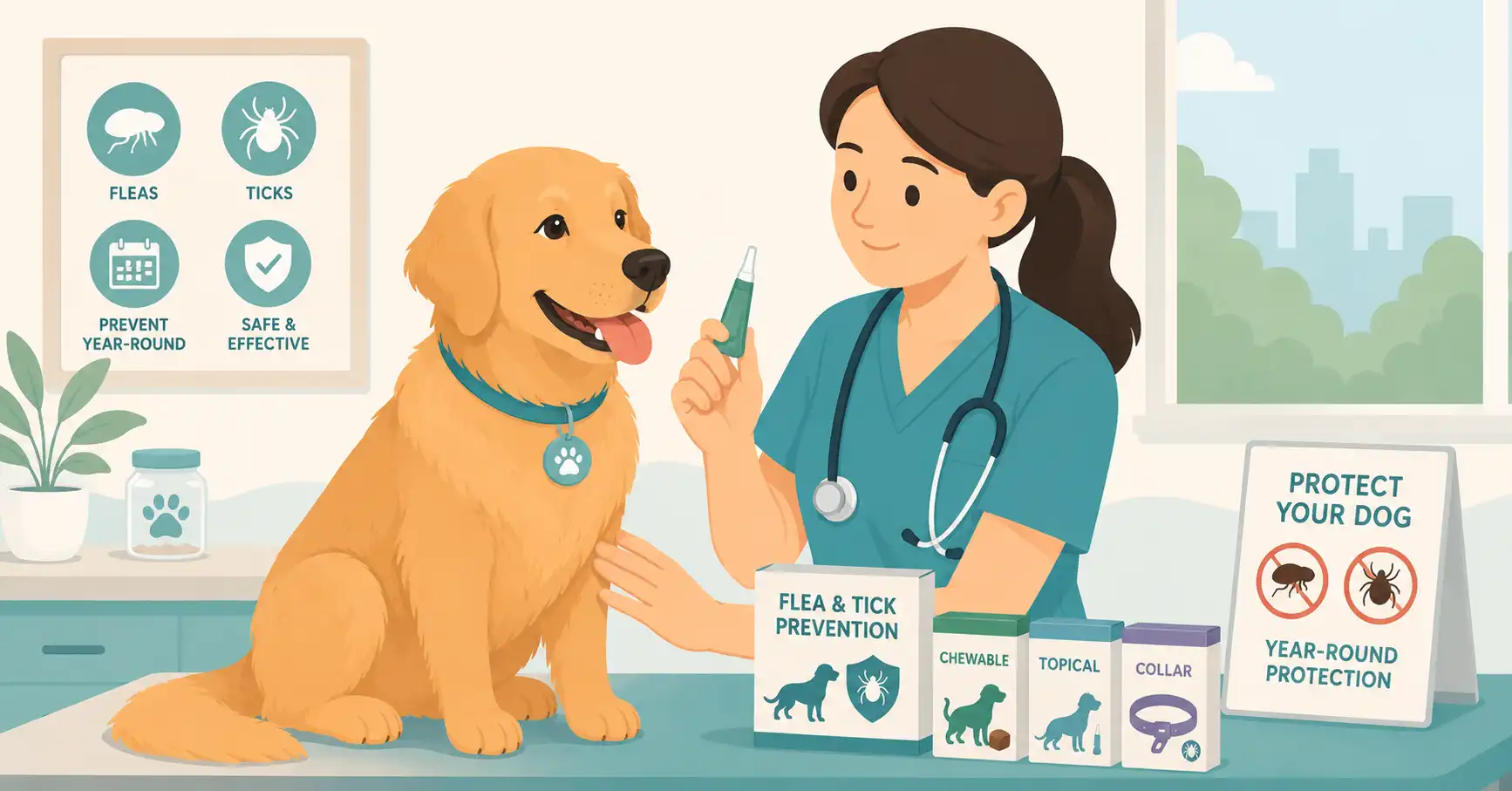
Fleas and ticks may be small, but they can cause significant discomfort and transmit diseases to dogs. Even dogs living primarily in Edmonton can encounter parasites during walks, trips to parks, visits to rural areas or contact with other animals.
The most effective approach is prevention rather than waiting until you find fleas or an attached tick.
At Walker Lake Veterinary Centre, we can recommend flea and tick prevention based on your dog’s age, weight, lifestyle and exposure risk. Call us at (587) 786-6771 to discuss the right parasite prevention plan for your dog.
Ticks are most active during spring, summer and fall in Alberta, but they can become active whenever temperatures rise above approximately 4°C. Prevention should be planned around your dog’s individual risk rather than relying only on the calendar.
Are Fleas and Ticks a Problem in Edmonton?
Yes. Dogs in Edmonton can be exposed to both fleas and ticks.
Ticks are commonly encountered in grassy, wooded and brush-filled areas. Dogs that hike, camp, visit rural properties or spend time around tall grass may have a greater risk of exposure.
Fleas can be picked up from other animals or contaminated environments. Once fleas enter a home, they can reproduce quickly and become much harder to eliminate.
Dogs do not have to travel far into the wilderness to encounter parasites.
Why Flea Prevention Matters
Fleas feed on your dog’s blood and can cause intense itching and skin irritation.
Some dogs develop flea allergy dermatitis, where even a small number of flea bites can trigger significant itching.
Possible signs of fleas include:
- Frequent scratching or biting at the skin
- Hair loss, particularly near the tail and lower back
- Red or irritated skin
- Small scabs
- Restlessness
- Fleas moving through the coat
- Small black specks known as flea dirt
Heavy flea infestations can also contribute to anaemia, particularly in puppies and small dogs.
Fleas can also carry tapeworms, which dogs may acquire if they swallow an infected flea while grooming.
Why Tick Prevention Matters
Ticks attach to the skin and feed on blood.
In addition to causing local irritation, some ticks can transmit diseases to dogs.
Tick-borne diseases may include:
- Lyme disease
- Anaplasmosis
- Ehrlichiosis
- Other regional tick-borne infections
Not every tick carries disease, but preventing attachment reduces the chance of transmission.
Alberta also operates a Submit-a-Tick surveillance program to monitor tick species found on people, pets and in the environment.
When Should Dogs Start Flea and Tick Prevention?
The ideal schedule depends on your dog’s lifestyle and the prevention product being used.
Dogs with higher exposure may include those that:
- Walk through tall grass or wooded areas
- Visit off-leash parks
- Go hiking or camping
- Visit cottages or rural properties
- Travel outside Alberta
- Live with other pets
- Hunt or spend significant time outdoors
Parasite prevention is most effective when used consistently rather than starting only after fleas or ticks have already been found.
Types of Flea and Tick Prevention for Dogs
Several types of parasite prevention are available.
Oral Medications
Oral flea and tick preventives are usually given as flavoured tablets or chews.
Depending on the product, protection may last approximately one month or longer.
Advantages include:
- Easy administration for many dogs
- No topical residue
- Reliable protection when given on schedule
Topical Treatments
Topical products are applied directly to the skin, usually along the back of the neck.
These products can provide flea, tick or combined parasite protection depending on the medication.
It is important to follow application instructions carefully and use a product specifically intended for your dog’s weight.
Combination Parasite Prevention
Some medications protect against several parasites in a single treatment.
Depending on the product, this may include protection against:
- Fleas
- Ticks
- Heartworm
- Roundworms
- Hookworms
- Other intestinal parasites
Your veterinarian can recommend the most suitable option based on your dog’s individual risks.
Never give your dog a parasite medication intended for another species or weight category. Some parasite-control ingredients that are safe for dogs can be dangerous to cats, and incorrect dosing may cause serious side effects.
How to Check Your Dog for Ticks
Check your dog after walks through long grass, wooded areas or other locations where ticks may be present.
Run your hands slowly over your dog’s body and feel for small bumps.
Pay particular attention to:
- Around the ears
- Around the eyes
- Under the collar
- Neck
- Armpits
- Between the toes
- Groin
- Around the tail
Ticks can be very small before feeding and may initially look like a tiny dark spot on the skin.
What Should You Do If You Find a Tick?
Remove an attached tick as soon as possible.
A simple approach is:
- Use fine-tipped tweezers or a tick-removal tool.
- Grasp the tick close to your dog’s skin.
- Pull upward steadily without crushing or twisting the tick.
- Clean the area after removal.
- Wash your hands thoroughly.
- Monitor your dog for changes in health.
If you cannot remove the tick completely or the area becomes swollen or painful, contact your veterinarian.
If you find a tick on your dog in Alberta, you can photograph it and submit the image through Alberta’s Submit-a-Tick program for identification.
Signs of Tick-Borne Disease in Dogs
Symptoms may not appear immediately after a tick bite.
Contact your veterinarian if your dog develops unexplained:
- Fever
- Lethargy
- Reduced appetite
- Limping or joint pain
- Swollen joints
- Weakness
- Enlarged lymph nodes
- Unusual behaviour following a known tick exposure
These symptoms can have many causes, so veterinary testing may be required.
Can Indoor Dogs Get Fleas or Ticks?
Yes.
Parasites can enter the home on other pets, clothing or visiting animals. Dogs may also encounter them during short walks or trips outside the city.
Dogs that spend little time outdoors may have a lower risk, but they are not completely protected from exposure.
How to Reduce Fleas and Ticks Around Your Home
Medication works best when combined with sensible environmental prevention.
Helpful steps include:
- Keep grass trimmed around your home
- Remove piles of leaves and excessive brush
- Check dogs after outdoor activities
- Wash pet bedding regularly
- Vacuum areas where pets sleep
- Treat all pets in the household when managing a flea infestation
- Keep parasite medications on schedule
Once fleas become established inside a home, eliminating the full life cycle can take time. Prevention is considerably easier than managing a large infestation.
Which Flea and Tick Product Is Best for My Dog?
There is no single best product for every dog.
The right choice depends on:
- Your dog’s age
- Weight
- Health
- Lifestyle
- Travel history
- Other pets in the household
- Parasites you need protection against
- How easily you can administer the medication
Your veterinarian can help you choose a product that provides the protection your dog needs without unnecessary treatment.
Protect your dog from fleas, ticks and other parasites with a prevention plan suited to their lifestyle. Call Walker Lake Veterinary Centre at (587) 786-6771 or book an appointment online. We are located at 5109 22 Avenue SW in Southwest Edmonton.
Flea and Tick Prevention at Walker Lake Veterinary Centre
Walker Lake Veterinary Centre provides preventive veterinary care for dogs across Walker Lake, Summerside, Ellerslie, Heritage Valley and surrounding Southwest Edmonton communities.
Whether your dog mainly walks around the neighbourhood or regularly hikes, camps and explores outdoor areas, we can recommend an appropriate parasite prevention plan.
Call us at (587) 786-6771 or book an appointment online.
Frequently Asked Questions
When is tick season in Edmonton?
Ticks are most active during the warmer months, particularly spring through fall. However, they can become active whenever temperatures rise above approximately 4°C.
Does my dog need flea prevention if I have never seen fleas?
Prevention is easier than treating an established infestation. Your veterinarian can assess whether ongoing flea prevention is appropriate based on your dog’s lifestyle.
Can I remove a tick from my dog myself?
Yes, many ticks can be removed using fine-tipped tweezers or a tick-removal tool. Grasp close to the skin and pull steadily upward. Contact your veterinarian if you have difficulty removing it.
Does flea and tick prevention protect against every parasite?
Not necessarily. Products protect against different combinations of parasites. Check exactly what your dog’s medication covers.
Should I still check my dog for ticks while using prevention?
Yes. Tick checks remain useful, particularly after hiking or walking through wooded and grassy areas. Preventive medication significantly reduces risk but does not replace regular checks.