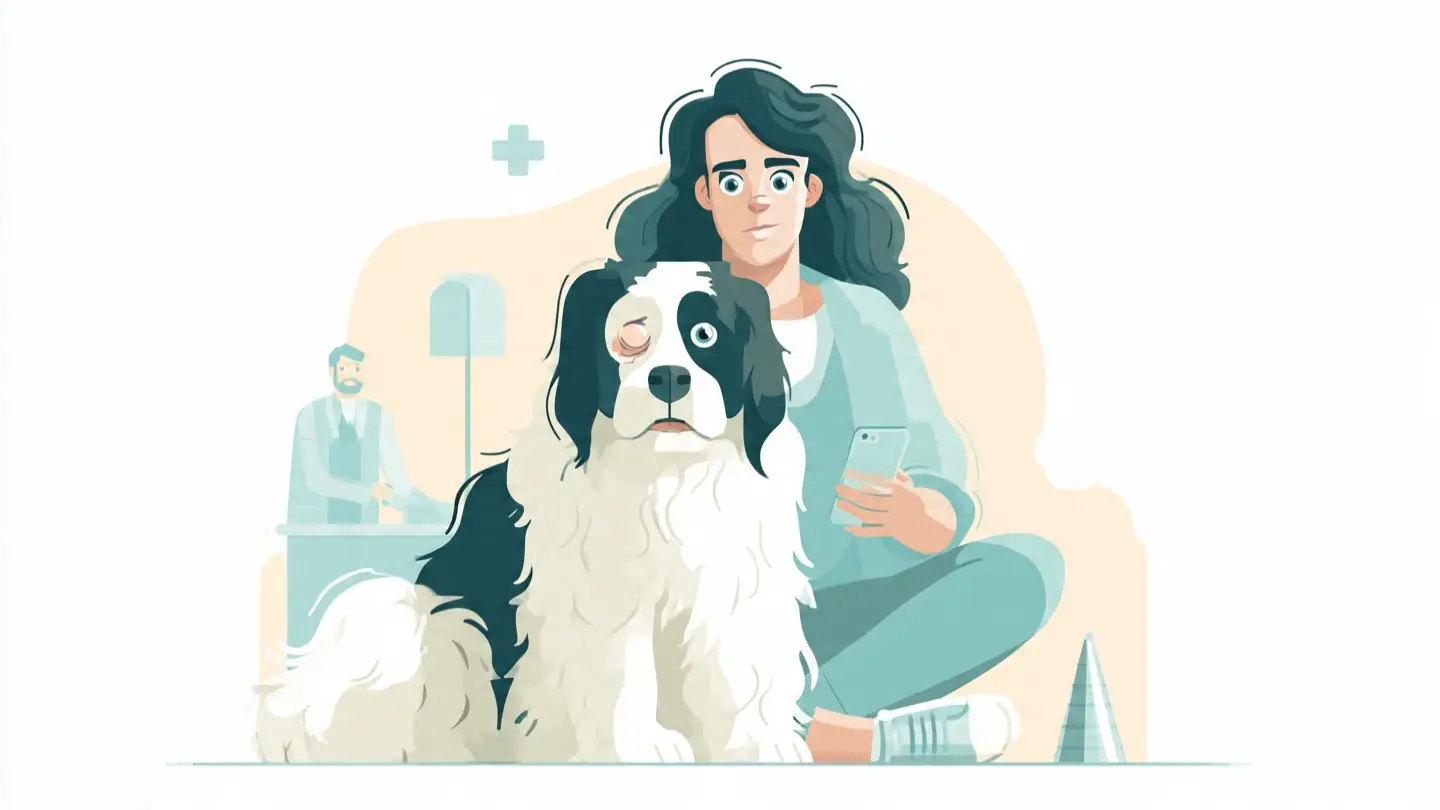
Eye infections in dogs are common, uncomfortable, and — if left untreated — capable of causing serious, permanent damage to vision. The eye is one of the most sensitive and complex organs in the body, and infections can escalate quickly from mild conjunctivitis to significant corneal disease within days.
If your dog has a red, weepy, or swollen eye, or is squinting or pawing at their face, contact Walker Lake Veterinary Centre at (587) 786-6771 for prompt assessment. Eye conditions should never be left to resolve on their own.
⚠️ Never use human eye drops — including over-the-counter antibiotic or steroid drops — on your dog without specific veterinary guidance. Certain eye drops, particularly those containing steroids, can cause catastrophic corneal damage in dogs with undiagnosed corneal ulcers.
Anatomy of the Dog Eye — Why Infections Are Common
The eye is a complex structure with multiple distinct anatomical layers, each of which can be affected by infection or inflammation independently. Understanding the basic anatomy helps make sense of why different eye conditions require such different treatments.
The outermost visible surface of the eye is covered by the conjunctiva — a thin, transparent mucous membrane lining the inside of the eyelids and the white of the eye (sclera). Behind the conjunctiva lies the cornea — the clear dome-shaped surface through which light enters the eye. Beneath the cornea is the anterior chamber, iris, lens, and deeper structures.
Most common eye infections in dogs involve the conjunctiva (conjunctivitis) or cornea (keratitis), or both simultaneously. Infections of the deeper eye structures are less common but more serious.
Types of Eye Infections and Conditions in Dogs
Conjunctivitis
Inflammation of the conjunctiva is the most common eye condition in dogs. It produces redness, swelling, and discharge from the eye. Conjunctivitis can be:
- Infectious — caused by bacteria, viruses, or parasites
- Non-infectious — caused by allergies, irritants, foreign bodies, or anatomical abnormalities
Conjunctivitis is rarely a standalone diagnosis in dogs — it is usually secondary to another underlying condition. Identifying and treating the underlying cause is essential for long-term resolution.
Corneal Ulceration
A corneal ulcer is a break in the surface of the cornea — the clear front layer of the eye. Ulcers cause significant pain — the cornea is one of the most densely innervated tissues in the body. Corneal ulcers range from superficial scratches that heal within days to deep ulcers that can perforate the eye within 24 to 48 hours if not treated aggressively.
Corneal ulcers are a veterinary urgency. They must be assessed and treated promptly to prevent permanent scarring, perforation, and vision loss.
Keratoconjunctivitis Sicca — Dry Eye
Dry eye is a common condition in dogs where inadequate tear production leads to chronic eye surface inflammation, secondary infection, and corneal damage. The eye produces a thick, sticky, yellow-green discharge rather than normal tears, and the corneal surface becomes dull and hazy over time.
Dry eye is managed with lifelong topical medication — it is not cured but effectively controlled. Left untreated, it causes progressive corneal scarring and blindness.
Uveitis
Inflammation of the interior structures of the eye — the iris, ciliary body, and choroid. Uveitis causes pain, a cloudy appearance to the eye, constricted pupils, and in severe cases, glaucoma and blindness. It can be caused by systemic infections, immune-mediated disease, trauma, or tumours.
Glaucoma
Increased pressure within the eye — caused by failure of normal aqueous humour drainage. Glaucoma is intensely painful and causes rapid, irreversible damage to the retina and optic nerve. It presents as a suddenly red, painful eye that may appear enlarged. Glaucoma is a veterinary emergency.
Common Causes of Eye Infections in Dogs
Bacterial Infection
Staphylococcus, Streptococcus, and Pseudomonas species are common bacterial causes of conjunctivitis and secondary corneal infection in dogs. Bacterial infection frequently occurs secondary to another primary condition — a foreign body, corneal ulcer, or dry eye — rather than as a primary infection.
Viral Infection
Canine distemper virus causes conjunctivitis as part of its systemic disease. Canine herpesvirus causes eye disease in neonatal puppies. Canine adenovirus can cause mild conjunctivitis.
Allergies
Environmental allergies are a common cause of bilateral conjunctivitis in dogs — both eyes are typically affected, producing clear to white watery discharge with redness and mild swelling. Allergic conjunctivitis is not infectious but can predispose to secondary bacterial infection.
Foreign Bodies
Grass seeds, dust, sand, plant material, and other debris trapped under the eyelids or on the corneal surface cause acute, painful conjunctivitis and corneal irritation. Foreign bodies must be removed — they will not resolve with antibiotics alone.
Anatomical Abnormalities
Several anatomical conditions predispose dogs to chronic eye problems:
- Entropion — the eyelid rolls inward, causing eyelashes and skin to rub constantly against the cornea
- Ectropion — the eyelid rolls outward, exposing the conjunctiva and reducing tear film coverage
- Distichiasis — extra eyelashes growing from abnormal locations that contact the corneal surface
- Nasal fold trichiasis — in brachycephalic breeds, skin folds near the nose cause hair to contact the eye
These conditions cause chronic irritation, recurrent infections, and corneal damage. Surgical correction is often required for permanent resolution.
Brachycephalic Breeds
Flat-faced breeds — Bulldogs, French Bulldogs, Pugs, Shih Tzus, Boxers, and Pekingese — have prominent, relatively exposed eyes with shallow eye sockets and reduced blink reflex. This anatomy makes them significantly more vulnerable to corneal trauma, drying, and ulceration. Eye problems are extremely common in brachycephalic breeds and require vigilant monitoring.
Signs of Eye Infection in Dogs
Discharge
The type of discharge provides important diagnostic information:
- Clear, watery discharge — common with allergies, early viral infection, or mild irritation
- White or grey mucoid discharge — suggests chronic dry eye or mild bacterial involvement
- Yellow or green purulent discharge — indicates significant bacterial infection
- Thick, sticky, yellow-green discharge — classic presentation of dry eye (KCS)
- Bloody discharge — suggests significant trauma, corneal ulceration, or haemorrhage
Eye Appearance
- Redness of the whites of the eye (scleral injection) or inner eyelids (conjunctival hyperaemia)
- Swelling of the conjunctiva — the tissue may appear puffy or raised (chemosis)
- Cloudiness of the cornea — a hazy, blue-white appearance indicating corneal oedema or ulceration
- A visible scratch, defect, or opacity on the corneal surface
- Abnormal pupil size — constricted pupil suggests uveitis; enlarged, fixed pupil suggests glaucoma
- A red, enlarged eye — possible glaucoma; always an emergency
Behavioural Signs
- Squinting or keeping the eye partially or fully closed — a reliable indicator of ocular pain
- Pawing at the eye or rubbing the face along the floor or furniture
- Sensitivity to light — squinting more in bright conditions
- Reluctance to open the eye in light
- Changes in behaviour — reduced activity, irritability related to eye discomfort
⚠️ A dog that is squinting a single eye closed and pawing at their face should be seen the same day. Squinting is a sign of significant ocular pain — often from a corneal ulcer that requires urgent treatment.
Diagnosing Eye Infections
Fluorescein Stain Test
A fluorescein dye is applied to the eye surface. The dye stains any break in the corneal surface green, making corneal ulcers clearly visible under a blue light. This is a quick, painless, essential test performed on any dog presenting with a red, painful, or squinting eye.
Schirmer Tear Test
A small strip of paper placed at the inner corner of the eye measures tear production volume in one minute. Normal tear production is above 15mm per minute. Values below 10mm confirm dry eye. This test is performed in any dog with chronic eye discharge or suspected dry eye.
Tonometry
Eye pressure measurement — performed with a tonometer. Essential for ruling out or confirming glaucoma in any dog with a red, painful eye. Normal intraocular pressure is 10 to 25mmHg. Values above 30mmHg indicate glaucoma.
Conjunctival Cytology and Culture
Cells and discharge from the conjunctiva are collected for microscopic examination and bacterial culture. Cytology identifies the type of infection and the organisms involved, guiding appropriate antibiotic selection.
Treating Eye Infections in Dogs
Topical Antibiotics
Prescription antibiotic eye drops or ointments are used to treat bacterial conjunctivitis and to prevent secondary bacterial infection in corneal ulcers. Common options include chloramphenicol, fusidic acid, and tobramycin. The choice depends on the suspected organism and the location of the infection.
Frequency of application is important — most topical eye medications need to be applied every 6 to 8 hours to maintain effective drug levels in the eye. Owner compliance with this schedule is one of the most important factors in treatment success.
Treating Corneal Ulcers
Corneal ulcers require aggressive treatment to prevent progression and perforation:
- Topical antibiotics — to prevent or treat secondary bacterial infection
- Atropine eye drops — to dilate the pupil and reduce the severe pain caused by ciliary muscle spasm
- E-collar — essential to prevent self-trauma which rapidly worsens corneal ulcers
- Avoidance of any topical steroids — steroids are absolutely contraindicated in corneal ulcers as they prevent healing and can cause rapid deepening of the ulcer
Deep corneal ulcers — descemetoceles and corneal perforations — require emergency surgical intervention.
Treating Dry Eye
Dry eye is managed with lifelong topical treatment:
- Cyclosporine (Optimmune) or tacrolimus — immune-modulating drops that stimulate tear production in most dogs. These are the cornerstone of dry eye management
- Artificial tear supplementation — provides lubrication and surface protection between doses of the immune-modulating drops
- Topical antibiotics when secondary infection is present
Response to cyclosporine is gradual — tear production typically improves over 4 to 8 weeks of consistent treatment.
Treating Allergic Conjunctivitis
Antihistamine eye drops or topical anti-inflammatory drops reduce allergic eye inflammation. Managing the underlying allergy — through allergen avoidance, immunotherapy, or systemic allergy medication — addresses the root cause.
Surgical Treatment
Several eye conditions require surgery for long-term resolution:
- Entropion and ectropion — eyelid correction surgery
- Cherry eye — gland repositioning surgery
- Distichiasis — removal of aberrant eyelashes
- Deep or perforated corneal ulcers — conjunctival flap or corneal grafting
- Glaucoma — medical management followed by surgical intervention if pressure cannot be controlled medically
Any eye concern in your dog deserves same-day assessment. Book an appointment at Walker Lake Veterinary Centre. Call (587) 786-6771 or book online. Located at 5109 22 Avenue SW, Southwest Edmonton.
Book an Appointment at Walker Lake Veterinary Centre
Walker Lake Veterinary Centre provides comprehensive eye examination, fluorescein staining, tear testing, tonometry, and treatment for eye conditions in dogs and cats across Walker Lake, Summerside, Ellerslie, Heritage Valley, and Southwest Edmonton.
Call us at (587) 786-6771 or book online. We are located at 5109 22 Avenue SW, Edmonton.
Clinic hours:
- Monday, Tuesday & Thursday: 9:00 AM – 7:00 PM
- Wednesday & Friday: 9:00 AM – 6:00 PM
- Saturday: 9:00 AM – 3:00 PM
- Sunday: Closed
Frequently Asked Questions
Can dog eye infections clear up on their own?
Mild conjunctivitis caused by a transient irritant may resolve without treatment. However, most eye infections in dogs do not resolve on their own and worsen without appropriate treatment. Given the potential for rapid deterioration — particularly with corneal ulcers — any eye showing signs of infection or discomfort should be assessed by a veterinarian rather than monitored at home.
Can I use human eye drops on my dog?
No. Human eye drops — including over-the-counter antibiotic drops and lubricant drops — are not formulated for dogs and should not be used without specific veterinary guidance. Steroid-containing eye drops, in particular, cause severe corneal damage in dogs with undiagnosed corneal ulcers. Always use veterinary-prescribed products for dog eye conditions.
How long does a dog eye infection take to clear up?
Mild bacterial conjunctivitis typically responds within 5 to 7 days of appropriate antibiotic treatment. Corneal ulcers heal at varying rates depending on depth and secondary infection — superficial ulcers often heal within a week, while deep ulcers may take weeks and sometimes require surgery. Dry eye and allergic conjunctivitis are chronic conditions requiring lifelong management rather than a finite treatment course.
My dog’s eye looks cloudy — what does this mean?
Cloudiness of the cornea — a blue-white haze — typically indicates corneal oedema (swelling), which can result from corneal ulceration, glaucoma, or uveitis. A nuclear opacity (cloudiness of the lens) is typically a cataract. Both warrant veterinary assessment. Corneal cloudiness associated with a red or painful eye should be assessed the same day.
Why does my dog keep getting eye infections?
Recurrent eye infections usually indicate an underlying cause — dry eye, anatomical abnormality (entropion, distichiasis), allergies, or a systemic disease affecting immune function. Repeated short courses of antibiotic eye drops without investigating the root cause leads to an ongoing cycle. A thorough ophthalmic examination is warranted for any dog with more than two episodes of eye infection.