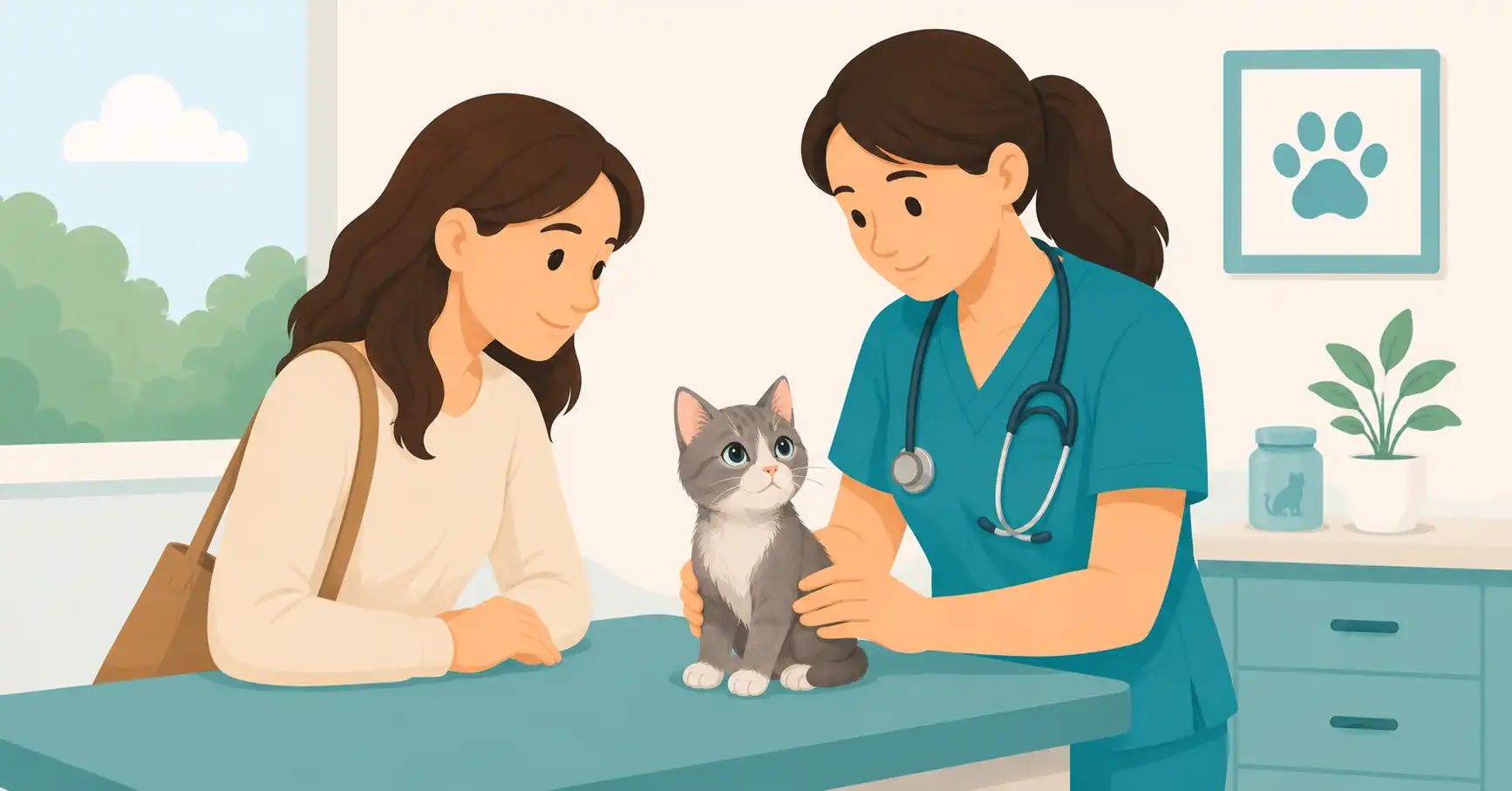
Bringing home a new kitten is exciting, but arranging their first veterinary appointment should be one of your earliest priorities. Even when a kitten appears healthy, a veterinary examination helps identify potential health concerns and establishes a plan for vaccinations, parasite prevention, nutrition and future preventive care.
Ideally, schedule your kitten’s first vet visit within the first few days after bringing them home, especially if their vaccination or medical history is incomplete.
At Walker Lake Veterinary Centre, we provide kitten wellness examinations and preventive care for families throughout Southwest Edmonton. Call us at (587) 786-6771 to book your kitten’s first appointment.
Kittens can appear healthy while carrying intestinal parasites or developing early infectious disease. A first veterinary examination helps establish a healthy baseline and ensures their vaccination schedule is on track.
What to Bring to Your Kitten’s First Vet Visit
Bring any information you received from the breeder, rescue or previous owner.
Helpful items include:
- Vaccination records
- Deworming records
- Previous veterinary records
- Current medications or supplements
- Information about the food your kitten is eating
- Adoption or breeder paperwork
- A fresh stool sample if requested
- A list of questions or concerns
If you do not have complete records, your veterinarian can still create an appropriate preventive-care plan.
What Happens During the First Kitten Vet Visit?
Your veterinarian will perform a physical examination to check your kitten’s overall health and development.
The examination may include:
- Weight and body condition
- Heart and lungs
- Eyes and ears
- Teeth and gums
- Skin and coat
- Abdomen
- Joints and movement
- Hydration
- General growth and development
The veterinarian will also ask about your kitten’s appetite, litter box habits, behaviour and activity level.
Kitten Vaccinations
Vaccinations are an important part of your kitten’s first veterinary visits.
Core kitten vaccines commonly protect against:
- Feline panleukopenia
- Feline herpesvirus
- Feline calicivirus
These are commonly combined in the FVRCP vaccine.
A typical vaccination schedule may look like:
- 6–8 weeks: First FVRCP vaccination.
- 10–12 weeks: FVRCP booster.
- 14–16 weeks: Additional FVRCP booster.
- From around 12 weeks: Rabies vaccination may be given depending on the vaccine used and your veterinarian’s recommendation.
Your kitten’s exact schedule will depend on their age and previous vaccination history.
One vaccination does not provide complete protection. Kittens need a series of vaccines while their immune system develops.
Does My Kitten Need the Feline Leukemia Vaccine?
Feline leukemia virus, or FeLV, can weaken a cat’s immune system and lead to serious illness.
FeLV vaccination is commonly recommended during kittenhood because young cats are particularly susceptible.
Ongoing vaccination later in life depends on exposure risk, especially whether your cat:
- Goes outdoors
- Lives with cats of unknown FeLV status
- Regularly encounters unfamiliar cats
- Lives with an FeLV-positive cat
Your veterinarian may also recommend FeLV testing before vaccination.
Deworming and Stool Testing
Intestinal parasites are common in kittens.
Possible parasites include:
- Roundworms
- Hookworms
- Tapeworms
- Giardia
- Other intestinal parasites
Many kittens require scheduled deworming during their first few months.
A stool test may also be recommended because not every parasite can be identified simply by looking at the stool.
Flea and Tick Prevention
Your veterinarian will discuss whether your kitten needs flea and tick prevention based on their age, weight and lifestyle.
Risk may be higher if your kitten:
- Goes outdoors
- Lives with dogs or other outdoor pets
- Has recently come from a shelter or multi-cat environment
- Travels with you
- Has already shown signs of fleas
Never apply a flea or tick product intended for dogs to your cat unless specifically directed by a veterinarian. Some ingredients that dogs tolerate can be dangerous to cats.
Never use a dog flea or tick medication on your kitten without veterinary guidance. Some canine parasite products can cause severe toxicity in cats.
Should Your Kitten Be Tested for FeLV and FIV?
Your veterinarian may recommend testing for feline leukemia virus (FeLV) and feline immunodeficiency virus (FIV), particularly if your kitten’s background is unknown.
Testing may be especially important for kittens that:
- Were found outdoors
- Came from an unknown environment
- Have been exposed to unfamiliar cats
- Are joining a household with other cats
- Have unexplained health problems
Knowing your kitten’s status can help guide their future healthcare and protect other cats in the household.
Discussing Your Kitten’s Diet
Good nutrition supports healthy growth during kittenhood.
During the appointment, discuss:
- The food your kitten currently eats
- How much to feed
- How often to offer meals
- Whether wet, dry or mixed feeding is appropriate
- Treats
- Any vomiting or diarrhoea
- Changes in appetite
Choose a complete food formulated specifically for kittens rather than adult cats. Kittens have different nutritional requirements because they are growing rapidly.
Litter Box Habits
Your kitten’s litter box behaviour can provide useful information about their health.
Tell your veterinarian if you notice:
- Diarrhoea
- Constipation
- Straining to urinate
- Frequent trips to the litter box
- Blood in the urine or stool
- Urinating outside the litter box
- Crying while using the litter box
Changes in urination should be taken particularly seriously because urinary problems can become urgent.
Microchipping Your Kitten
Microchipping provides permanent identification if your kitten becomes lost.
Even indoor cats can escape through an open door, damaged window or carrier.
Microchipping can often be performed during a routine appointment or during another procedure such as spaying or neutering.
After implantation, make sure the microchip is registered with your current contact information.
When Should Your Kitten Be Spayed or Neutered?
Your kitten’s first appointments are a good opportunity to discuss spaying or neutering.
The veterinarian will recommend appropriate timing based on:
- Age
- Weight
- Health
- Development
- Lifestyle
Discussing the procedure early allows you to plan ahead rather than waiting until your kitten reaches reproductive maturity.
Helping Your Kitten Feel Comfortable at the Vet
Cats can become stressed by travel and unfamiliar environments, so making the carrier a positive place can help.
Try these steps:
- Leave the carrier accessible at home instead of storing it away.
- Place a familiar blanket inside.
- Occasionally offer treats or meals near the carrier.
- Avoid chasing your kitten around the house immediately before the appointment.
- Covering part of the carrier with a light towel during travel may help some cats feel more secure.
Make the carrier part of your kitten’s normal environment. If the carrier only appears before veterinary visits, many cats quickly learn to associate it with stress.
Questions to Ask at Your Kitten’s First Vet Visit
Consider asking:
- When is the next vaccination due?
- Does my kitten need deworming?
- Should my kitten be tested for FeLV or FIV?
- Which parasite prevention is appropriate?
- Is my kitten’s food suitable?
- How much should I feed?
- When should my kitten be microchipped?
- When should we discuss spaying or neutering?
- How often should my kitten return for checkups?
Your first appointment is the ideal time to establish a preventive-care plan for the months ahead.
Have a new kitten? Book their first veterinary examination at Walker Lake Veterinary Centre. Our team can review vaccinations, parasite prevention, nutrition and your kitten’s overall development. Call (587) 786-6771 or book online.
Book Your Kitten’s First Vet Visit in Edmonton
Walker Lake Veterinary Centre provides kitten examinations, vaccinations, parasite prevention, microchipping and preventive care for families across Walker Lake, Summerside, Ellerslie, Heritage Valley and surrounding Southwest Edmonton communities.
Bring any records provided by the breeder, rescue or previous owner, and our team will help determine what your kitten needs next.
Call us at (587) 786-6771 or book an appointment online. We are located at 5109 22 Avenue SW, Edmonton.
Frequently Asked Questions
When should I take my new kitten to the vet?
Ideally, arrange an appointment within the first few days after bringing your kitten home, especially if their medical history is incomplete.
What should I bring to the appointment?
Bring vaccination and deworming records, previous medical records, details about your kitten’s food and any questions you have.
Will my kitten receive vaccines at the first visit?
Possibly. The veterinarian will review your kitten’s age and previous vaccination history before determining which vaccines are due.
Should indoor kittens still be vaccinated?
Yes. Indoor cats can still be exposed to infectious diseases, and unexpected situations such as escaping outdoors can increase their risk.
Does my kitten need a stool test?
A stool test may be recommended to check for intestinal parasites, which are common in kittens even when they appear healthy.