
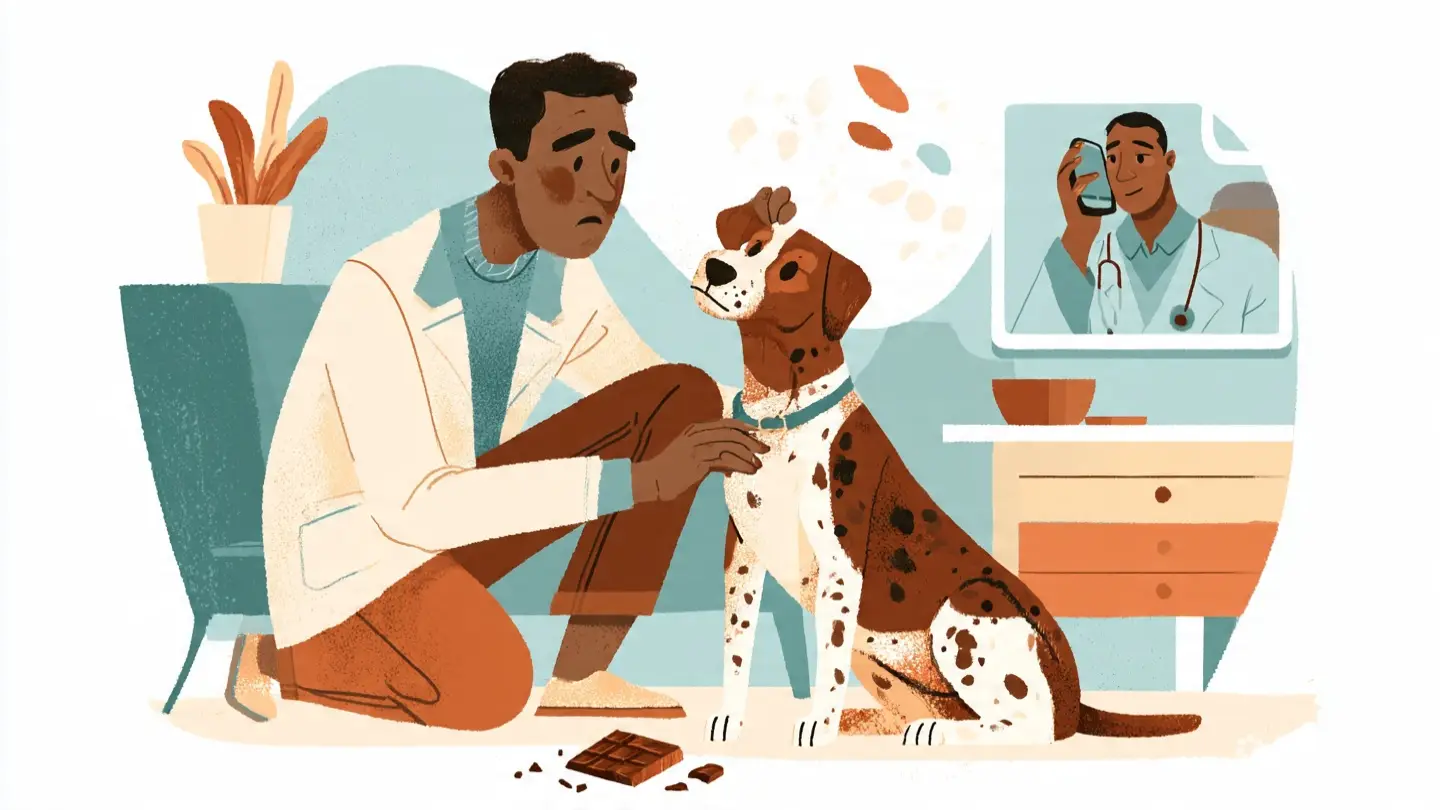
If your dog has just eaten chocolate, do not wait to see if symptoms develop. Chocolate is toxic to dogs and depending on the type, the amount consumed, and your dog’s size, it can cause serious harm — or worse. Call your veterinarian immediately.
At Walker Lake Veterinary Centre in Southwest Edmonton, we treat chocolate toxicity cases and can help you assess the risk and determine the right course of action. Call us at (587) 786-6771 right now if your dog has eaten chocolate.
⚠️ If your dog is showing seizures, collapse, or loss of consciousness — go to the clinic immediately. Call (587) 786-6771 on the way.
Why Is Chocolate Toxic to Dogs?
Chocolate contains two substances that are toxic to dogs: theobromine and caffeine. Both are methylxanthines — compounds that dogs metabolise far more slowly than humans. While a small amount of chocolate might cause a human no harm whatsoever, the same amount can cause significant toxicity in a dog.
Theobromine is the primary concern. It affects the central nervous system, cardiovascular system, and kidneys. As it builds up in a dog’s system, it causes a range of symptoms that can escalate rapidly without veterinary intervention.
The severity of toxicity depends on three factors:
- The type of chocolate consumed
- How much was eaten relative to the dog’s body weight
- The individual dog’s sensitivity
Which Types of Chocolate Are Most Dangerous?
Not all chocolate carries the same level of risk. The darker and more concentrated the chocolate, the higher the theobromine content and the greater the danger.
Most Dangerous
- Baking chocolate and cocoa powder — the highest concentration of theobromine. Even a small amount can be life-threatening for a small dog.
- Dark chocolate — significantly more toxic than milk chocolate. A 10kg dog eating just 50g of dark chocolate may experience serious symptoms.
Moderately Dangerous
- Milk chocolate — lower theobromine content but still dangerous in sufficient quantities, particularly for smaller breeds.
- Semi-sweet chocolate chips — commonly used in baking and frequently left within reach of curious dogs.
Lower Risk but Still Concerning
- White chocolate — contains very little theobromine and is unlikely to cause toxicity from theobromine alone. However, the high fat and sugar content can cause gastrointestinal upset and pancreatitis.
- Hot chocolate powder — variable concentration depending on the brand. Treat with caution.
Important: Some chocolate products also contain xylitol — a sweetener that is highly toxic to dogs independently of theobromine. Always check the ingredient list if possible.
How Much Chocolate Is Dangerous for a Dog?
Toxicity is dose-dependent and based on body weight. As a general guide:
- Milk chocolate: Toxic effects can begin at approximately 45mg of theobromine per kg of body weight. Milk chocolate contains roughly 60mg of theobromine per 30g. So a 5kg dog eating 25g of milk chocolate is approaching a concerning dose.
- Dark chocolate: Contains approximately 130–450mg of theobromine per 30g depending on cocoa content. A much smaller quantity is needed to cause serious harm.
- Baking chocolate: Contains up to 450–600mg of theobromine per 30g. Even a few squares can be dangerous for a medium-sized dog.
These are approximations — do not use them to decide whether to seek care. If your dog has eaten any amount of chocolate that causes concern, call a veterinarian immediately.
Symptoms of Chocolate Toxicity in Dogs
Symptoms typically appear within 6 to 12 hours of ingestion and can last up to 72 hours in severe cases.
Early Symptoms (2–4 Hours After Ingestion)
- Vomiting
- Diarrhoea
- Excessive thirst and urination
- Restlessness and hyperactivity
- Bloating or abdominal discomfort
Moderate to Severe Symptoms (4–12 Hours)
- Rapid, irregular, or elevated heart rate
- Muscle tremors or twitching
- Excessive panting
- High body temperature
- Increased blood pressure
Severe Symptoms — Requires Immediate Emergency Care
- Seizures
- Collapse
- Loss of consciousness
- Cardiac arrhythmia
Do not wait for severe symptoms before seeking veterinary care. By the time a dog is showing neurological symptoms, the toxin has been absorbed and treatment becomes significantly more complex.
What to Do If Your Dog Ate Chocolate
Step 1 — Stay Calm and Act Quickly
Panic will not help your dog. A clear, quick response will. Take a breath and move through the following steps without delay.
Step 2 — Note the Details
Before calling the vet, gather the following information as quickly as possible:
- What type of chocolate was it? (milk, dark, baking, white)
- Approximately how much did they eat? (check the packaging if available)
- When did they eat it? (time of ingestion)
- How much does your dog weigh?
- Is your dog showing any symptoms already?
This information allows the veterinary team to assess the risk level quickly and recommend the most appropriate course of action.
Step 3 — Call Your Veterinarian Immediately
Call Walker Lake Veterinary Centre at (587) 786-6771. Our team will assess the situation over the phone, advise you on the urgency, and instruct you on whether to bring your dog in right away.
Do not induce vomiting unless specifically instructed to do so by a veterinarian. Inducing vomiting incorrectly can cause additional harm and is not always appropriate depending on timing and the dog’s condition.
Step 4 — Follow Veterinary Instructions
If the veterinarian advises you to bring your dog in, do so without delay. If they advise monitoring at home, follow their specific guidance on what symptoms to watch for and when to escalate.
How Is Chocolate Toxicity Treated?
Treatment depends on how recently the chocolate was consumed and what symptoms are present.
Induced Vomiting
If ingestion occurred recently — typically within one to two hours — a veterinarian may induce vomiting to remove the chocolate from the stomach before more theobromine is absorbed. This is only safe and effective when performed or supervised by a veterinary professional.
Activated Charcoal
Activated charcoal may be administered to bind remaining toxins in the gastrointestinal tract and reduce further absorption. This is most effective in the early stages of toxicity.
Intravenous Fluids
IV fluids support kidney function, help flush theobromine from the system, and maintain hydration — particularly important when vomiting and diarrhoea are present.
Medications
Depending on symptoms, medications may be administered to control heart rate and blood pressure, manage tremors or seizures, and provide supportive care throughout recovery.
Monitoring
Dogs with significant exposure are monitored closely for cardiac and neurological changes. In serious cases, overnight monitoring may be required.
Can Dogs Recover From Chocolate Toxicity?
With prompt veterinary treatment, the majority of dogs recover fully from chocolate toxicity. The prognosis is significantly better when treatment begins early before symptoms progress to neurological or cardiac involvement.
Dogs that receive treatment quickly after ingestion particularly induced vomiting before substantial absorption occurs often recover within 24 hours with minimal complications.
Delayed treatment, large quantities of highly concentrated chocolate, or very small dogs with significant exposure carry a more serious prognosis. This is why acting immediately always gives your dog the best chance.
How to Prevent Chocolate Toxicity
The safest approach is to ensure chocolate is never within reach of your dog. Practical prevention measures include:
- Store all chocolate and cocoa products in closed cupboards or high shelves your dog cannot access
- Be especially vigilant during holidays — Easter eggs, Christmas chocolates, and Halloween candy are common culprits
- Educate all household members and visitors about the dangers of feeding chocolate to dogs
- Be aware that chocolate-flavoured foods such as brownies, cakes, and protein bars can be just as dangerous
- Check ingredient labels on any baked goods — some contain concentrated cocoa powder
Other Foods Toxic to Dogs to Be Aware Of
Chocolate is not the only common household food that is dangerous to dogs. Other substances to keep away from your pet include:
- Grapes and raisins — can cause acute kidney failure
- Xylitol — found in sugar-free gum, some peanut butters, and baked goods
- Onions and garlic — damage red blood cells and cause anaemia
- Macadamia nuts — cause weakness, tremors, and vomiting
- Alcohol — toxic even in small amounts
Book an Appointment at Walker Lake Veterinary Centre
If your dog has eaten chocolate or any toxic substance, do not wait. Call Walker Lake Veterinary Centre immediately at (587) 786-6771. We provide urgent and emergency veterinary care for dogs and cats in Walker Lake, Summerside, Ellerslie, Heritage Valley, and across Southwest Edmonton.
Our clinic is located at 5109 22 Avenue SW, Edmonton. Same-day appointments are available for urgent concerns during clinic hours.
Clinic hours:
- Monday, Tuesday & Thursday: 9:00 AM – 7:00 PM
- Wednesday & Friday: 9:00 AM – 6:00 PM
- Saturday: 9:00 AM – 3:00 PM
- Sunday: Closed
Frequently Asked Questions
My dog ate a small piece of chocolate — should I still call a vet?
Yes. Even a small amount warrants a call to your veterinarian. The risk depends on the type of chocolate, your dog’s weight, and individual sensitivity. A quick call allows the vet to assess the risk and advise whether a visit is needed — it takes less than five minutes and could save your dog’s life.
How long after eating chocolate will a dog show symptoms?
Symptoms typically begin within 6 to 12 hours of ingestion. In some cases, particularly with large quantities of dark or baking chocolate, symptoms can appear within 2 to 4 hours. Do not wait for symptoms before calling your vet — early intervention before symptoms develop gives the best outcome.
Can I make my dog vomit at home?
Do not attempt to induce vomiting at home without veterinary guidance. Certain home methods are unsafe and can cause additional harm. If vomiting is appropriate, your veterinarian will advise the safest method or perform it in the clinic under supervision.
Is white chocolate dangerous for dogs?
White chocolate contains very little theobromine, so the risk of theobromine toxicity is low. However, the high fat and sugar content can cause gastrointestinal upset and potentially pancreatitis. Always call your vet if your dog has eaten a significant quantity of any chocolate product.
What if my dog ate chocolate hours ago and seems fine?
Some dogs show no immediate symptoms but can develop them within 12 to 24 hours. If you know your dog consumed chocolate, call your veterinarian even if they appear normal. Blood and heart monitoring may still be appropriate depending on the quantity and type of chocolate consumed.