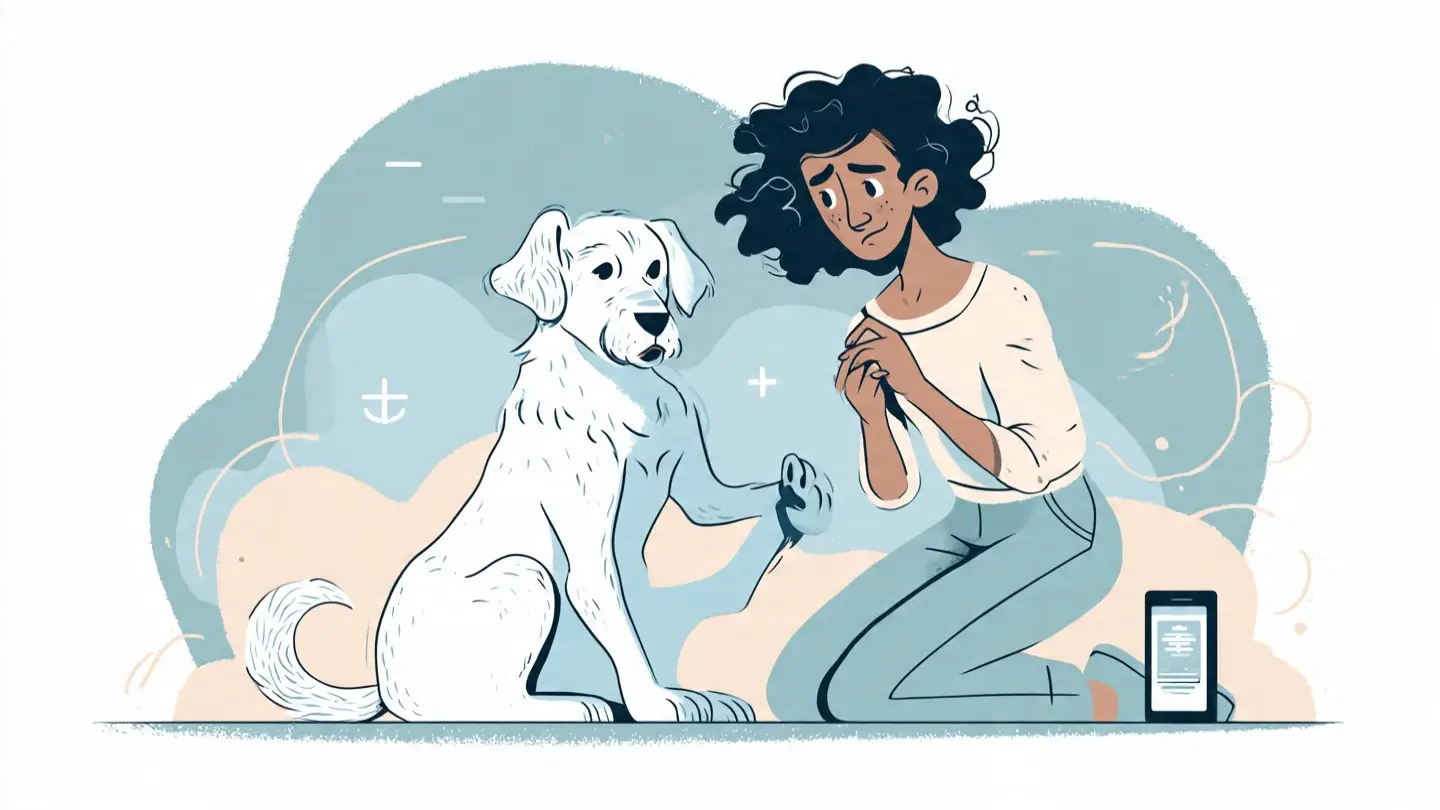
A limping dog is one of the most common concerns that brings pet owners to a veterinary clinic — and for good reason. Limping always indicates something is wrong, but the causes range enormously in severity — from a small stone wedged between the toes to a ruptured ligament, bone fracture, or even cancer.
Knowing when to seek emergency care versus when to monitor and book a routine appointment can save you unnecessary stress and ensure your dog gets the right treatment at the right time. If your dog has been limping for more than 24 hours or is in obvious distress, contact Walker Lake Veterinary Centre at (587) 786-6771.
Limping is almost always a sign of pain. Dogs do not limp out of habit or for attention. Any dog that is consistently favouring a limb is experiencing discomfort and deserves a veterinary assessment.
Understanding the Difference Between Gradual and Sudden Onset Limping
One of the most useful pieces of information when investigating limping is whether it came on suddenly or developed gradually over time.
Sudden Onset Limping
Sudden limping — where the dog was fine one moment and limping the next — typically suggests an acute injury or trauma. Common causes include:
- A cut, thorn, or foreign body in the paw
- A sprain or muscle strain
- A fracture
- A dislocated joint
- A cruciate ligament rupture — which often occurs during normal activity with no obvious trauma
Sudden onset limping that is severe — the dog refuses to bear any weight on the limb — warrants same-day veterinary assessment.
Gradual Onset Limping
Limping that develops slowly over days, weeks, or months typically suggests a progressive condition such as:
- Osteoarthritis — the most common cause of gradual limping in older dogs
- Hip or elbow dysplasia — more common in young large breed dogs
- Bone cancer (osteosarcoma) — unfortunately common in large and giant breeds
- Panosteitis — a painful bone condition affecting growing large breed puppies
- Lyme disease or other tick-borne illness
Gradual onset limping in a senior dog is easy to dismiss as normal ageing. It is not. It almost always represents manageable pain, and appropriate treatment significantly improves quality of life.
Which Leg Is Limping?
Identifying which leg is affected — and whether the limp is in the front or back — helps narrow the diagnosis considerably.
Front Leg Limping
Common causes of front leg limping include:
- Paw injuries — cuts, thorns, broken nails, interdigital cysts
- Elbow dysplasia — particularly in young large breeds
- Shoulder injury or osteoarthritis
- Bicipital tenosynovitis — inflammation of the biceps tendon
- Nerve root compression in the neck or upper spine
- Osteosarcoma — bone cancer most commonly affects the distal radius (just above the wrist) in large breeds
Hind Leg Limping
Common causes of hind leg limping include:
- Cruciate ligament rupture — the most common orthopaedic injury in dogs, equivalent to an ACL tear in humans
- Hip dysplasia and hip osteoarthritis
- Luxating patella — the kneecap slips out of its groove, common in small breeds
- Lumbosacral disease — lower spine problems causing referred pain down the hind leg
- Osteosarcoma — the distal femur and proximal tibia are common sites in large breeds
Cruciate ligament rupture is one of the most common causes of sudden hind leg lameness in middle-aged and older dogs. It often occurs during normal activity — jumping, turning, or landing — without any obvious traumatic event. Surgery is typically required for the best long-term outcome.
Common Causes of Limping in Dogs
Paw Problems
The paw is the first place to check when a dog begins limping suddenly. Common paw issues include:
- Cuts and lacerations from sharp objects on footpaths or in grass
- Thorns, splinters, or grass awns embedded between the toes or in the paw pad
- Broken or torn nails — often more painful than they appear
- Interdigital cysts — painful swellings between the toes, often associated with allergies
- Burns from hot pavement — common in Edmonton summers
- Ice ball formation between the toes in winter
- Paw pad cracking and soreness from extreme cold or hot surfaces
Always examine the paw thoroughly — between the toes, under the paw pads, and around the nails — before assuming the problem is higher up the limb.
Cruciate Ligament Disease
The cranial cruciate ligament (CCL) is equivalent to the ACL in human knees. It stabilises the stifle joint (knee) and is one of the most commonly injured structures in dogs.
Unlike ACL injuries in humans which typically result from a single traumatic event, cruciate ligament disease in dogs is often a degenerative condition — the ligament weakens over time before eventually rupturing, sometimes during minimal activity. Overweight dogs, certain breeds (Labrador Retrievers, Rottweilers, Boxers, Bulldogs), and middle-aged to older dogs are at highest risk.
Signs of cruciate ligament rupture include sudden hind leg lameness, often with the dog toe-touching but not bearing full weight. Without surgical repair, the joint develops progressive arthritis and the dog remains in chronic pain.
Hip Dysplasia
Hip dysplasia is a developmental condition where the hip joint does not form correctly, resulting in a loose, poorly fitting joint that causes pain, inflammation, and eventually osteoarthritis. It is one of the most common skeletal conditions in dogs, particularly in large and giant breeds.
Signs typically develop in young dogs — often between 5 and 12 months — but may not become obvious until the arthritis develops in middle age. Affected dogs show difficulty rising, a swaying gait, reluctance to exercise, and progressive hind limb weakness.
Osteoarthritis
The most common cause of chronic limping in older dogs. Osteoarthritis is a progressive degenerative joint disease — the cartilage cushioning the joint breaks down over time, causing pain, stiffness, and reduced range of motion.
Any joint can be affected but the hips, elbows, stifles, and spine are most commonly involved. Osteoarthritis is not curable but is highly manageable with appropriate pain medication, weight management, physiotherapy, and joint supplements.
Luxating Patella
The patella (kneecap) normally sits in a groove at the front of the stifle joint. In dogs with a luxating patella, the kneecap slips out of this groove — medially (inward) in most cases. The dog may suddenly skip or hold the leg up for a few steps, then resume normal walking once the patella returns to its correct position.
Luxating patella is very common in small breeds — Chihuahuas, Pomeranians, Yorkshire Terriers, French Bulldogs, and Cavalier King Charles Spaniels. Mild cases are managed medically. Severe or progressive cases require surgical correction.
Panosteitis
A painful inflammatory condition affecting the long bones of young, rapidly growing large breed dogs — typically between 5 and 18 months of age. Panosteitis causes shifting limb lameness — the limp may move from one leg to another over days or weeks. German Shepherds are most commonly affected. The condition is self-limiting and resolves as the dog matures, but appropriate pain management is essential during the affected period.
Lyme Disease and Tick-Borne Illness
Lyme disease — caused by Borrelia burgdorferi transmitted through tick bites — can cause joint pain and lameness in dogs. In Alberta, ticks are present in wooded and grassy areas and tick-borne disease is a genuine consideration for dogs that spend time outdoors. Lyme disease in dogs typically causes a shifting, episodic lameness affecting multiple joints.
Bone Cancer — Osteosarcoma
Osteosarcoma is an aggressive primary bone tumour that is unfortunately common in large and giant breed dogs — particularly in the limb bones. The distal radius (just above the wrist), proximal humerus (shoulder), distal femur, and proximal tibia are the most common sites.
Signs include progressive lameness, swelling around the affected bone, and pain on palpation. Osteosarcoma grows rapidly and the prognosis is serious. Early diagnosis gives the best chance of managing the disease effectively.
Any large breed dog with a gradually worsening limb lameness that does not respond to standard pain management should be X-rayed to rule out bone cancer.
When Is Limping an Emergency?
Go to the Vet Immediately If Your Dog
- Is completely non-weight-bearing on a limb — holding it entirely off the ground
- Has an obviously deformed or swollen limb suggesting fracture or dislocation
- Has a wound with significant bleeding
- Is in obvious severe pain — crying, unable to settle, snapping when touched
- Has sudden hind limb weakness or dragging of the hind legs — may indicate spinal cord compromise
- Has been hit by a vehicle or fallen from a significant height
Book a Same-Day Appointment If Your Dog
- Is limping significantly and not improving after several hours of rest
- Is toe-touching a limb but putting minimal weight on it
- Has visible swelling around a joint
- Has a paw wound that is not superficial
- Has been limping for more than 24 hours
Monitor and Book a Routine Appointment If Your Dog
- Has a mild limp that resolves completely after a short period of rest
- Is slightly stiff getting up but moves normally once warmed up
- Has been gradually slowing down over weeks or months
Dog limping and not sure what to do? Call Walker Lake Veterinary Centre at (587) 786-6771 or book online. Located at 5109 22 Avenue SW, Southwest Edmonton. Same-day appointments available for urgent concerns.
Diagnosing the Cause of Limping
Physical and Orthopaedic Examination
The veterinarian will systematically examine each joint and limb — assessing range of motion, muscle mass, pain response, joint stability, and gait. This examination provides significant diagnostic information and guides the choice of further diagnostics.
X-Rays
Radiographs are the primary tool for assessing bone and joint conditions — fractures, arthritis, hip dysplasia, luxating patella, and bone tumours all have characteristic X-ray appearances. X-rays are taken under sedation in most cases to ensure the dog is positioned correctly and comfortably.
Advanced Imaging
For soft tissue injuries — cruciate ligament tears, cartilage damage, and spinal cord compression — MRI or CT scanning provides more detailed information than X-rays. These are typically performed at specialist referral centres.
Orthopaedic Surgery Referral
Complex orthopaedic conditions — cruciate ligament rupture, hip dysplasia requiring total hip replacement, or bone cancer — may be referred to a veterinary orthopaedic surgeon for specialist assessment and treatment.
Treating Limping in Dogs
Treatment depends entirely on the underlying cause.
Rest and Activity Restriction
For mild sprains, strains, and paw injuries, a period of strict rest — typically 2 to 4 weeks — combined with anti-inflammatory medication is often sufficient. Leash walks only, no running, jumping, or stairs.
Pain Management
NSAIDs are the cornerstone of pain management for most musculoskeletal causes of limping. Additional medications including gabapentin may be added for neuropathic pain or chronic conditions. Appropriate pain management is essential — a dog in pain that continues to use a damaged limb causes further injury.
Weight Management
For arthritic dogs, weight reduction is one of the most impactful treatments available. Every kilogram of excess body weight adds significant load to painful joints. Even a 10 to 15% reduction in body weight can dramatically improve mobility and reduce pain medication requirements.
Physiotherapy and Hydrotherapy
Physiotherapy improves muscle strength, joint range of motion, and overall mobility in dogs recovering from injury or managing chronic conditions. Hydrotherapy — exercise in water — allows movement and muscle building without weight-bearing stress on painful joints.
Surgery
Surgical treatment is required for cruciate ligament rupture, severe hip dysplasia, moderate to severe luxating patella, fractures, and bone cancer. The specific surgical technique depends on the condition, the size of the dog, and the individual assessment.
Book an Appointment at Walker Lake Veterinary Centre
Walker Lake Veterinary Centre provides orthopaedic examination, X-ray diagnostics, pain management, and treatment for limping dogs across Walker Lake, Summerside, Ellerslie, Heritage Valley, and Southwest Edmonton.
Call us at (587) 786-6771 or book online. We are located at 5109 22 Avenue SW, Edmonton.
Clinic hours:
- Monday, Tuesday & Thursday: 9:00 AM – 7:00 PM
- Wednesday & Friday: 9:00 AM – 6:00 PM
- Saturday: 9:00 AM – 3:00 PM
- Sunday: Closed
Frequently Asked Questions
My dog was limping last night but seems fine this morning — should I still see a vet?
If the limp has completely resolved and your dog is bearing full weight, moving freely, and showing no signs of pain, monitoring for recurrence is reasonable. However, if the limp returns — particularly after exercise — a veterinary assessment is warranted. Intermittent lameness is often the first sign of progressive joint disease.
Can a dog walk on a broken leg?
Sometimes, depending on the location and type of fracture. Some fractures — particularly incomplete or hairline fractures — allow limited weight-bearing. However, any suspicion of a fracture requires emergency veterinary assessment. Do not assume that because a dog is partially weight-bearing, a fracture is not present.
How long should I wait before taking a limping dog to the vet?
A dog that is completely non-weight-bearing should be seen the same day. A dog with a significant limp that persists beyond 24 hours should be assessed. A mild limp that resolves completely with rest can be monitored for 24 to 48 hours — if it returns after activity, book an appointment.
Is limping in old dogs just arthritis?
Arthritis is the most common cause of limping in older dogs, but it should not be assumed without assessment. Bone cancer, spinal disease, and other conditions also cause limping in senior dogs and have very different treatment implications. A veterinary examination and X-rays provide clarity.
Can I give my dog anything for pain while I wait for an appointment?
Do not give your dog any human pain medications. Paracetamol, ibuprofen, and aspirin are all dangerous or toxic to dogs. Rest your dog strictly — restrict activity, prevent jumping and stairs, and keep them comfortable and calm until they can be assessed.