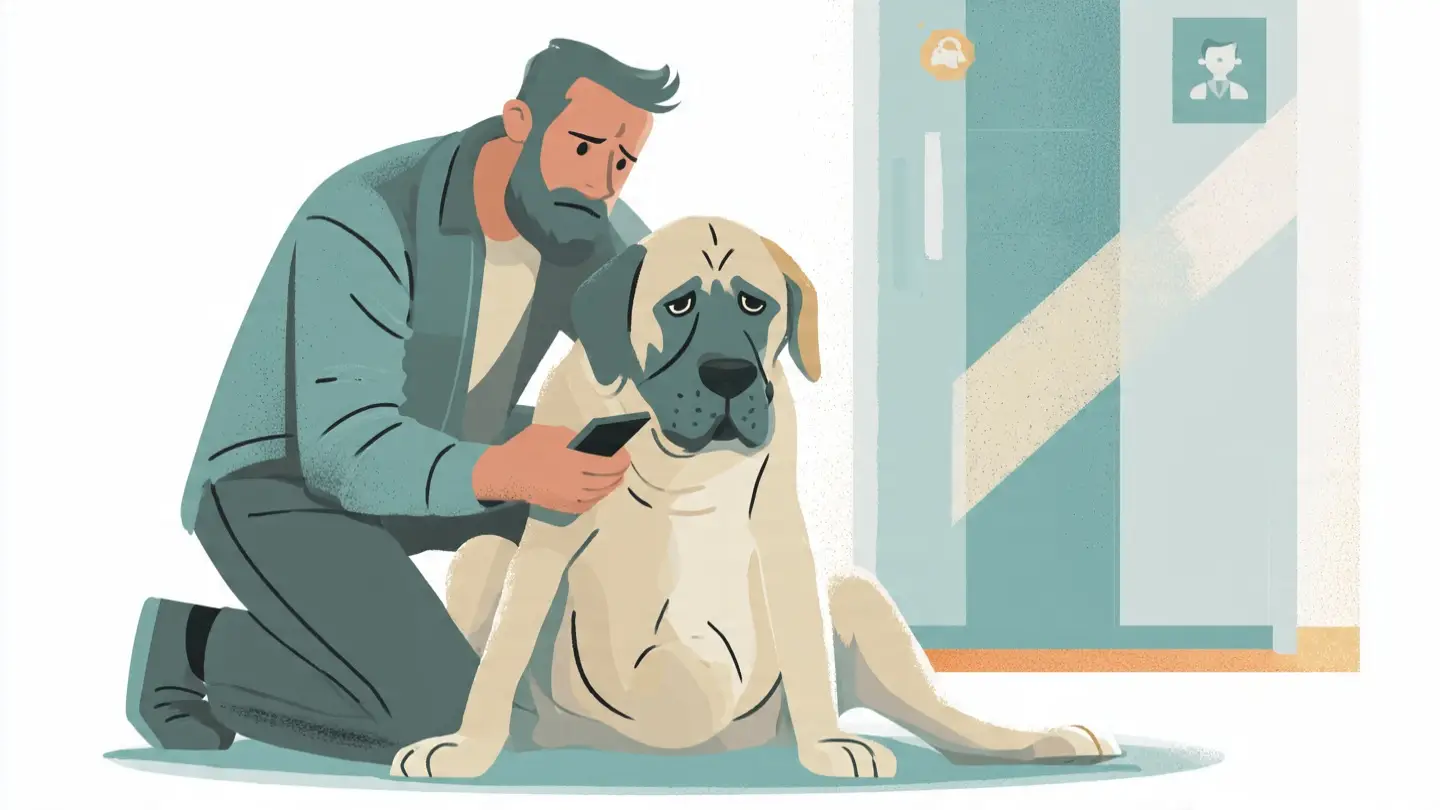
Dog bloat — medically known as gastric dilatation-volvulus or GDV — is one of the most rapidly fatal conditions in veterinary medicine. A dog that develops GDV can go from appearing normal to critically ill within a matter of hours. Without emergency surgical intervention, the condition is almost always fatal.
If your dog is showing signs of bloat right now — a distended abdomen, unproductive retching, extreme restlessness, or collapse — do not call ahead. Go directly to a veterinary clinic immediately.
⚠️ GDV is a surgical emergency. Every minute without treatment reduces survival chances. If you suspect bloat, leave for the vet immediately. Call (587) 786-6771 on the way to Walker Lake Veterinary Centre at 5109 22 Avenue SW.
What Is GDV?
GDV occurs in two stages that often happen together rapidly.
The first stage is gastric dilatation — the stomach fills with gas, fluid, or food and expands dramatically. In some cases, dilatation alone resolves on its own or with veterinary treatment. However, in GDV, dilatation progresses to the second stage.
The second stage is volvulus — the distended stomach rotates on its axis, twisting the entrance and exit points closed. Once this happens, gas cannot escape, blood supply to the stomach is cut off, the spleen is often pulled out of position, and pressure builds rapidly on the surrounding organs including the heart, lungs, and large blood vessels.
As the condition progresses, the stomach tissue begins to die, toxins enter the bloodstream, the dog goes into shock, and cardiac arrest can follow. All of this can occur within two to four hours of onset.
GDV is not the same as simple bloating or gas. Many dogs pass gas or have occasional digestive discomfort. GDV is a distinct, acute, life-threatening event — not an extension of normal digestive issues.
Warning Signs of GDV in Dogs
The symptoms of GDV are distinctive. Learning to recognise them can save your dog’s life.
The Classic Signs
- Visibly distended or swollen abdomen — particularly in the left side behind the ribcage
- Unproductive retching or repeated attempts to vomit with nothing or only foam coming up
- Extreme restlessness — the dog cannot get comfortable, paces, changes position constantly
- Excessive drooling and salivation
- Rapid, shallow breathing
- Hunched posture or reluctance to move
- Pale, white, or blue gums
- Weak pulse and rapid heart rate
- Collapse in advanced cases
The combination of a distended abdomen and unproductive retching is the hallmark presentation of GDV. If you see both of these signs together, treat it as an emergency regardless of how the dog is otherwise behaving.
⚠️ A dog with GDV may wag its tail, appear alert, and show no obvious signs of pain in the early stages. Do not let a dog’s seemingly normal behaviour reassure you if the physical signs of bloat are present.
Which Dogs Are Most at Risk?
While any dog can develop GDV, certain factors significantly increase the risk.
Breed and Body Shape
Deep-chested, large breeds are disproportionately affected. The anatomy of a deep chest creates more space for the stomach to rotate. High-risk breeds include:
- Great Danes — the highest lifetime risk of any breed, estimated at 40%
- German Shepherds
- Standard Poodles
- Weimaraners
- Irish Setters
- Dobermann Pinschers
- Labrador and Golden Retrievers
- Saint Bernards
- Basset Hounds — a smaller breed but with a deep chest
Age
Older dogs are at greater risk. The ligaments that hold the stomach in position become less taut with age, making rotation more likely.
Eating Habits
Dogs that eat a single large meal per day, eat very quickly, or exercise vigorously immediately after eating face a higher risk. Elevated food bowls were historically believed to reduce risk but research suggests they may actually increase it in some breeds.
Prior GDV
A dog that has experienced GDV previously is at extremely high risk of recurrence unless a gastropexy procedure has been performed.
Anxious or Fearful Temperament
Research has suggested that dogs with fearful or nervous temperaments have a higher incidence of GDV, though the mechanism is not fully understood.
What Causes GDV?
The exact cause of GDV is not fully understood and is likely multifactorial. Contributing factors are believed to include:
- Rapid eating and aerophagia — swallowing large amounts of air with food
- Single large meals that distend the stomach
- Vigorous exercise before or after eating
- Genetic predisposition — GDV tends to run in families within breeds
- Stress or significant environmental change
Despite popular belief, there is no definitive evidence that dry kibble, grain-free diets, or specific ingredients cause GDV. Diet composition has not been conclusively identified as a primary cause.
How Is GDV Treated?
GDV requires emergency surgical treatment. There is no home remedy, wait-and-see approach, or non-surgical option for a dog with confirmed GDV.
Stabilisation
On arrival at the clinic, the veterinary team will work immediately to stabilise the dog. This involves establishing IV access, administering IV fluids to address shock, providing pain relief, and decompressing the stomach — typically by passing a tube into the stomach or using a needle to release gas through the abdominal wall.
Electrocardiogram (ECG)
GDV causes serious cardiac arrhythmias due to poor blood flow and toxin release. An ECG monitors heart rhythm and guides treatment decisions before and during surgery.
Emergency Surgery
Once the dog is stable enough to safely undergo anaesthesia, emergency surgery is performed. The stomach is untwisted and returned to its correct position. Any stomach or spleen tissue that has died due to loss of blood supply is removed.
A procedure called gastropexy is performed at the same time — the stomach is permanently sutured to the abdominal wall, preventing future rotation. Without gastropexy, the recurrence rate of GDV is extremely high.
Recovery and Monitoring
Post-operative care involves IV fluids, cardiac monitoring, pain management, and close observation for complications including re-perfusion injury, continued cardiac arrhythmias, and stomach wall breakdown. Recovery typically requires several days of hospitalisation.
Survival Rates and Prognosis
With prompt treatment, survival rates for GDV range from 80 to 95 percent. When treatment is delayed — particularly when stomach tissue has already begun to die — survival rates drop dramatically to 50 percent or lower.
The single most important factor in GDV survival is how quickly the dog reaches emergency veterinary care.
Preventing GDV
While GDV cannot be completely prevented, particularly in high-risk breeds, several measures can meaningfully reduce the risk.
Prophylactic Gastropexy
High-risk breed owners can discuss prophylactic gastropexy with their veterinarian — a planned surgical procedure to permanently attach the stomach to the abdominal wall before GDV ever occurs. This can be performed at the same time as a spay or neuter procedure, adding minimal additional surgical time.
Prophylactic gastropexy does not prevent gastric dilatation but eliminates the risk of volvulus — the life-threatening twist. It is strongly recommended for Great Danes and other very high-risk breeds.
Feeding Management
- Feed two or three smaller meals per day rather than one large meal
- Use a slow-feeder bowl if your dog eats rapidly
- Avoid vigorous exercise for at least one hour before and two hours after meals
- Do not use elevated food bowls for large and giant breeds
- Avoid stress around mealtimes
Know the Signs
Familiarise yourself with the warning signs of GDV so you can act immediately if they occur. Every minute of delay between symptom onset and veterinary treatment reduces survival chances.
Book an Appointment at Walker Lake Veterinary Centre
Walker Lake Veterinary Centre provides emergency and urgent veterinary care for dogs and cats across Walker Lake, Summerside, Ellerslie, Heritage Valley, and Southwest Edmonton.
For preventive consultations regarding GDV risk in your dog, prophylactic gastropexy discussions, or any urgent concern, call us at (587) 786-6771 or book online. We are located at 5109 22 Avenue SW, Edmonton.
Clinic hours:
- Monday, Tuesday & Thursday: 9:00 AM – 7:00 PM
- Wednesday & Friday: 9:00 AM – 6:00 PM
- Saturday: 9:00 AM – 3:00 PM
- Sunday: Closed
Frequently Asked Questions
How quickly does GDV progress?
GDV can progress from early symptoms to life-threatening shock within two to four hours. Some dogs deteriorate even faster. This is why immediate action is essential — do not adopt a wait-and-see approach with any dog showing signs of bloat.
Can GDV resolve on its own?
No. Gastric dilatation alone may occasionally resolve without intervention, but once volvulus has occurred — once the stomach has twisted — surgical correction is the only treatment. GDV does not resolve on its own.
Is GDV painful for dogs?
Yes. GDV causes significant abdominal pain, though dogs vary in how visibly they express pain. Some dogs appear distressed and restless; others may appear surprisingly calm in early stages. Do not use a dog’s apparent pain level as your only indicator of severity.
Can small dogs get GDV?
Yes, though it is far less common than in large and giant breeds. Any dog with a deep chest relative to their body size carries some risk. Basset Hounds, Dachshunds, and some smaller terrier breeds have been reported with GDV.
What is the difference between bloat and GDV?
Bloat typically refers to simple gastric dilatation — the stomach is distended with gas but has not twisted. GDV refers specifically to dilatation combined with volvulus — the twist. Bloat without volvulus can sometimes be treated without surgery. GDV always requires emergency surgery.