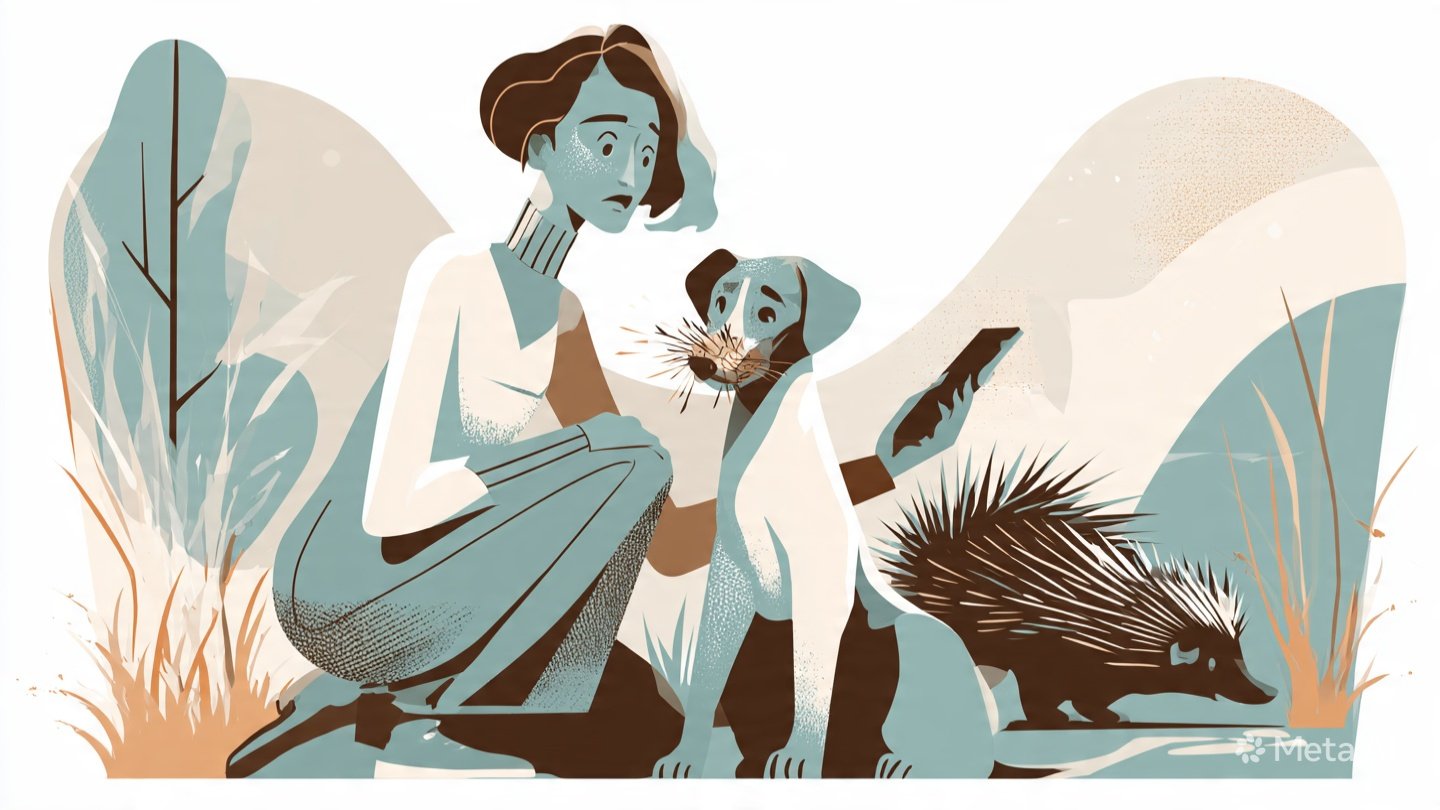
Porcupine encounters are a common reality for dogs in Alberta — particularly for dogs that spend time outdoors, in ravines, or in rural and semi-rural areas around Edmonton. If your dog has come home with a face, muzzle, or body full of porcupine quills, it can look alarming. The good news is that with prompt veterinary attention, most dogs recover completely.
The most important thing to know immediately: do not attempt to pull the quills out at home. Contact Walker Lake Veterinary Centre at (587) 786-6771 so we can remove them safely.
⚠️ Never attempt to remove porcupine quills at home. This can cause quills to break, migrate deeper into tissue, and significantly increase the risk of serious infection and internal injury.
Why Are Porcupine Quills Dangerous?
Porcupine quills are not simply sharp spines — they are sophisticated natural weapons. Each quill is covered in microscopic backward-facing barbs, similar in design to a fishing hook. These barbs serve a specific purpose: once a quill penetrates skin, normal movement causes it to work progressively deeper into tissue rather than staying in place or coming back out.
This means that a quill that appears to be sitting near the surface may already be travelling inward with every movement your dog makes. Quills that are not removed promptly — or that break during amateur removal attempts — can migrate through muscle, reach internal organs, penetrate the chest or abdominal cavity, and cause life-threatening infections.
Porcupines in Alberta do not throw their quills. Contact occurs when a curious or predatory dog gets too close and the porcupine slaps its tail or raises its quills against the dog’s face. The quills release on contact with skin and detach from the porcupine.
What Happens If Quills Are Left Untreated?
Quills that are not removed — or that break off below the skin surface — continue to migrate through tissue. Depending on their location, migrating quills can:
- Cause severe localised infections and abscess formation
- Penetrate into the chest cavity causing pneumothorax or lung infection
- Enter the abdominal cavity and damage internal organs
- Migrate toward the spinal cord or brain in extreme cases
- Cause chronic pain, lameness, and neurological symptoms months or years after the initial encounter
- Reach the eye socket and cause permanent eye damage
Cases of quills migrating to the heart, brain, and spine have been documented in veterinary literature. While these are extreme outcomes, they illustrate why even a small number of quills requires professional attention.
Where Are Quills Typically Found?
Quills most commonly embed in the areas of the dog that made first contact with the porcupine — which is almost always the face and front of the body.
Common locations include:
- Muzzle and lips
- Inside the mouth, tongue, and throat
- Nose and nasal passages
- Around and inside the eyes
- Ears — including deep inside the ear canal
- Chest and front legs
- Paws — from stepping on fallen quills
Quills inside the mouth and throat are particularly dangerous because they are easily missed, can be swallowed, and can migrate into the digestive tract or airway.
Why You Should Not Remove Quills at Home
This point is worth repeating because it is the most common mistake pet owners make after a porcupine encounter.
Quills Break Easily
The barbed structure that makes quills so effective at penetrating tissue also makes them fragile. Dry quills that have been embedded for even a short time are prone to snapping at the skin surface when pulled. Once broken, the remaining portion is much harder to locate and remove — often requiring surgical exploration to find.
Attempts to Remove Cause Additional Embedding
The act of grasping and pulling a quill causes the barbs to grip more tightly, driving the quill deeper before it eventually snaps. This is the opposite of the intended result.
Dogs in Pain Are Unpredictable
A dog with dozens of quills in their face is in significant pain and stress. Attempting to restrain them and pull quills without sedation puts both you and your dog at risk of injury. Veterinary removal is performed under appropriate sedation so the dog is comfortable, still, and safe throughout the procedure.
Mouth and Throat Quills Require Specialised Access
Quills embedded deep in the mouth, at the base of the tongue, or in the throat cannot be safely accessed without proper lighting, instruments, and sedation. Missing these quills during home removal is common and can have serious consequences.
The myth that cutting the end off a quill before pulling it out makes removal easier is not supported by evidence and does not reduce the risk of breakage or additional embedding. Do not cut quills.
What to Do After a Porcupine Encounter
Step 1 — Prevent Further Damage
Do not let your dog paw at their face, rub against the ground, or chew at the quills. Every movement drives quills deeper. Use a soft muzzle or gently hold your dog’s face away from their paws if they are trying to scratch. Keep them as calm and still as possible.
Step 2 — Do a Quick Visual Assessment
Count approximately how many quills are visible and note their locations — particularly whether any are in or near the eyes, inside the mouth, or in the ears. Do not probe or touch the quills. This information helps the veterinary team prepare.
Step 3 — Travel to the Clinic Calmly
Keep your dog calm and comfortable during transport. Avoid letting them move around excessively in the vehicle. If another person is available, have them sit with the dog to provide reassurance.
Dog had a porcupine encounter? Call Walker Lake Veterinary Centre at (587) 786-6771 before arriving so we can prepare for your dog’s arrival. Located at 5109 22 Avenue SW, Southwest Edmonton.
How Does a Veterinarian Remove Porcupine Quills?
Sedation or Anaesthesia
Depending on the number of quills, their location, and the dog’s temperament, removal is performed under sedation or general anaesthesia. This ensures the dog is completely relaxed and still, allowing thorough and careful removal without risk of injury to the dog or the veterinary team.
Systematic Removal
Each quill is grasped firmly as close to the skin as possible and removed in one smooth, deliberate movement. The veterinarian works systematically through all visible areas — including inside the mouth, ears, and between toes — to ensure no quills are missed.
Wound Assessment and Irrigation
After removal, the veterinarian assesses each wound site for signs of infection, retained quill fragments, and depth of penetration. Wound sites are irrigated to reduce bacterial contamination.
Antibiotics and Pain Management
Most dogs that have had porcupine quills removed are sent home with a course of antibiotics to prevent infection and appropriate pain relief. Follow-up is sometimes recommended to check for signs of infection or migrating quill fragments.
Imaging for Deep or Missed Quills
In cases involving a large number of quills, deeply embedded quills, or suspicion of broken fragments, X-rays or ultrasound may be used to locate quills that are no longer visible at the surface.
How to Prevent Future Porcupine Encounters
Once a dog has encountered a porcupine, they may or may not learn from the experience. Some dogs — particularly terriers and hunting breeds with strong prey drive — will seek out porcupines repeatedly regardless of the pain involved.
- Keep dogs on a lead in areas known for porcupine activity — particularly ravines, riverbanks, and wooded areas around Southwest Edmonton
- Supervise outdoor time at dawn and dusk when porcupines are most active
- Ensure your yard is secured if porcupines are known to pass through the area
- Consider recall training to call your dog away from wildlife encounters
- If your dog is a repeat offender, discuss management strategies with your veterinarian
Book an Appointment at Walker Lake Veterinary Centre
Walker Lake Veterinary Centre provides urgent care for porcupine quill removal and other wildlife-related injuries for dogs across Walker Lake, Summerside, Ellerslie, Heritage Valley, and Southwest Edmonton.
Call us at (587) 786-6771 or book online. We are located at 5109 22 Avenue SW, Edmonton.
Clinic hours:
- Monday, Tuesday & Thursday: 9:00 AM – 7:00 PM
- Wednesday & Friday: 9:00 AM – 6:00 PM
- Saturday: 9:00 AM – 3:00 PM
- Sunday: Closed
Frequently Asked Questions
Can I remove porcupine quills from my dog at home?
It is strongly advised against. Quills break easily, barbs cause them to migrate deeper with each movement, and quills inside the mouth and ears cannot be safely accessed without sedation and proper instruments. Home removal attempts frequently result in broken quill fragments that require surgical extraction.
How long can porcupine quills stay in a dog?
Quills begin migrating as soon as they are embedded. The longer they remain in place, the deeper and more difficult to remove they become, and the higher the risk of infection, abscess, and internal damage. Same-day veterinary attention is always recommended.
My dog only has a few quills — does it still need a vet?
Yes. Even a single quill carries the same migration risk as many quills. There is no safe number of quills that can be left in place or removed at home. The number of visible quills also does not reflect the total number embedded — quills inside the mouth and ears are easily missed on a quick visual inspection.
Will my dog need surgery to remove porcupine quills?
Most quill removal is performed under sedation rather than full surgical anaesthesia. However, deeply embedded quills, quills that have already begun to migrate internally, or cases involving quills in the chest or abdominal cavity may require surgical exploration.
How much does porcupine quill removal cost at a vet?
The cost varies depending on the number of quills, whether sedation or general anaesthesia is required, and whether additional diagnostics such as X-rays are needed. Contact Walker Lake Veterinary Centre at (587) 786-6771 for specific pricing guidance.