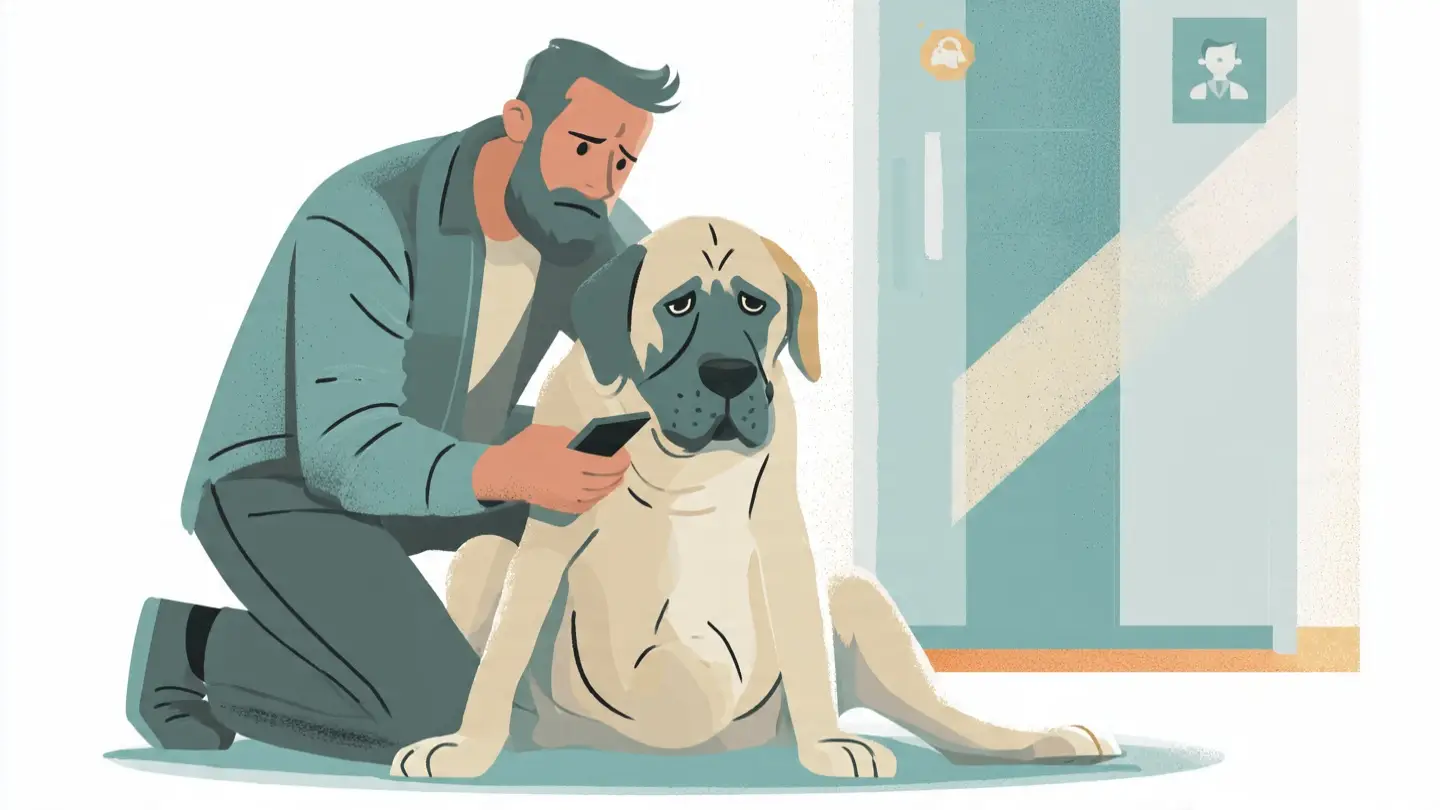

One of the most stressful moments as a pet owner is not knowing whether what you are seeing is a true emergency or something that can wait until morning. Getting that judgement wrong in either direction has consequences — waiting too long with a serious condition, or making an unnecessary trip with a minor one.
This guide is designed to help you make that call confidently. If you are ever unsure, the safest approach is always to call Walker Lake Veterinary Centre at (587) 786-6771 — a two-minute phone call can help you decide.
This guide covers dogs and cats. Some symptoms are more urgent in one species than the other — those differences are noted where relevant.
Go to the Emergency Vet Immediately — No Exceptions
The following symptoms always require immediate veterinary attention. Do not wait to see if they improve. Go now.
Breathing Difficulties
Laboured, rapid, noisy, or open-mouth breathing is always an emergency. In cats particularly, open-mouth breathing is never normal and signals a life-threatening respiratory crisis. In dogs, excessive panting combined with restlessness and a distended abdomen can indicate bloat — one of the most dangerous conditions in veterinary medicine.
- Struggling to breathe or gasping
- Breathing with mouth open (cats — always an emergency)
- Blue, white, or pale gums — indicates oxygen deprivation
- Choking or gagging with nothing coming up
Seizures
A single seizure lasting less than two minutes, while frightening to witness, is not always immediately life-threatening. However, a seizure lasting more than five minutes — known as status epilepticus — is a neurological emergency. Multiple seizures within a 24-hour period also require urgent evaluation.
Never put your hand near a seizing animal’s mouth. Keep them away from furniture, stay calm, and time the seizure. Get to a vet as soon as it ends.
Suspected Poisoning
If you know or suspect your pet has ingested a toxic substance — chocolate, grapes, raisins, medications, antifreeze, rodenticide, a toxic plant, or any household chemical — do not wait for symptoms. Many poisons cause no immediate visible effect but begin damaging organs within hours.
Trauma and Injuries
Any significant physical trauma requires emergency assessment even if the pet appears to be walking and behaving normally. Internal injuries, internal bleeding, and organ damage are not always visible from the outside.
- Hit by a vehicle
- Fall from height
- Animal attack or bite wound — bite wounds are often deeper than they appear and carry serious infection risk
- Suspected broken bones
- Eye injuries of any kind
- Impalement or deep puncture wounds
Urinary Blockage
A cat — particularly a male cat — that is straining to urinate, crying in the litter box, or producing no urine is experiencing a urinary blockage. This is a life-threatening emergency. A blocked bladder can rupture within 24 to 48 hours and the buildup of toxins in the bloodstream can be fatal. Do not wait overnight.
Male dogs can also experience urinary blockages, though less commonly than male cats.
Collapse or Loss of Consciousness
Any pet that collapses, loses consciousness, or is unable to stand requires immediate emergency care. This includes sudden weakness in the hindquarters — particularly in cats, where sudden hind limb paralysis can indicate a cardiac condition called aortic thromboembolism.
Suspected Bloat in Dogs — GDV
Gastric dilatation-volvulus (GDV), commonly called bloat, is one of the most rapidly fatal conditions in dogs. The stomach fills with gas and twists on itself, cutting off blood supply. It progresses from onset to death within hours without surgical intervention.
Warning signs include a visibly distended abdomen, unproductive retching with nothing coming up, excessive drooling, extreme restlessness, and a dog that cannot get comfortable. Large and deep-chested breeds — Great Danes, German Shepherds, Standard Poodles, Weimaraners — are at highest risk, but any dog can develop GDV.
⚠️ Suspected GDV is one of the few conditions where every minute genuinely matters. If your dog has a distended abdomen and is retching unproductively, go directly to an emergency vet without delay.
Difficulty Giving Birth
If a pregnant dog or cat has been in active labour for more than 30 to 60 minutes without producing a puppy or kitten, or if more than two hours pass between births with the animal still in active labour, veterinary intervention is required.
Severe Uncontrolled Bleeding
Apply gentle pressure to the wound and go to the vet immediately. Do not attempt to remove embedded objects — stabilise them in place and seek emergency care.
Symptoms That Need Same-Day Veterinary Care
These symptoms are not necessarily life-threatening emergencies but should be assessed by a veterinarian the same day — do not leave them until the following morning or the weekend.
- Vomiting or diarrhoea more than three times in a day
- Complete loss of appetite lasting more than 24 hours
- Significant swelling anywhere on the body
- Limping that does not improve after a few hours of rest
- Eye redness, discharge, squinting, or pawing at the eye
- Sudden changes in behaviour — unusual aggression, hiding, or vocalisation
- Straining to defecate with nothing produced
- Suspected ingestion of a foreign object such as a toy, bone, or clothing
- Blood in urine or stool
- Noticeable pain when touched or moved
Symptoms That Can Wait for a Routine Appointment
These symptoms generally do not require emergency care but should be monitored and booked for a routine appointment within a few days.
- Single episode of vomiting with no other symptoms and normal behaviour afterward
- Mild loose stool without blood and normal energy levels
- Minor limping that improves with rest
- Small cuts or scrapes that are not deep and are not bleeding heavily
- Mild sneezing or nasal discharge without fever or lethargy
- Gradual weight loss over several weeks
- Mild scratching or skin irritation without open wounds
When in doubt, it is always better to call and ask than to wait and wonder. A brief phone conversation with a veterinary team member can help you assess urgency and give you peace of mind.
What to Expect During an Emergency Vet Visit
Understanding what happens during an emergency visit can reduce the stress of the situation for both you and your pet.
Triage
When you arrive, the veterinary team will assess your pet’s condition to determine the severity and prioritise care accordingly. Pets with life-threatening conditions are seen ahead of those with less critical concerns regardless of arrival order.
Initial Assessment and Diagnostics
Once your pet is stable enough, the veterinarian will perform a physical examination and recommend appropriate diagnostics — which may include bloodwork, urinalysis, X-rays, or ultrasound depending on the presenting symptoms.
Treatment and Stabilisation
Treatment begins as soon as the situation is assessed. This may include pain management, IV fluids, oxygen support, wound care, or emergency procedures.
Communication
The veterinarian will explain their findings, the recommended treatment plan, and the expected costs before proceeding. You will be kept informed throughout.
Aftercare
Every patient goes home with written aftercare instructions, any necessary medications, and clear guidance on when to return or seek further care.
How to Prepare for a Pet Emergency Before One Happens
The best time to prepare for a pet emergency is before one occurs.
- Save your vet’s number in your phone — Walker Lake Veterinary Centre: (587) 786-6771
- Know the address of your nearest 24-hour emergency facility for after-hours situations
- Keep a basic pet first aid kit at home — gauze, bandages, a digital thermometer, and saline solution
- Know your pet’s normal baseline — resting heart rate, breathing rate, and typical behaviour — so you recognise changes quickly
- Keep a record of your pet’s medications, allergies, and vaccination history easily accessible
- Know which foods, plants, and household substances are toxic to your species of pet
Book an Appointment at Walker Lake Veterinary Centre
Walker Lake Veterinary Centre provides urgent and emergency veterinary care for dogs and cats across Walker Lake, Summerside, Ellerslie, Heritage Valley, and Southwest Edmonton. Same-day appointments are available for urgent concerns during clinic hours.
Call us at (587) 786-6771 or book online. We are located at 5109 22 Avenue SW, Edmonton.
Clinic hours:
- Monday, Tuesday & Thursday: 9:00 AM – 7:00 PM
- Wednesday & Friday: 9:00 AM – 6:00 PM
- Saturday: 9:00 AM – 3:00 PM
- Sunday: Closed
Frequently Asked Questions
How do I know if my pet’s condition is an emergency?
If your pet is having difficulty breathing, is unconscious or unresponsive, has been in a serious accident, is bleeding heavily, is in obvious severe pain, or you suspect poisoning — go immediately. For anything less clear-cut, call your vet and describe the symptoms. They will advise on urgency.
Should I call ahead before bringing my pet to the emergency vet?
If the situation allows, calling ahead gives the veterinary team time to prepare for your pet’s arrival and provide guidance on safe transport. In a life-threatening situation, go immediately and call on the way.
What should I bring to an emergency vet visit?
Bring any previous medical records, current medications, and vaccination history if available. If your pet has ingested something, bring the packaging. Most importantly — just get your pet there.
Is Walker Lake Veterinary Centre a 24-hour emergency clinic?
Walker Lake Veterinary provides urgent care during clinic hours: Mon, Tue & Thu 9am–7pm; Wed & Fri 9am–6pm; Sat 9am–3pm. Closed Sundays. For after-hours life-threatening emergencies, contact a 24-hour emergency veterinary facility in Edmonton.
Can I treat my pet at home instead of going to the emergency vet?
For true emergencies — breathing difficulties, suspected poisoning, collapse, seizures, trauma — home treatment is not appropriate and can cost your pet valuable time. For minor concerns that can wait, your vet can advise on home monitoring steps over the phone.